Introduction
Guard booths protecting critical infrastructure—government facilities, military installations, data centers, and energy plants—must withstand explosive threats including vehicle-borne improvised explosive devices (VBIED) and hand-placed charges. Windows are the most vulnerable penetration point in a guard booth, as blast pressure can shatter standard glazing into lethal flying fragments and create an opening for blast pressure to enter the occupied space. Blast-resistant glazing systems are engineered to absorb explosive energy while maintaining structural integrity and protecting occupants.
Blast Threat Characterization
Blast loads on guard booth glazing are characterized by two parameters: peak reflected pressure (Pr) and positive phase impulse (ip). These depend on the explosive charge weight (TNT equivalent) and the standoff distance.
Typical Threat Scenarios
| Threat | Charge Weight (kg TNT) | Standoff (m) | Pr (kPa) | ip (kPa·ms) |
|---|---|---|---|---|
| Hand-placed charge | 4 | 1 | 2,400 | 3,200 |
| Small VBIED | 100 | 5 | 850 | 4,500 |
| Medium VBIED | 500 | 10 | 620 | 5,800 |
| Large VBIED | 2,000 | 15 | 780 | 9,200 |
These values are computed using the Kingery-Bulmash blast parameter curves, which are the standard reference for conventional blast effects prediction. Guard booth glazing must be designed to withstand the specific threat level identified in the facility’s security risk assessment.
Blast-Resistant Glazing Composition
Laminated Glass Architecture
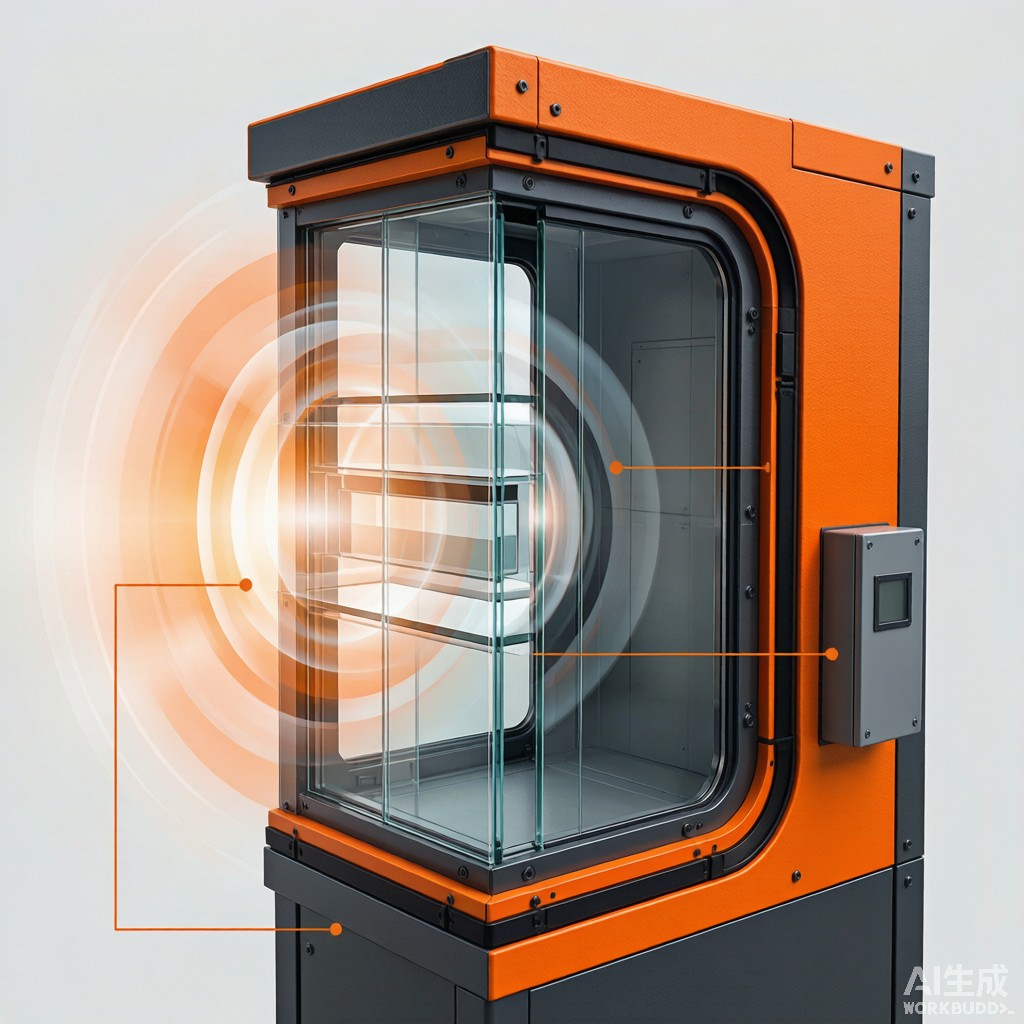
Blast-resistant glazing uses multiple glass layers bonded by polyvinyl butyral (PVB) or SentryGlas Plus (SGP) interlayers. The interlayer’s role is critical: it absorbs blast energy through membrane flexure and holds shattered glass fragments in place, preventing them from becoming projectiles.
| Glazing Type | Construction | Total Thickness (mm) | Threat Rating | Application |
|---|---|---|---|---|
| Standard laminated | 3+0.76PVB+3 | 6.76 | Minimal | Non-security |
| Blast-rated Level 1 | 6+1.52PVB+6 | 13.52 | Low (3m, 4kg) | Basic security |
| Blast-rated Level 2 | 6+1.52SGP+6+1.52SGP+6 | 21.04 | Medium (5m, 100kg) | Guard booth |
| Blast-rated Level 3 | 10+1.52SGP+10+1.52SGP+10 | 33.04 | High (10m, 500kg) | Critical infrastructure |
| Glass-clad polycarbonate | 6+0.76PU+6PC+0.76PU+6 | 19.52 | High | Forced entry + blast |
PVB vs SGP Interlayer Comparison
| Property | PVB | SGP (SentryGlas) |
|---|---|---|
| Tensile strength (MPa) | 20 | 35 |
| Elongation at break (%) | 250 | 400 |
| Shear modulus (MPa) | 0.7 | 3.0 |
| Tear strength (N/mm) | 5 | 15 |
| Yellowing index | 3–6 | <1 |
| Blast energy absorption | Baseline | 2–3× better |
SGP’s superior mechanical properties make it the preferred interlayer for blast-resistant applications, particularly in tropical climates where PVB can experience edge delamination under prolonged humidity and thermal cycling exposure.
Blast-Resistant Window Frame Design
The glazing is only as strong as its frame attachment. A blast-rated window system must include a frame designed to transfer the blast load from the glazing to the structural wall without failure.
Frame Material Selection
| Frame Material | Yield Strength (MPa) | Section Depth (mm) | Blast Rating | Weight (kg/m) |
|---|---|---|---|---|
| Aluminum 6063-T6 | 215 | 70–100 | Level 1–2 | 3–5 |
| Steel (galvanized) | 250 | 60–80 | Level 2–3 | 8–15 |
| Stainless 316L | 290 | 60–80 | Level 2–3 | 10–18 |
For Southeast Asian coastal deployments, stainless steel 316L is recommended due to its superior corrosion resistance in salt-laden tropical air. Galvanized steel frames require periodic inspection of the zinc coating and are susceptible to corrosion at cut edges and fastener points.
Glazing Retention Methods
- Wet glazing (structural silicone): A structural silicone sealant bead (12–20mm width) bonds the glazing edge to the frame. Provides flexibility to accommodate blast-induced deflection. Silicone shore A hardness 50–60, tensile strength >0.7 MPa. Preferred for Level 2–3 applications.
- Dry glazing (mechanical retention): Aluminum or steel pressure bars with EPDM gaskets clamp the glazing edge. Suitable for Level 1 applications. Requires 15–25mm bite depth into the frame.
- Structural anchoring: Through-bolts or threaded inserts that mechanically anchor the glazing to the structural wall. Used in conjunction with wet or dry glazing for maximum security.
ASTM and ISO Blast Standards
ASTM F1642 — Standard Test Method for Glazing
ASTM F1642 classifies blast-resistant glazing performance into categories based on arena testing with actual explosive charges:
| Performance Condition | Description | Glass Fragment Hazard |
|---|---|---|
| 1 | No break | None |
| 2 | Safe break — fragments on floor within 1m | Minimal |
| 3a | Safe break — fragments within 3m | Low |
| 3b | Moderate hazard — fragments 3–6m | Moderate |
| 4 | High hazard — fragments beyond 6m | High |
| 5 | Catastrophic failure | Extreme |
For guard booth applications, Performance Condition 1 or 2 is the minimum acceptable rating. The glazing must not only survive the blast but also prevent fragments from entering the occupied space.
ISO 16933 — Glass in Building — Explosion-Resistant
ISO 16933 uses a similar arena test method but with different charge weights and standoff distances, classified as ISO EXV classes (EXV 15 through EXV 45). The ISO standard also includes a vehicle test (ISO 16934) for VBIED scenarios.
Tropical Climate Considerations
Thermal Stress
Tropical sun exposure creates thermal gradients in blast-resistant glazing. Dark-tinted or reflective coatings can cause surface temperature differentials of 25–40°C between sun-exposed and shaded areas, potentially causing thermal breakage. Heat-strengthened glass (HS, surface compression 24–52 MPa) is recommended over a
ealed glass for the outer lite to resist thermal stress.
Humidity and Interlayer Edge Exposure
In environments with >80% RH, exposed PVB interlayer edges can absorb moisture, leading to edge delamination within 3–5 years. Mitigation strategies include:
- Using SGP interlayer (moisture absorption rate 10× lower than PVB)
- Sealing exposed interlayer edges with moisture barrier tape or edge sealant
- Designing frames with minimum 15mm edge coverage to protect the interlayer from direct moisture exposure
Cyclone and Wind Load
Blast-resistant glazing in SE Asia must also withstand typhoon wind loads (up to 250 km/h). The frame and anchorage must be designed for both blast pressure (transient, millisecond duration) and wind pressure (sustained, seconds to minutes) load cases. Blast design typically governs for medium and high threat levels, but wind load may govern for low threat levels with large glass panes.
Design Integration with Guard Booth Structure
Blast-resistant glazing ca
ot be treated in isolation—it must be integrated with the guard booth’s structural design:
- Wall blast capacity: The booth walls must withstand the same blast pressure as the glazing. Reinforced concrete (200–300mm) or steel plate (6–12mm) walls are typical.
- Frame anchorage: Window frames must be anchored to the structural wall with bolts sized for the blast load. Minimum embedment depth: 100mm into concrete, or full-penetration weld to steel frame.
- Deflection compatibility: The frame and glazing must accommodate blast deflection (up to 50–100mm at center for large panes) without losing glazing retention. Flexible gasket systems or silicone bond allow this movement.
Conclusion
Blast-resistant glazing is a critical life-safety component for guard booths protecting critical infrastructure. The combination of multi-layer SGP-laminated glass, robust stainless steel frames with adequate bite depth, and proper structural anchorage provides protection against explosive threats while maintaining operational visibility. For Southeast Asian deployments, SGP interlayers offer superior blast performance and moisture resistance compared to PVB, and stainless steel 316L frames provide long-term corrosion resistance in tropical coastal environments. Proper integration of blast-rated glazing with the guard booth structural design ensures comprehensive protection that meets both ASTM and ISO performance standards.