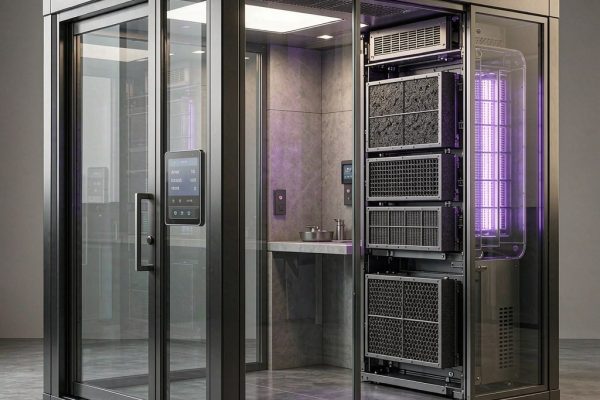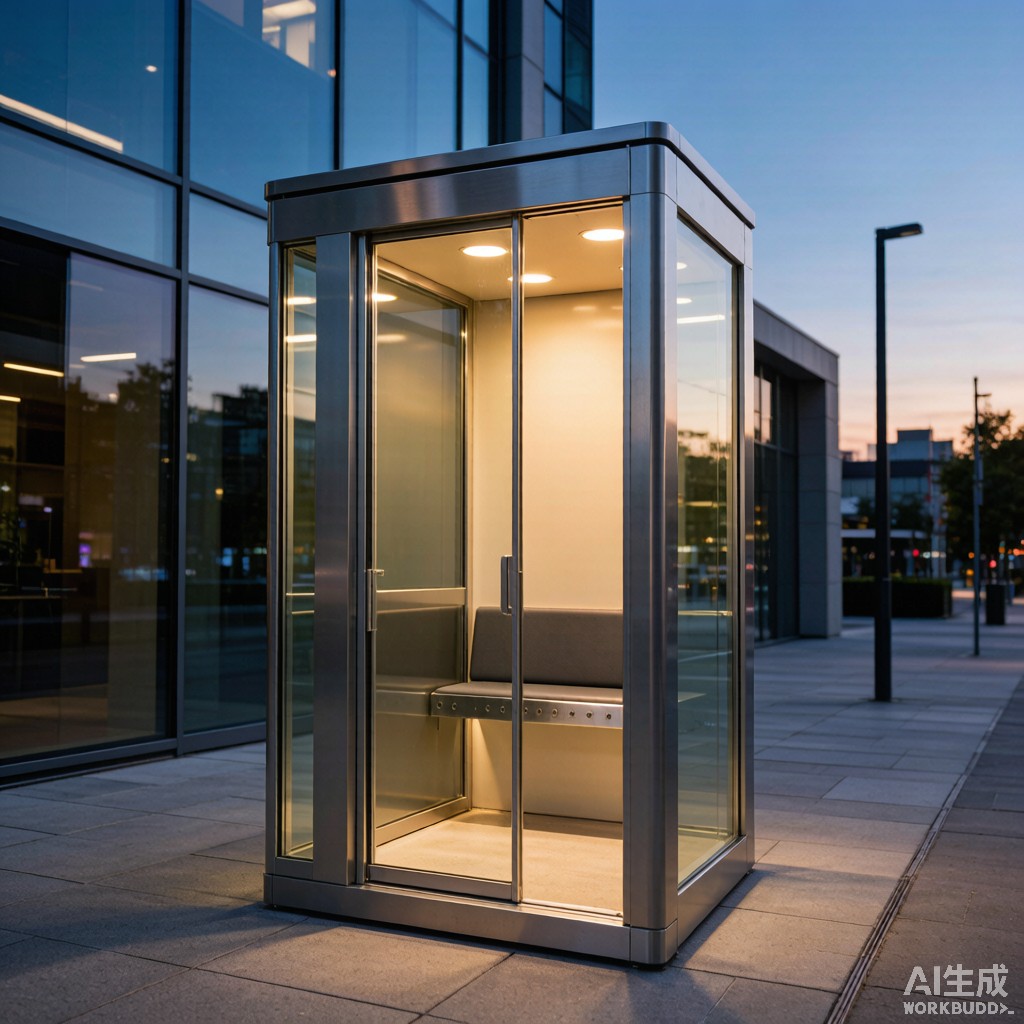
Commercial smoking booths installed in airports, shopping malls, transportation hubs, and urban streetscapes face a persistent operational challenge: vandalism. Deliberate damage—including graffiti tagging, panel denting, fixture removal, and fire-setting—can render a smoking shelter unusable within weeks of installation and generate substantial maintenance expenditure over the product lifecycle. For facility managers across Southeast Asia’s dense urban environments, specifying vandal-resistant design from the outset is essential for achieving acceptable total cost of ownership. This article examines the engineering principles, material selections, and hardware specifications that define truly vandal-resistant smoking booth design.
Vandalism Risk Assessment for Smoking Booths
Common Attack Vectors
Field studies of smoking booth damage patterns reveal five primary vandalism categories:
| Attack Type | Frequency | Typical Damage | Mitigation Priority |
|---|---|---|---|
| Graffiti (paint, marker, etching) | Very High (>70%) | Surface staining, acid etching on glass | High |
| Impact damage (kicking, striking) | High (40–60%) | Denting, panel dislodgement, glass cracking | High |
| Hardware tampering | Medium (20–40%) | Fixture removal, panel theft, loosening | Medium |
| Fire-setting (waste ignition) | Medium (15–30%) | Surface charring, structural weakening | High |
| Climbing/rooftop access | Low (5–15%) | Roof damage, liability risk | Low |
Risk Factors by Installation Environment
Vandalism probability correlates strongly with environmental context:
- Transportation hubs (MRT, bus terminals): Highest risk—unsupervised nighttime exposure, transient population, competitive tagging culture
- Shopping malls: Moderate risk—CCTV presence deters but enclosed parking areas remain vulnerable
- Corporate campuses: Lower risk—employee identification and security patrol reduce incidents
- Public parks and streetscapes: High risk—isolated placement, limited surveillance, delayed response times
Anti-Graffiti Surface Engineering
Surface Treatment Categories
Anti-graffiti treatments fall into two functional classes: sacrificial coatings that are removed with the graffiti, and permanent coatings that enable graffiti removal without coating damage.
Sacrificial Coatings
Wax- or polymer-based formulations (typically paraffin, polyethylene, or fluoropolymer emulsions) form a clear protective layer 5–20 μm thick. When graffiti is applied, the sacrificial layer absorbs the paint or ink. Removal via hot water pressure washing (80–100°C, 100–150 bar) strips both graffiti and sacrificial layer, after which the coating must be reapplied.
- Cost: $5–$15 per m² initial application; $3–$8 per m² reapplication
- Lifespan: 1–3 graffiti removal cycles before reapplication required
- Best for: Low-to-medium risk areas with scheduled maintenance programs
Permanent Anti-Graffiti Coatings
Fluoropolymer or polysiloxane-based permanent coatings create low-surface-energy barriers (contact angle >110°) that prevent paint adhesion. Graffiti can be removed with solvent wipes or mild pressure washing without damaging the underlying coating.
- Cost: $25–$60 per m² initial application
- Lifespan: 5–10 years with proper maintenance
- Chemical resistance: Withstands acetone, MEK, toluene, and alkaline cleaners
- Best for: High-risk areas where maintenance access is limited
Material-Specific Strategies
| Surface Material | Graffiti Vulnerability | Recommended Treatment |
|---|---|---|
| Powder-coated steel | Moderate—paint adheres to textured finishes | Permanent fluoropolymer topcoat over epoxy primer |
| Stainless steel ( brushed #4) | Low—smooth surface resists adhesion | Passivation + periodic cleaning |
| Tempered glass | High—acid etching permanent | Anti-graffiti film (replaceable) or permanent silane coating |
| Aluminum composite panel | Moderate—PVDF coating provides some resistance | PVDF factory coating (Kynar 500) + sacrificial wax |
| HDPE recycled plastic | Low—non-porous, paint does not bond well | No treatment required; pressure wash only |
Impact-Resistant Panel Design
IK Rating System
The IK code (IEC 62262) classifies impact resistance of enclosure assemblies against mechanical impact energy:
| IK Code | Impact Energy (Joules) | Equivalent Attack | Application Suitability |
|---|---|---|---|
| IK06 | 1.0 J | Hammer swing (0.5 kg from 200 mm) | Low risk indoor |
| IK08 | 5.0 J | Heavy kick or baton strike | Standard commercial |
| IK09 | 10.0 J | Sustained beating with tool | High-risk transit |
| IK10 | 20.0 J | Sledgehammer attack | Maximum security |
Panel Material Selection
For smoking booth wall and roof panels, material selection directly determines impact resistance:
- 2 mm powder-coated steel: IK08 achievable with proper framing; cost-effective but corrosion-vulnerable in coastal SE Asia
- 1.5 mm 304 stainless steel: IK09 with rigid framing; superior corrosion resistance; premium pricing
- 6 mm tempered glass: IK08 for flat panels; shatters into safe granules if broken; requires anti-shatter film for overhead
- 10 mm polycarbonate: IK10; 250× impact strength of glass; UV-stabilized grades resist yellowing; scratch-vulnerable surface
- Aluminum composite (3 mm Al/PE core): IK06–IK07; lightweight but susceptible to denting and delamination at edges
Framing and Anchoring for Impact Resistance
Panel impact resistance is only as good as the framing system. Vandal-resistant smoking booths require:
- Steel tube framing: Minimum 50×50×2 mm galvanized steel or 40×40×1.5 mm stainless steel
- Concealed fasteners: All panel attachment points hidden behind trim or inside structural cha
els
- Continuous welding: Frame joints fully MIG-welded, not bolted or riveted
- Foundation anchoring: M16 chemical anchors at 400 mm centers into concrete slab with pull-out resistance >10 kN per anchor
Tamper-Proof Hardware and Fixings
Anti-Tamper Fastener Types
| Fastener Type | Security Level | Tool Requirement | Application |
|---|---|---|---|
| Pin hex (resistorx) screws | Medium | Specialized bit ($10–$20) | Panel trim, non-critical covers |
| Tri-groove (T-groove) screws | Medium-High | Proprietary driver ($25–$50) | Service access panels |
| One-way clutch heads | High | Non-removable (must drill out) | Permanent structural joints |
| Shear nuts (breakaway nuts) | High | Standard wrench (head shears off) | Exposed bolted co
ections |
| Security Torx (Tamper-Resistant Torx) | Medium | Pin-in-Torx bit ($5–$15) | Internal components, filter doors |
Ash Receptacle Security
The ash receptacle is the most frequently targeted component. Vandal-resistant designs include:
- Recessed dump tray: Internal tray accessible only through keyed service door, not user-accessible opening
- Fire-safe construction: Tray fabricated from 1.2 mm stainless steel with sand-filled base for thermal mass
- Anti-theft mounting: Tray secured with concealed bolts or welded brackets, not slide-out rails
- Overflow prevention: 3–5 liter capacity with visual fill-level indicator for maintenance scheduling
Fire Safety Integration
Waste Fire Prevention
Deliberate or accidental ignition of accumulated waste in smoking booths presents serious liability risks. Fire-resistant design measures include:
- Non-combustible interior surfaces: Steel or stainless steel wall panels (Class A per ASTM E84, flame spread index <25)
- Self-closing waste chute: Spring-loaded flap that seals the waste chamber when not in active use
- Fire-resistant insulation: 25 mm mineral wool (A1 fire classification) in wall cavities to prevent fire spread
- Smoke detection: Photoelectric smoke detector integrated with facility fire alarm system
- Suppression readiness: Provision for automatic aerosol extinguisher (50–100 g unit) in waste chamber
Lifecycle Cost Analysis
| Design Level | Initial Cost Premium | A
ual Maintenance |
5-Year TCO |
|---|---|---|---|
| Standard (non-vandal-resistant) | Baseline ($3,000–$5,000) | $1,200–$2,500 | $9,000–$17,500 |
| Medium security (IK08, anti-graffiti film) | +30% ($4,000–$6,500) | $400–$800 | $6,000–$10,500 |
| High security (IK10, permanent coating, tamper-proof) | +60% ($4,800–$8,000) | $150–$400 | $5,550–$10,000 |
Paradoxically, the highest-security specification often achieves the lowest 5-year total cost of ownership in high-risk environments, as maintenance cost reductions more than offset the initial premium.
Conclusion
Vandal-resistant smoking booth design represents a systems engineering challenge that integrates material science, mechanical engineering, and security hardware specifications. For Southeast Asian commercial and public infrastructure deployments, specifying IK09–IK10 impact ratings, permanent fluoropolymer anti-graffiti coatings, and tamper-proof fastening systems is essential for achieving acceptable lifecycle costs.
The most cost-effective approach is not necessarily the lowest initial price. Facility managers should evaluate total cost of ownership over a 5–10 year horizon, recognizing that every dollar invested in vandal resistance typically returns $2–$4 in avoided maintenance, replacement, and operational downtime. In high-traffic urban environments where smoking booths experience daily use by hundreds of occupants, vandal-resistant design is not a luxury—it is a necessity for sustainable facility operations.