Introduction
Medical electronics operate in some of the most electromagnetically challenging environments imaginable. MRI machines generate multi-tesla magnetic fields, surgical equipment emits high-frequency RF energy, and patient monitoring devices must reject cellular, Wi-Fi, and Bluetooth interference. Copper woven mesh EMI shielding offers a lightweight, flexible, and highly effective solution for protecting sensitive medical circuitry without compromising device ergonomics or thermal performance.
How Copper Woven Mesh Works
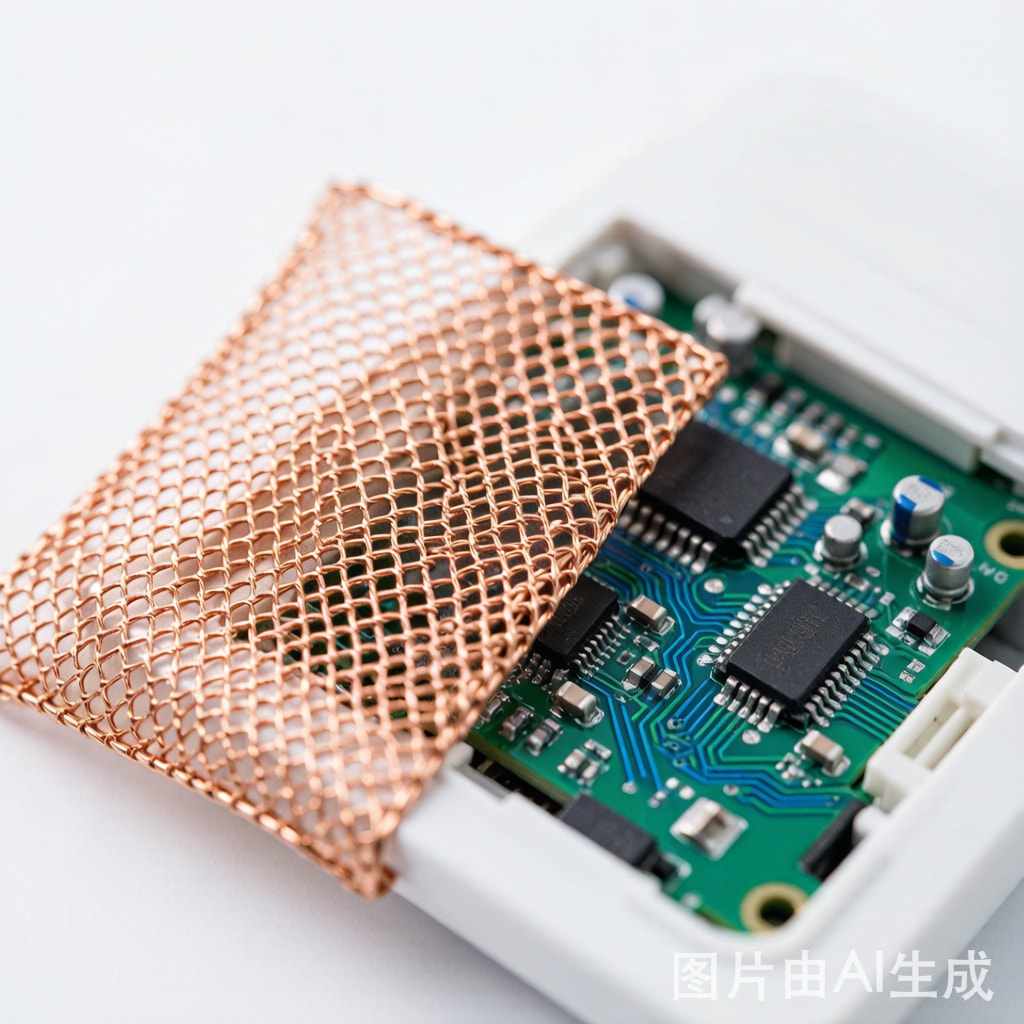
Copper woven mesh consists of interlaced copper wires forming a regular grid pattern. The mesh provides electromagnetic shielding through a combination of reflection and absorption. When an incident electromagnetic wave encounters the conductive mesh, the copper surface induces eddy currents that reflect the majority of the wave energy. The remaining energy is dissipated as heat within the copper due to the material’s finite resistivity.
The shielding effectiveness depends on the mesh opening size relative to the wavelength of the interfering signal. For medical devices, typical copper mesh specifications range from 100 to 400 mesh count per inch, with wire diameters from 0.03 mm to 0.15 mm. Finer meshes provide better shielding at higher frequencies but reduce optical transparency and airflow.
Shielding Effectiveness Across the Medical Frequency Spectrum
Medical electronics face interference across a broad spectrum. Diagnostic imaging equipment operates at radio frequencies, while implanted devices and neurostimulators are sensitive to low-frequency electric fields. Copper woven mesh can be engineered for each regime by adjusting the weave density and material thickness.
Frequency Range Comparison
| Frequency Range | Primary Medical Source | Recommended Mesh Count |
|---|---|---|
| 10 kHz – 1 MHz | Power line harmonics, MRI gradient | Coarse mesh + solid ground plane |
| 1 MHz – 100 MHz | AM/FM, medical telemetry | 100-200 mesh |
| 100 MHz – 6 GHz | Cellular, Wi-Fi, Bluetooth | 200-400 mesh |
Biocompatibility and Material Selection
For medical devices that contact patients or enter the body, material selection goes beyond electrical performance. Bare copper can oxidize and may cause tissue irritation in long-term implants. Common medical-grade copper mesh configurations include:
- Copper-nickel alloy mesh: Combines good shielding with improved corrosion resistance and reduced ion release.
- Silver-plated copper mesh: Provides antimicrobial properties and stable contact resistance for external medical devices.
- Gold-plated copper mesh: Used in high-reliability probe assemblies and surgical instruments where oxidation must be eliminated.
External medical devices such as ECG monitors, pulse oximeters, and ultrasound probes frequently use copper mesh laminated between polymer films. This construction provides shielding while maintaining flexibility and cleanability required for clinical use.
Integration and Grounding Best Practices
Shielding effectiveness is only as good as the grounding. Copper mesh must make low-impedance electrical contact with the device ground plane at multiple points around the perimeter. For removable covers, conductive gaskets or fingerstock establish the ground path. For flexible cables, the mesh should extend to the co
ector shell and be bonded to the shield ground.
Designers must also avoid shielding apertures that exceed the wavelength of the threat. Seams, ventilation holes, and display windows should be covered with mesh or conductive transparent coatings. The goal is to create a Faraday cage with no significant gaps larger than one-tenth of the wavelength at the highest frequency of concern.
Conclusion
Copper woven mesh EMI shielding provides medical electronics designers with a versatile tool for managing electromagnetic interference across diagnostic, therapeutic, and patient monitoring applications. By selecting the appropriate mesh count, material finish, and grounding strategy, engineers can meet stringent medical EMC requirements while preserving device functionality, safety, and patient comfort. As medical devices become more co
ected and wireless-enabled, robust copper mesh shielding will remain essential for reliable operation in clinical environments.