Introduction
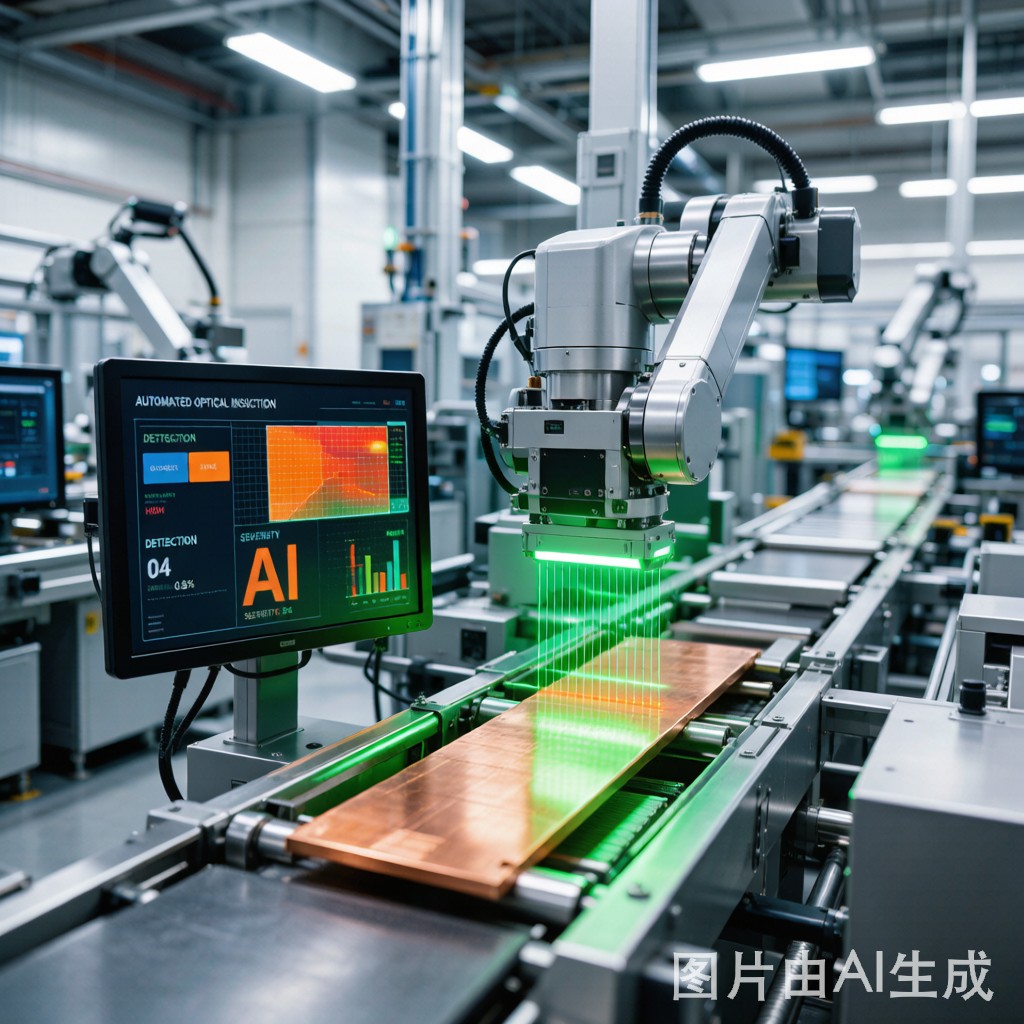
Quality assurance in copper strip manufacturing has traditionally relied on manual visual inspection, a method that is slow, inconsistent, and prone to operator fatigue. As SMT component demands grow and tolerances tighten, manufacturers are adopting automated optical inspection (AOI) systems enhanced with artificial intelligence to detect surface defects on copper strip at production speed. This article explores the technology, defect types, and implementation strategies for smart factory AOI in copper strip production.
Common Copper Strip Surface Defects
Copper strip defects can originate from casting, rolling, slitting, plating, or handling. The most common defects targeted by AOI include:
- Scratches: Linear abrasions caused by contact with rollers, guides, or tooling. Deep scratches can compromise plating adhesion and create stress concentration points.
- Dents and pits: Localized depressions from mechanical impact or foreign particles. Pits in plated strip can expose the base copper and accelerate corrosion.
- Oxidation and discoloration: Tarnish, rainbow patterns, or dark spots indicating unacceptable oxide thickness. Particularly critical for solderability-critical applications.
- Stains and residues: Oil, lubricant, or cleaning agent residues that interfere with plating or solder wetting.
- Roll marks and inclusion: Periodic impressions from damaged rolls or embedded particles from the casting process.
- Edge burrs and cracks: Mechanical damage at the strip edge from slitting or shearing, which can cause handling injuries and plating defects.
AOI System Architecture
A typical copper strip AOI system integrates several components:
- Line-scan cameras: High-resolution cameras (typically 2-25 µm/pixel) capture continuous images as the strip moves through the inspection station. Line-scan cameras are preferred over area cameras for continuous web inspection.
- Lighting: Specialized lighting is essential for detecting subtle defects. Common configurations include bright-field coaxial illumination, dark-field low-angle illumination, and diffuse dome lighting. Multi-angle LED arrays can highlight scratches and dents differently to improve classification.
- Transport mechanism: The strip must be tensioned and guided to maintain flatness and consistent speed during imaging. Encoders synchronize image capture with strip position.
- Image processing software: Traditional rule-based algorithms detect anomalies by comparing each image to a reference template. Modern systems use deep learning convolutional neural networks (CNNs) trained on thousands of defect examples to classify defect types automatically.
AI-Powered Defect Classification
Deep learning has transformed AOI from simple pass/fail detection to sophisticated defect classification. A CNN trained on labeled copper strip images can distinguish between scratch types, severity levels, and defect locations with accuracy exceeding human inspectors. Key benefits include:
- Reduced false positives: Traditional systems often flag acceptable surface variations as defects. AI learns to ignore acceptable cosmetic variations and focus on functional defects.
- Consistent standards: Once trained, the AI applies the same criteria across all shifts, eliminating inspector-to-inspector variation.
- Adaptive learning: New defect types can be added to the training dataset, allowing the system to improve over time.
- Traceability: Every defect is logged with image, position, time, and classification, enabling root cause analysis and process improvement.
Implementation Best Practices
Successful AOI deployment requires attention to both technical and operational factors:
- Representative training data: The AI model must be trained on a balanced dataset that includes all expected defect types and normal surface variations. Underrepresented defects will be missed.
- Ground-truth labeling: Experienced quality engineers must label images accurately. Inconsistent labels degrade model performance.
- Lighting optimization: Defect detection capability is often limited by lighting, not camera resolution. Spend time optimizing illumination angles and wavelengths.
- Integration with MES: Co
ect the AOI system to the manufacturing execution system to automatically flag reels, trigger rework, and update quality metrics.
- Periodic revalidation: Revalidate the model when materials, processes, or specifications change to maintain detection accuracy.
Conclusion
Smart factory AOI with AI-based defect classification is becoming essential for copper strip manufacturers serving the SMT electronics market. By automating the detection of scratches, dents, oxidation, and other surface anomalies, manufacturers can improve quality consistency, reduce scrap, and increase throughput. The key to success lies in careful lighting design, high-quality training data, and integration with broader manufacturing systems. As AI models continue to improve, AOI systems will move beyond detection to predictive quality control, identifying process drift before defective strip is produced.