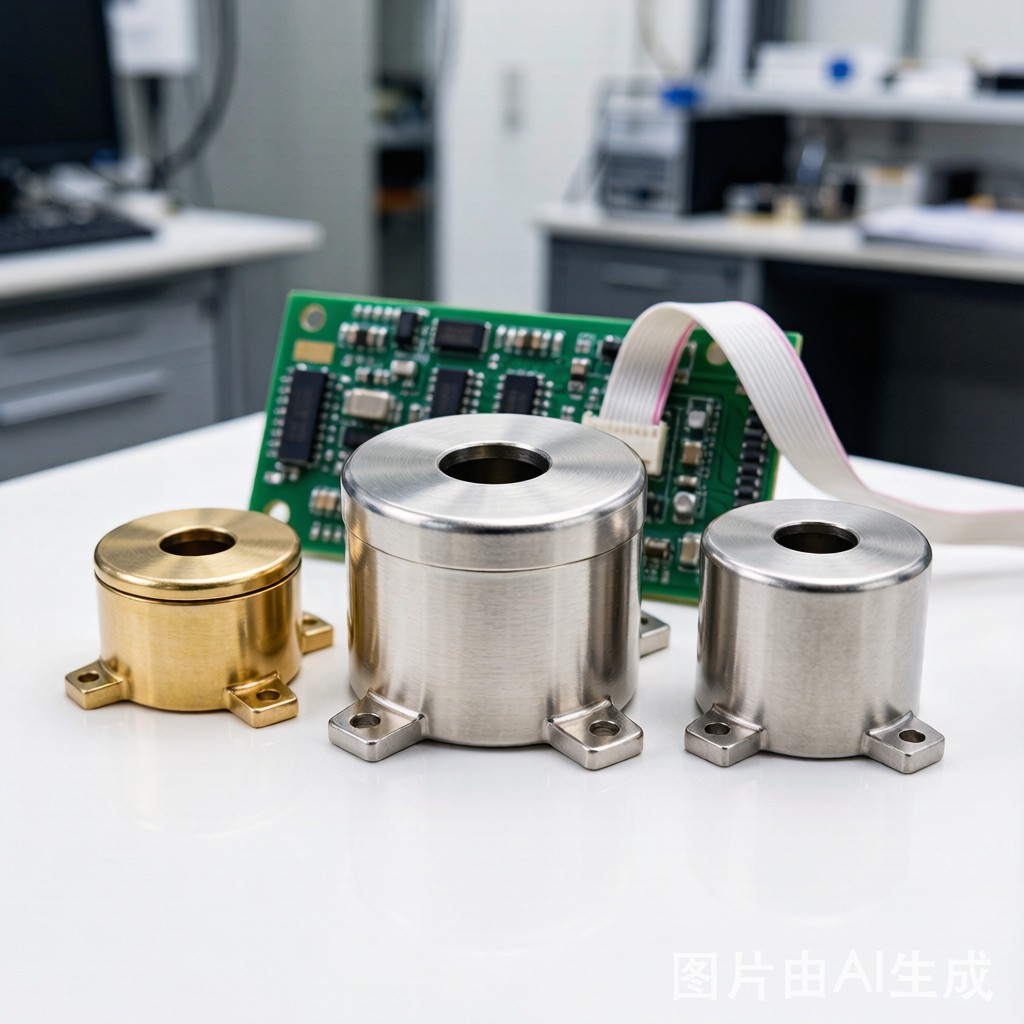
The humble EMI shielding can, soldered to a PCB around sensitive or noisy circuitry, is the most widely deployed electromagnetic compatibility solution in consumer electronics. Its material — typically a copper alloy stamped into a five-sided box — determines its shielding effectiveness, solderability, corrosion resistance, mechanical fit on the PCB, and cost. Three families of materials compete for the shielding can market: nickel-silver (C7521), brass (C2680), and stainless steel (SUS304). Each has a distinct performance profile that makes it the optimal choice for specific applications. This article compares them on the five criteria that matter most to design engineers.
C7521 Nickel-Silver: The Standard Choice
C7521 nickel-silver (also called “German silver,” though it contains no silver) is a copper-nickel-zinc alloy: Cu 62–66%, Ni 16.5–19.5%, Zn balance. It is the most widely used EMI shielding can material in consumer electronics because it offers an excellent balance of properties:
Shielding effectiveness: The combination of copper (high conductivity) and nickel (high magnetic permeability) gives C7521 good shielding across a broad frequency range. At 100 MHz (FM radio band), a 0.2 mm thick C7521 can provides 60–70 dB of shielding effectiveness. At 1 GHz, shielding effectiveness drops to 45–55 dB, which is still adequate for most consumer and industrial applications. At 5 GHz (Wi-Fi 5/6, sub-6 GHz 5G), shielding effectiveness is 30–40 dB — marginal for some applications but acceptable when combined with board-level shielding techniques.
Formability: C7521 in the a
ealed (soft) condition has excellent formability with elongation 35–40%. It can be deep-drawn into complex shapes with 90° corners, flanges for surface-mount soldering, and even embossed features for part-number marking. Progressive die stamping is the dominant fabrication method; a single stamping line can produce 100–300 shielding cans per minute.
Solderability: C7521 solders well to standard SAC305 and SnPb solders. The alloy does not require a pre-plated finish for solderability — the bare nickel-silver surface wets adequately with standard no-clean flux — but most shielding can manufacturers apply a bright tin plating (3–5 μm matte tin) to improve solderability, provide a brighter appearance, and prevent tarnish during storage.
Corrosion resistance: The nickel content provides good resistance to atmospheric corrosion. C7521 will tarnish over time in humid environments (forming a thin, dark oxide), but the tarnish layer is non-conductive and does not affect shielding performance. For tropical storage (Southeast Asia, 30°C/80% RH), tin plating is recommended to maintain appearance and solderability.
Cost: C7521 strip (0.2 mm thickness, 200 mm width) is approximately $9–12 per kg in the Southeast Asian market (2026 pricing). For a typical shielding can at 40 × 30 × 5 mm, the material cost is $0.02–0.04 per piece.
C2680 Brass: The Low-Cost Alternative
C2680 brass (Cu 64–68.5%, Zn balance, also called “yellow brass” or “cartridge brass”) is the entry-level shielding can material for cost-sensitive applications:
Shielding effectiveness: Brass is an excellent electrical conductor (IACS conductivity 26–28% for C2680 vs. 6–8% for C7521), which gives it better shielding effectiveness at frequencies below 100 MHz — 65–75 dB at 100 MHz, slightly better than C7521. However, brass has negligible magnetic permeability (approximately 1.0, like all non-ferromagnetic materials), so its shielding mechanism is purely reflective, relying on electrical conductivity to reflect electromagnetic waves. At frequencies above 1 GHz, where absorption becomes more important than reflection, C7521’s nickel content gives it an advantage.
Formability: C2680 has excellent formability in the a
ealed condition (elongation 50–55%, higher than C7521). The brass can be drawn into deeper, more complex shapes without cracking, making it ideal for tall shielding cans and cans with aggressive flange angles. However, C2680 work-hardens more rapidly than C7521 — after 60% cold reduction, brass hardness increases to Hv 180–200, while C7521 reaches Hv 160–170. This means that stamped brass cans may require intermediate a
ealing for complex progressive die designs with more than 4–5 drawing stages, while C7521 can tolerate more drawing stages before intermediate a
ealing is needed.
Solderability: Bare brass solders acceptably with active (RA or RMA) fluxes, but the solderability degrades more rapidly during storage than C7521. Brass forms a thicker surface oxide than nickel-silver, and the oxide film is harder for flux to penetrate. Tin plating (3–5 μm) is strongly recommended for brass shielding cans to ensure consistent solderability, especially for cans that will be stored for more than 3 months before assembly.
Corrosion resistance: Brass has poorer corrosion resistance than C7521, particularly in environments with sulfur compounds (industrial atmospheres, rubber gaskets) or ammonia (cleaning agents). Dezincification — the selective leaching of zinc from the brass, leaving a porous copper structure — is a known failure mode in warm, humid environments. For outdoor, marine, and industrial applications, brass shielding cans require tin or nickel plating for corrosion protection.
Cost: C2680 strip (0.2 mm, 200 mm width) is approximately $6–8 per kg, 30–40% less than C7521. The material cost per shielding can is $0.01–0.03. The cost advantage is significant for high-volume consumer products producing 1–10 million units per year.
Stainless Steel (SUS304): The High-Performance Option
SUS304 stainless steel (Fe balance, Cr 18–20%, Ni 8–10.5%) is used for demanding applications where durability, high-temperature performance, or magnetic shielding is required:
Shielding effectiveness: This is the critical difference — and misunderstanding — about stainless steel shielding. SUS304 has poor electrical conductivity (IACS ~2.4%, 50× worse than brass) and is essentially a poor reflector of electromagnetic waves. Its shielding mechanism is primarily magnetic absorption, not reflective, due to its high magnetic permeability (μr ~100–500 in the fully a
ealed condition, μr ~2–10 after cold working that induces martensitic transformation). This means:
- Below 1 MHz: SUS304 provides excellent magnetic field shielding (40–60 dB) through its permeability. It is the material of choice for shielding sensitive analog circuits from 50/60 Hz power-line magnetic fields.
- 100 MHz to 1 GHz: SUS304’s shielding effectiveness is 20–40 dB, significantly worse than C7521 or brass, because the reflective mechanism (driven by conductivity) is weak. Stainless steel shielding cans are rarely used at these frequencies unless magnetic shielding at low frequencies is also required.
- Above 1 GHz: The absorption mechanism becomes significant again as skin depth decreases, and SUS304 can provide 40–50 dB at 10 GHz, comparable to C7521.
Formability: SUS304 has good formability (elongation 50–60% in a
ealed condition) but requires higher press forces (yield strength ~215 MPa vs. ~120 MPa for a
ealed C7521) and more aggressive tooling. Stainless steel work-hardens rapidly — after 20% cold reduction, hardness doubles to Hv 400+, which limits progressive die designs to 2–3 drawing stages before intermediate a
ealing is required. Tool life is 30–50% shorter than for brass or nickel-silver tooling due to the higher wear rate of stainless steel on tool steel.
Solderability: SUS304 does not solder with standard electronic solders (SAC305 or SnPb). Stainless steel’s chromium oxide surface layer is chemically inert and ca
ot be wetted by solder. For applications requiring soldered shielding cans, SUS304 must be pre-plated with nickel (3–5 μm) and then tin (3–5 μm) or gold flash (0.05–0.10 μm). The plating adds $0.05–0.15 per can and introduces adhesion reliability concerns — the plated layer can delaminate from the stainless steel under thermal cycling. For this reason, stainless steel shielding cans are more commonly mechanically attached (clip-on, spring-contact, or screw-mounted) rather than soldered.
Corrosion resistance: SUS304 has excellent corrosion resistance — the best of the three materials — and requires no plating for corrosion protection in indoor environments. For outdoor and marine environments, SUS316 (with 2–3% Mo added) provides even better resistance to chloride pitting.
Cost: SUS304 strip (0.2 mm, 200 mm width) is approximately $5–7 per kg — similar to brass in raw material cost. However, the higher stamping cost (more a
ealing stages, shorter tool life), the plating cost for solderable cans, and the lower stamping throughput (fewer strokes per minute to manage work-hardening) raise the total fabricated cost to 2–3× that of C7521 cans.
Comprehensive Comparison Table
| Property | C7521 Nickel-Silver | C2680 Brass | SUS304 Stainless Steel |
|---|---|---|---|
| Alloy composition | Cu 62–66%, Ni 16.5–19.5%, Zn bal | Cu 64–68.5%, Zn bal | Fe bal, Cr 18–20%, Ni 8–10.5% |
| Electrical conductivity (% IACS) | 6–8 | 26–28 | 2.4 |
| Magnetic permeability (μr) | 1.0 (non-magnetic) | 1.0 (non-magnetic) | 100–500 (a
ealed) |
| Shielding at 100 MHz | 60–70 dB | 65–75 dB | 25–35 dB |
| Shielding at 1 GHz | 45–55 dB | 40–50 dB | 20–30 dB |
| Shielding at 10 GHz | 30–40 dB | 30–40 dB | 40–50 dB |
| Magnetic shielding (< 100 kHz) | Negligible | Negligible | 40–60 dB |
| Formability (elongation %) | 35–40 | 50–55 | 50–60 |
| Yield strength (MPa, a
ealed) |
110–150 | 100–140 | 205–250 |
| Solderability (bare) | Good | Fair (tin plate recommended) | None (plating required) |
| Thermal conductivity (W/m·K) | 33–37 | 116–120 | 16 |
| Corrosion resistance (indoor) | Good | Fair | Excellent |
| Material cost (USD/kg, SEA 2026) | $9–12 | $6–8 | $5–7 |
| Stamping cost | Medium | Low | High (2–3×) |
| Best application | General consumer, IoT, industrial | Cost-sensitive, short-life products | Military, high-temp, magnetic |
Application Selection Guide
Choose C7521 nickel-silver when:
- Shielding is required across a broad frequency range (100 MHz to 6 GHz) — most consumer, IoT, and industrial applications fall here.
- Solderability without plating is desired, or tin plating is acceptable for appearance and storage performance.
- Moderate formability and stamping cost are acceptable.
- Components are shielded with standard SMT soldering processes at 235–245°C.
This covers approximately 70–80% of all EMI shielding can applications in the electronics industry.
Choose C2680 brass when:
- Cost is the dominant driver (consumer disposables, single-use electronics, toy electronics).
- Shielding above 100 MHz is the primary concern, and frequencies below 100 MHz are not significant.
- Solderability can be ensured through tin plating (adds $0.01–0.02 per can).
- Product lifetime is short (< 3 years) so corrosion is not a reliability concern.
Choose SUS304 stainless steel when:
- Magnetic field shielding at low frequencies (< 1 MHz) is required — audio circuits, precision analog, sensor front-ends.
- High-temperature operation is required (> 150°C ambient or > 260°C during assembly).
- Mechanical durability is paramount — military, aerospace, automotive under-hood applications where solder joints may fatigue and shielding cans need to survive physical shock.
- Corrosion resistance in outdoor or marine environments is a requirement.
- Clip-on or screw-mounted attachment (non-soldered) is the preferred mechanical design.
The EMI shielding can market in Southeast Asia is dominated by C7521 for good reason: its balance of shielding, formability, solderability, and cost is unmatched for the broadest range of electronic products. Brass is the value alternative, stainless steel the specialist. The choice depends on the specific EMC requirements of the product, the mechanical design of the shielding enclosure, and the assembly process available.