Introduction
EMI fingerstock gaskets are the workhorses of enclosure-level electromagnetic shielding, providing reliable electrical contact between mating surfaces across thousands of compression cycles. The two dominant material choices — beryllium copper (BeCu) and stainless steel — each offer distinct advantages, and the wrong selection can compromise shielding effectiveness or drive u
ecessary cost. This guide breaks down the technical differences to inform your next shielding design decision.
Material Properties at a Glance
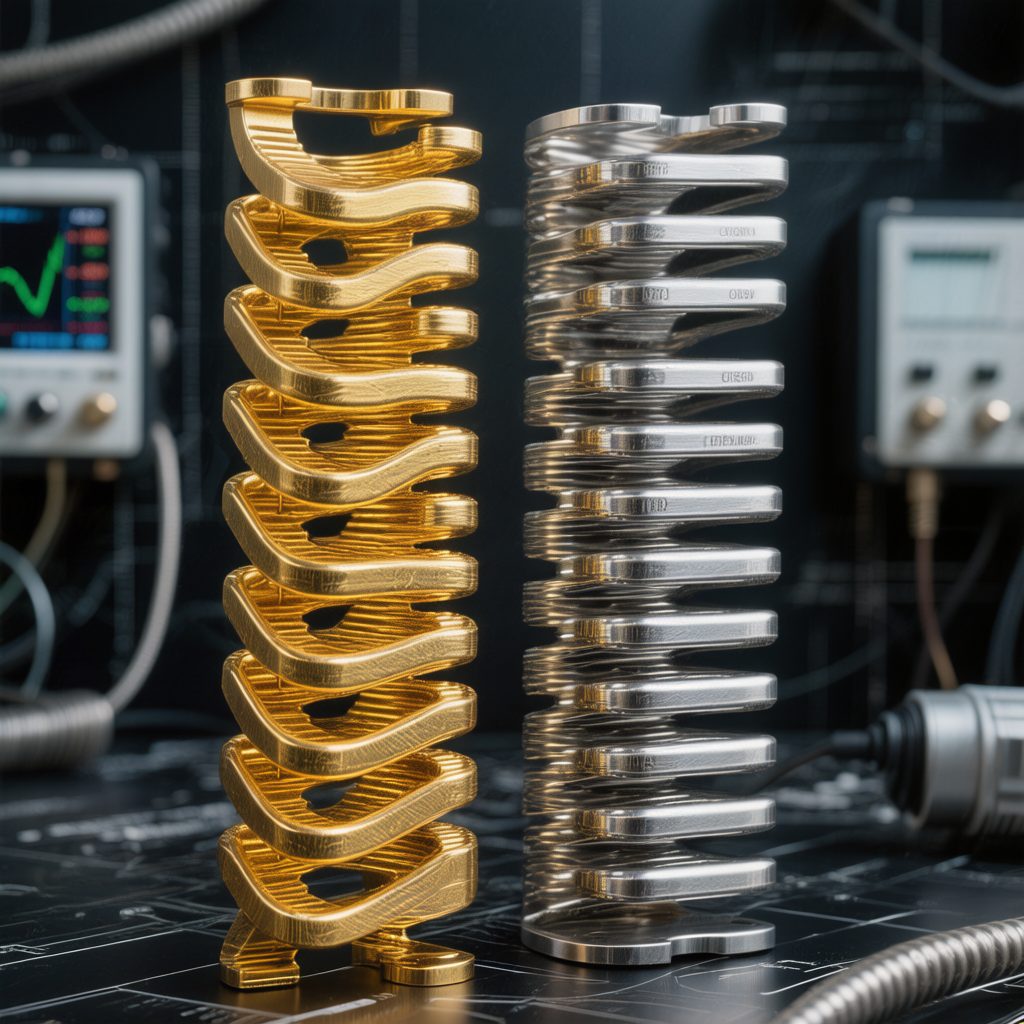
Beryllium copper (typically C17200 alloy) contains 1.8-2.0% beryllium and delivers an exceptional combination of high strength, excellent electrical conductivity, and fatigue resistance. After age hardening, BeCu achieves tensile strength of 1,200-1,480 MPa with electrical conductivity around 22% IACS (International A
ealed Copper Standard).
Stainless steel fingerstock, typically fabricated from 301 or 302 stainless, provides tensile strength of 1,200-1,450 MPa but with significantly lower conductivity — approximately 2-3% IACS. However, stainless steel offers superior corrosion resistance and is inherently non-magnetic in its austenitic form, making it suitable for applications sensitive to magnetic permeability.
Shielding Effectiveness Comparison
Shielding effectiveness (SE) of fingerstock gaskets depends on both the material conductivity and the quality of electrical contact at each finger tip. BeCu’s higher conductivity (22% IACS vs 2-3% IACS for stainless) translates to better shielding at frequencies above 100 MHz where skin effect dominates. At these frequencies, current flows primarily on the conductor surface, and the lower resistivity of BeCu reduces the transfer impedance across the gasket interface.
In practice, a well-designed BeCu fingerstock gasket typically achieves 80-100 dB of shielding effectiveness from 100 MHz to 1 GHz, while stainless steel gaskets deliver 60-80 dB in the same frequency range. For commercial electronics requiring FCC Part 15 compliance, either material is usually sufficient. For military or aerospace applications requiring MIL-STD-461 levels, BeCu is strongly preferred.
Spring Properties and Compression Life
Beryllium copper’s superior fatigue strength is its defining advantage. BeCu fingerstock maintains consistent contact force after 100,000+ compression cycles with minimal compression set. This makes it ideal for doors, access panels, and removable enclosures where the gasket undergoes repeated mating cycles.
Stainless steel fingerstock, while exhibiting higher initial spring force for a given geometry, experiences more pronounced stress relaxation over time, particularly at elevated temperatures. For static applications — enclosures that are assembled once and rarely opened — this difference is negligible. For dynamic applications with frequent access, BeCu’s fatigue resistance justifies its cost premium.
Corrosion Resistance and Plating Options
Stainless steel inherently resists corrosion and can often be used unplated in indoor environments. However, for galvanic compatibility with aluminum enclosure surfaces, stainless steel fingerstock is frequently plated with tin, nickel, or a tin-lead finish to prevent dissimilar metal corrosion.
BeCu fingerstock requires plating for corrosion protection — bare BeCu oxidizes rapidly and the oxide layer compromises contact resistance. Common finishes include bright tin (most economical), nickel (for high-temperature applications), and gold over nickel (for aerospace and high-reliability applications). The plating not only protects the base material but also determines the galvanic compatibility with the mating surface.
Cost and Application Guidance
BeCu fingerstock costs approximately 3-5× more than equivalent stainless steel gaskets, driven by raw material cost and the mandatory plating process. The decision framework should consider:
- Choose BeCu when shielding above 80 dB is required, compression cycles exceed 10,000, or low contact resistance is critical for high-frequency performance
- Choose stainless steel for cost-sensitive commercial products, static enclosures, applications requiring magnetic transparency, or environments where unplated corrosion resistance is valuable
Conclusion
Beryllium copper and stainless steel each have well-defined roles in EMI shielding design. BeCu delivers superior conductivity, fatigue life, and shielding effectiveness for demanding applications. Stainless steel offers cost efficiency and inherent corrosion resistance for commercial and static applications. Understanding these tradeoffs enables informed material selection that balances shielding performance, mechanical durability, and project budget.