Glazing Is the Smoking Booth’s Public Face — and Its Weak Point
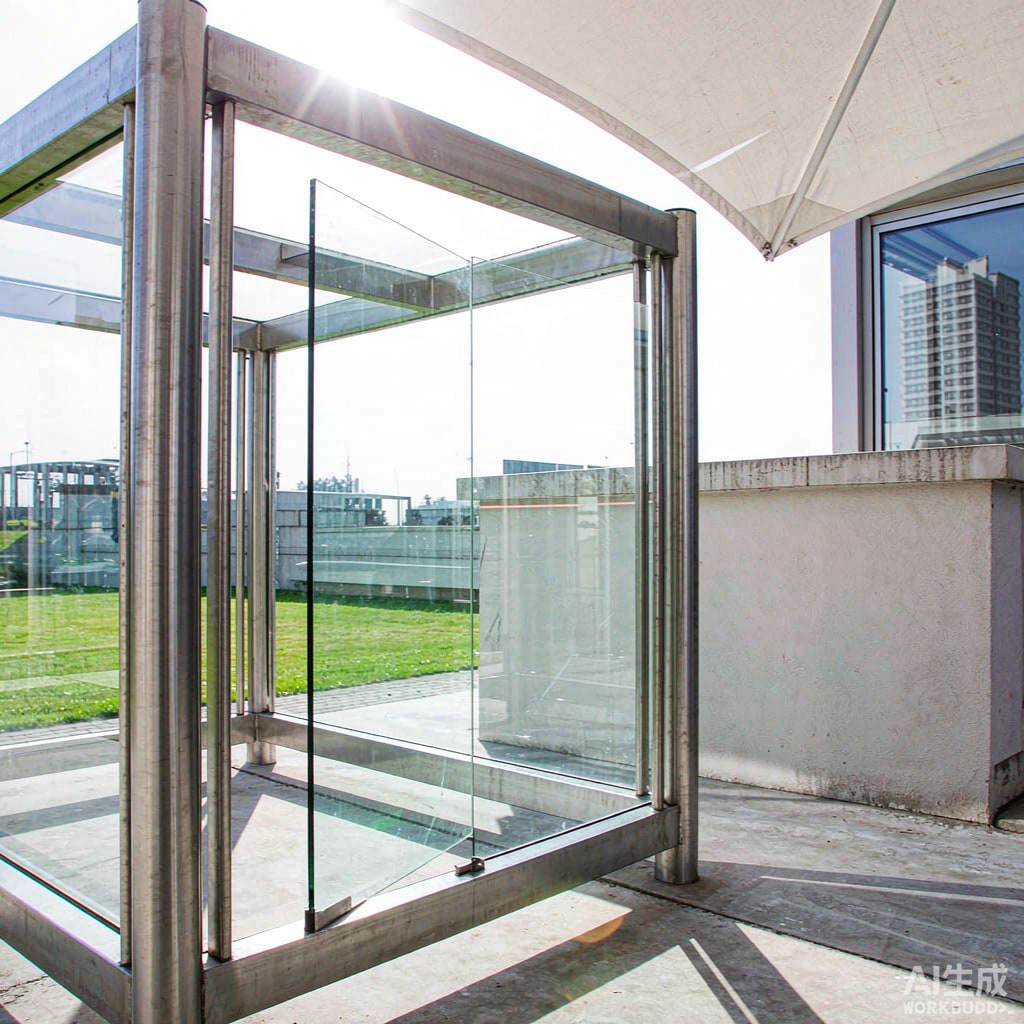
Visitors judge a smoking booth by its glass: how clean, how clear, how solid it feels. Operationally, the glazing must survive impacts, thermal stress from lighting and sun, constant cleaning with aggressive chemicals, and — in the worst case — contain smoke and resist fire long enough for evacuation. The three practical glazing options are tempered glass, laminated glass, and polycarbonate sheet. Each wins on different criteria, and the right answer depends on the booth’s location, user profile, and maintenance budget.
Tempered Glass: The Workhorse Default
Toughened safety glass, typically 8–12 mm on booth panels, is the default for good reasons. It withstands daily cleaning with alcohol- and ammonia-based agents without any surface degradation, resists scratching that polycarbonate accumulates, and remains optically clear for the booth’s life. Thermal performance is strong: tempered glass handles the temperature gradients created by internal LED lighting and sun exposure better than a
ealed glass. When it does break, it fractures into small blunt granules — required behavior for safety glazing under most building codes.
The weaknesses are impact and post-breakage containment. Tempered glass can spontaneously shatter from nickel sulfide inclusions (rare but real, mitigated by heat-soak testing), and once broken, the panel becomes a hole — the booth loses its smoke containment and weather seal until replacement. Vandalism in unsupervised public locations is the main driver to look beyond tempered glass.
Laminated Glass: Containment and Post-Breakage Strength
Laminated glass bonds two or more glass lites with a PVB or ionoplast interlayer. Break a laminated panel and the fragments stay adhered to the interlayer — the opening remains covered, smoke containment is partially preserved, and no glass falls into the booth or onto passers-by. For overhead glazing, balustrade-adjacent panels, and booths in public transit hubs where panel replacement takes weeks, laminated construction (often 6+1.52+6 mm) is the responsible choice. Ionoplast interlayers (SentryGlas-type) add meaningful stiffness, allowing slimmer frames and better edge stability in humid, outdoor conditions where standard PVB can cloud at exposed edges.
Laminated panels cost 40–80% more than tempered equivalents and are heavier; frames and hinges must be specified accordingly. Edge sealing quality matters outdoors — wicking moisture along unsealed edges causes interlayer whitening over years. Specify polished edges with a compatible edge sealant for exterior booths.
Polycarbonate: Impact Champion, Maintenance Challenge
Solid polycarbonate sheet (4–8 mm) absorbs impacts that would destroy any glass — bottles, kicks, even deliberate vandalism — which is why it dominates in correctional facilities and transit shelters. But it demands a maintenance plan: the surface is soft, scratching within months under casual wiping with dirty cloths is nearly guaranteed, and it yellows and embrittles under UV unless a high-quality UV-blocking hard coat is specified (look for a warranty-backed abrasion/UV coating, not bare UV-stabilized sheet). Polycarbonate also has a lower continuous service temperature and, critically for a smoking environment, poorer fire performance — standard grades melt, drip, and ignite where glass does not. Fire codes in many jurisdictions restrict or prohibit combustible glazing in enclosed smoking structures; always verify locally before choosing polycarbonate for a walk-in booth interior.
Where polycarbonate earns its place: the lower panels of a booth (kick zone) as a laminated-glass-polycarbonate hybrid or as sacrificial liners, and in temporary or relocatable booths where shatterproofing outweighs optics.
Practical Selection Framework
For a typical supervised commercial or workplace booth, the emerging best practice is a hybrid specification: tempered glass for most panels, laminated glass for the door (the highest-use, highest-stress element) and any panel within reach of the public from outside, and hard-coated polycarbonate kick panels up to roughly 300 mm from the floor. Add a safety film on interior faces of tempered panels in high-vandalism locations as a middle path between tempered and laminated costs.
Whatever the choice, three details determine long-term satisfaction more than the material itself. First, hardware quality: stainless steel (316 outdoors, 304 indoors) patch fittings and pivots; failing hinges slam panels and cause more glass breakage than impacts. Second, cleaning access and signage: provide janitorial guidance — no abrasive pads, no dry-wiping polycarbonate, ammonia-free agents on coated sheet. Third, spare panel strategy: for multi-booth sites, holding one spare tempered panel per size converts a multi-week replacement lead time into a same-day fix. Glazing is a one-time decision with a decade of consequences; a small premium for laminated protection at the right panels usually pays for itself the first time something breaks.