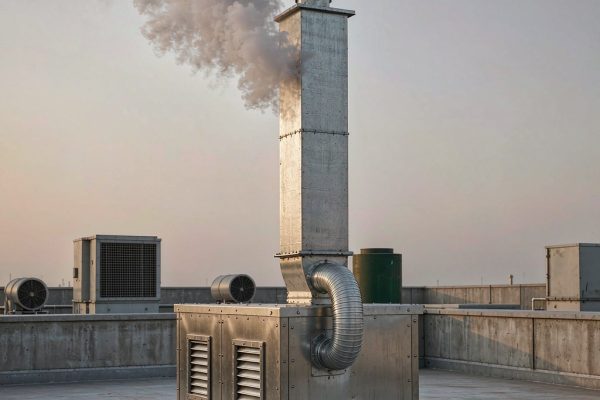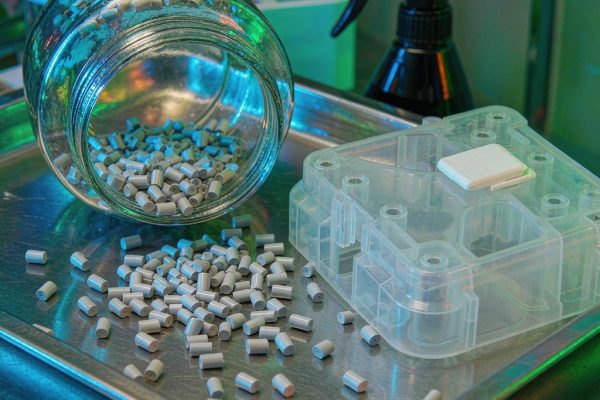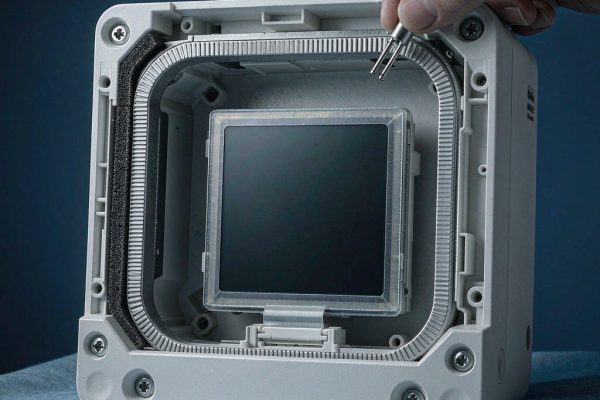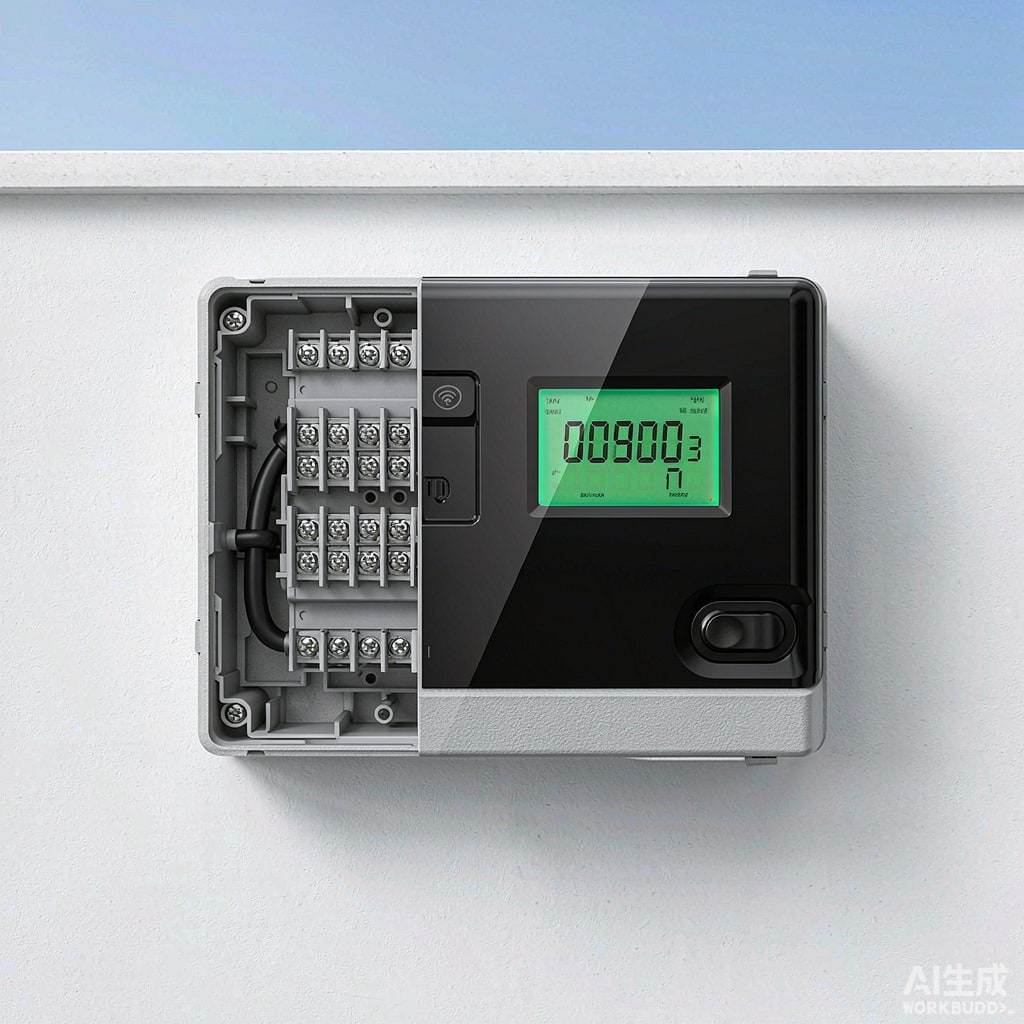
Smart meters live outdoors or in dusty meter rooms for 15+ years, get hit by sun, temperature swings, and occasional overvoltage events on live terminals. Their enclosures demand a rare combination: outdoor weatherability, high tracking resistance, flame retardancy, and stable dimensions over a wide temperature range. PC/ABS alloy pellets have become the mainstream answer, but not all PC/ABS grades survive meter duty — three properties separate the wi
ers.
Why PC/ABS for Meter Enclosures
Polycarbonate brings impact strength, a high heat-deflection temperature (120–135°C unfilled), and good dielectric properties. ABS improves flow for thin-wall molding at 1.5–2.5 mm, cuts cost, and improves notch toughness at low temperature. The blend ratio typically runs 70/30 to 50/50 PC/ABS. Compared with pure PC, the alloy molds faster and resists stress cracking around metal inserts; compared with pure ABS, it survives 100°C+ service and meets tougher flammability classes.
Property 1: UV and Weathering Stability
Unstabilized ABS content degrades under UV — the butadiene rubber phase oxidizes, causing chalking and yellowing within 1–3 years of outdoor exposure. For meter enclosures:
- Specify UV-stabilized grades with HALS (hindered amine light stabilizers) plus a UV absorber package. Demand xenon arc weathering data (ISO 4892-2, 3000 h) with ΔE color shift below 3 and impact retention above 70%.
- Carbon black masterbatch (2%) provides the best UV shielding where black housings are acceptable — most meter bodies are black or dark gray for this reason.
- Where the meter sits behind glass or in shaded meter cabinets, standard UV-stabilized grades suffice; check the installation specification before paying for outdoor-grade material.
Property 2: Tracking Resistance and CTI
Tracking is the carbonized conductive path that forms on a plastic surface between live terminals under contamination and humidity. Meters live with 230–480 V across terminal blocks, so enclosure material near live parts must resist tracking. The metric is Comparative Tracking Index (CTI) per IEC 60112:
- Standard PC/ABS grades: CTI 200–300 V (PLC 3–2). Marginal for meter terminals.
- High-CTI grades (CTI 400–600 V, PLC 0–1): achieved with phosphorus-based flame retardant systems and optimized filler surfaces. These are the meter-grade materials.
- Verify with the complete assembly under IEC 62052-31 and IEC 62053-21 meter standards, which impose specific creepage and clearance distances that interact with material CTI.
Practical note: CTI drops on mold-flow-textured surfaces and where mold release agents or silicone sprays contaminate the part. Ban mold release sprays in molding shops producing meter enclosures — process control is part of the material spec.
Property 3: Flammability
Meter standards and most utilities require UL94 V-0 at 1.5–2.0 mm wall thickness. Halogen-free phosphorus FR systems dominate new designs (RoHS and WEEE pressure), delivering V-0 at 1.5 mm with glow-wire performance (IEC 60695-2-12, GWFI 960°C) that terminal-area legislation increasingly demands. Confirm both ratings on the actual wall thickness of the part, not on the datasheet’s best-case 3.2 mm — V-0 at 3.2 mm says nothing about a 1.8 mm enclosure.
Molding Practice for Meter Enclosures
- Drying: PC/ABS absorbs moisture; dry 3–4 h at 100–110°C to below 0.02% moisture. Wet material gives splay and, worse, molecular weight loss that cuts impact strength silently.
- Melt temperature: 240–270°C depending on grade. Above 290°C, phosphorus FR systems begin degrading and discoloring.
- Mold temperature: 60–80°C for surface finish and lower residual stress around brass terminal inserts.
- Insert molding: Metal terminals embed with high shrink mismatch; preheat inserts and design generous boss walls to avoid cracking under thermal cycling.
- Regression check: Impact and melt-flow tests on each lot; recycled-content contamination wrecks UV and tracking performance invisibly.
Qualification Checklist for Meter Enclosure Material
- CTI ≥ 400 V (IEC 60112) on molded, textured plaques.
- UL94 V-0 at production wall thickness; GWFI ≥ 960°C.
- Xenon arc 3000 h: ΔE ≤ 3, impact retention ≥ 70%.
- HDT ≥ 120°C at 1.8 MPa for reflow-free operation near warm terminals.
- Dimensional stability: shrinkage 0.5–0.7%, low post-mold drift.
- Full RoHS/REACH declarations including FR package.
PC/ABS alloys earn their meter-enclosure role when the grade is chosen for CTI and verified at production wall thickness, UV package matches the installation environment, and the molding shop holds moisture and temperature discipline. Skipping any one of these shows up years later as a yellowed, cracked, or tracked enclosure — expensive lessons that good upfront specification prevents.