Polyvinyl chloride (PVC) remains the most widely used insulation and jacketing material for building wire, appliance cord, automotive harness, and internal electronics wiring. The reason is formulation flexibility: a PVC compound can be tuned from rigid to jelly-soft, flame-retarded, oil-resistant, or cold-flexible — all from the same base resin delivered as pellets. Understanding what is inside a PVC pellet, and how to specify it, keeps cable programs on budget and compliant.
What Is in a PVC Compound Pellet
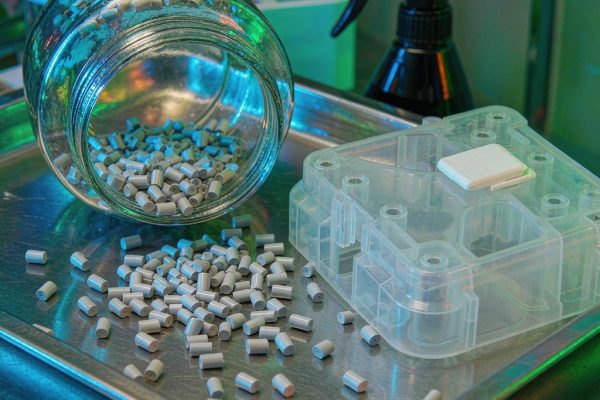
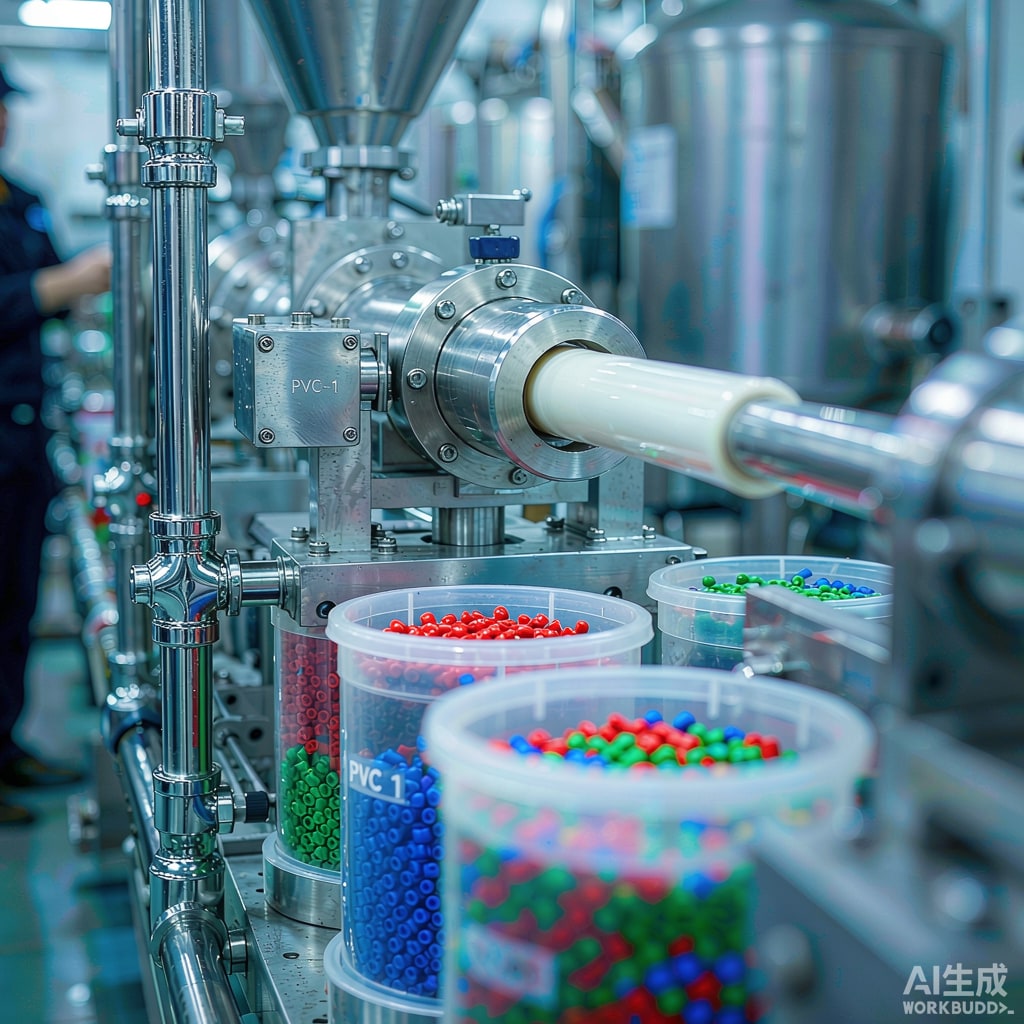
Unlike commodity polyolefins, PVC pellets are compounds: base resin plus a tailored package of additives. The key ingredients:
- PVC resin (K-value 57–70): determines stiffness and processing; higher K-value means higher molecular weight and better mechanicals but harder extrusion
- Plasticizers: typically 20–50 phr (parts per hundred resin). Phthalate types (DINP, DIDP) for cost; citrates or DOTP for phthalate-restricted applications. Plasticizer level sets durometer — 90A compounds for hook-up wire, 75–80A for flexible cords
- Stabilizers: calcium-zinc systems are now standard for RoHS/REACH compliance, replacing lead-based stabilizers in virtually all export markets
- Fillers: calcium carbonate 10–40 phr for cost and dimensional stability; calcined clay for improved electricals
- Lubricants, pigments, and processing aids: control melt flow and surface finish
Temperature Ratings and Electrical Properties
PVC cable compounds are rated by continuous operating temperature: 60°C, 70°C, 90°C, and 105°C grades. The rating depends on plasticizer volatility and stabilizer package — a 105°C wire compound uses plasticizers with low volatility plus stabilizers validated for long-term heat aging (per UL 1581 and IEC 60228 aging protocols). Key electrical targets: volume resistivity above 10¹³ Ω·cm for insulation grades and dielectric strength above 20 kV/mm on 1 mm samples.
Note the distinction between insulation compounds (on the conductor, need high resistivity and dielectric strength) and jacketing compounds (outer sheath, emphasize abrasion, oil, and UV resistance — often slightly conductive carbon-black-loaded grades for static dissipation).
Flame Retardancy and Smoke
PVC is inherently self-extinguishing due to its chlorine content (LOI around 45). But plasticizers reduce this margin, so flame-retardant grades add antimony trioxide synergists or ATH (aluminum trihydrate). For plenum and transit applications where smoke and corrosive gas matter, specify low-smoke zero-halogen (LSZH) alternatives — PVC’s hydrogen chloride release during fire disqualifies it from some installations. For general appliance and building wire, PVC’s flame performance easily meets UL 758 and IEC 60227 VW-1 requirements at lower cost than any halogen-free system.
Extrusion Processing Guidelines
Drying and Temperature Profile
PVC pellets are non-hygroscopic and generally need no drying below 40°C storage humidity; however, condensation on cold pellets from winter warehouses causes surface defects — 2 hours at 60–70°C is a cheap insurance. Barrel profiles for 70°C-rated insulation runs typically start at 150°C at the feed zone and rise to 175–190°C at the die. Overheating above 200°C risks dehydrochlorination (HCl release), which degrades the compound and corrodes tooling — temperature control accuracy matters more with PVC than with polyolefins.
Tooling and Line Speed
Pressure tooling (conductor guided through a die under pressure) gives the best insulation concentricity and dielectric performance; tubing tooling (drawn down over the conductor) suits thin-wall automotive wire. Typical line speeds run 100–600 m/min for small-gauge hook-up wire. Crosshead die land length of 5–10× gap and well-polished tips prevent melt fracture on high-speed runs.
Compliance and Selection Checklist
When sourcing PVC compound pellets for electronics wiring, confirm: RoHS 2.0 and REACH SVHC declarations (especially phthalates under REACH A
ex XVII); UL or VDE file numbers for the specific compound grade if the finished wire carries certification; temperature rating matched to the application standard (UL 758 style vs IEC 60227); and whether your production environment needs low-tainting grades (for assemblies near co
ectors and optics, volatile plasticizer emissions can fog contacts). A supplier that provides datasheets with long-term aging data, not just initial properties, is worth a premium — insulation failure in the field almost always traces back to heat aging and plasticizer migration.