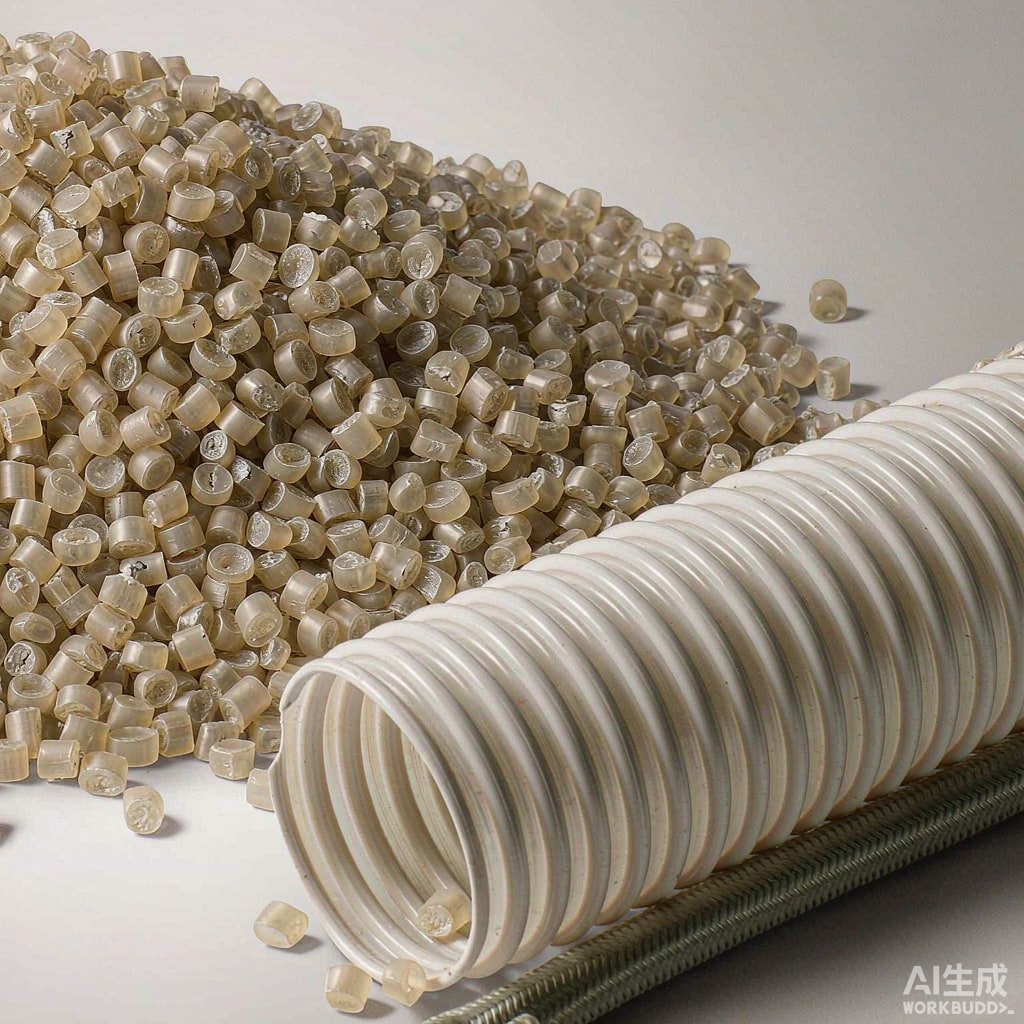
Flexible conduits and cable protection tubes may not be the most visible parts of an electronic product, but they are critical for routing power, signal, and sensor cables safely. PA12 nylon plastic pellets offer a rare combination of flexibility, low moisture absorption, chemical resistance, and UV stability, making them a preferred material for these applications in automotive, industrial, and outdoor electronics.
Why PA12 Instead of PA6 or PA66
Standard polyamides such as PA6 and PA66 absorb significantly more moisture than PA12. High moisture uptake plasticizes the material, reduces stiffness, and can cause dimensional changes that loosen fittings. PA12 absorbs roughly one-third the moisture of PA66, so conduits retain their mechanical properties and tight tolerances across humid tropical conditions.
PA12 also has a lower density and better low-temperature toughness than PA66. This matters for automotive under-hood and under-chassis routing, where cables must flex at -40°C without cracking.
Key Properties of PA12 Pellets
Flexibility and Fatigue Resistance
Unfilled PA12 has high elongation at break, typically above 200%. Plasticized grades can exceed 300% elongation, allowing convoluted tubing and tight bend radii. Repeated flexing without fatigue failure is essential for cable carriers and robotic cable management.
Chemical and Fuel Resistance
PA12 resists automotive fluids, including diesel, gasoline, brake fluid, and salt spray. This makes it suitable for engine-bay conduits, fuel-cell cabling, and agricultural machinery where exposure to oils and fertilizers is common.
UV and Weathering
Outdoor electronics, solar installations, and telecom cabinets require UV-stable conduits. Carbon-black or hindered-amine light stabilizer (HALS) grades of PA12 withstand years of sun exposure without embrittlement. Natural grades should not be used outdoors without stabilization.
Processing PA12 Pellets
PA12 processes at lower melt temperatures than PA66, typically 240–280°C, reducing thermal degradation risk. Pellets must be dried to below 0.1% moisture before extrusion or injection molding to avoid hydrolysis and surface defects. Extrusion lines for corrugated conduit require precise temperature control and calibrated vacuum sizing.
Applications in Electronics
Beyond simple cable protection, PA12 is used for flexible cable glands, strain-relief boots, spiral wrap, and split-loom tubing. Flame-retardant and halogen-free grades are available for rail, aerospace, and building installations where low smoke and toxicity are required.
Specification Checklist
When sourcing PA12 pellets for conduits, confirm grade, plasticizer content, tensile elongation, moisture absorption, UV stabilization, flame rating, and compliance with UL, RoHS, and REACH. Matching the right grade to the operating environment prevents premature cracking, fitting leakage, and costly field replacements.