Electric vehicles operate high-voltage systems that switch hundreds of amperes at frequencies from tens to hundreds of kilohertz. Inverters, onboard chargers (OBCs), and DC-DC converters generate electromagnetic noise that can interfere with battery management systems, CAN bus, and autonomous sensors. EMI shielding tapes and grounding gaskets provide a lightweight, flexible way to contain that noise and maintain reliable vehicle operation.
Sources of EMI in EV Power Electronics
SiC and GaN power devices switch faster than traditional IGBTs, producing sharp voltage and current transitions with rich high-frequency content. These transients couple onto cables, enclosure panels, and cooling hardware. Without adequate shielding, conducted and radiated emissions can exceed CISPR 25 limits and cause functional failures.
Enclosure seams, co
ector cutouts, and cooling passages become unintended ante
as. A continuous low-impedance ground path around every seam is the most reliable way to prevent leakage.
EMI Shielding Tape Materials
Copper Foil Tape
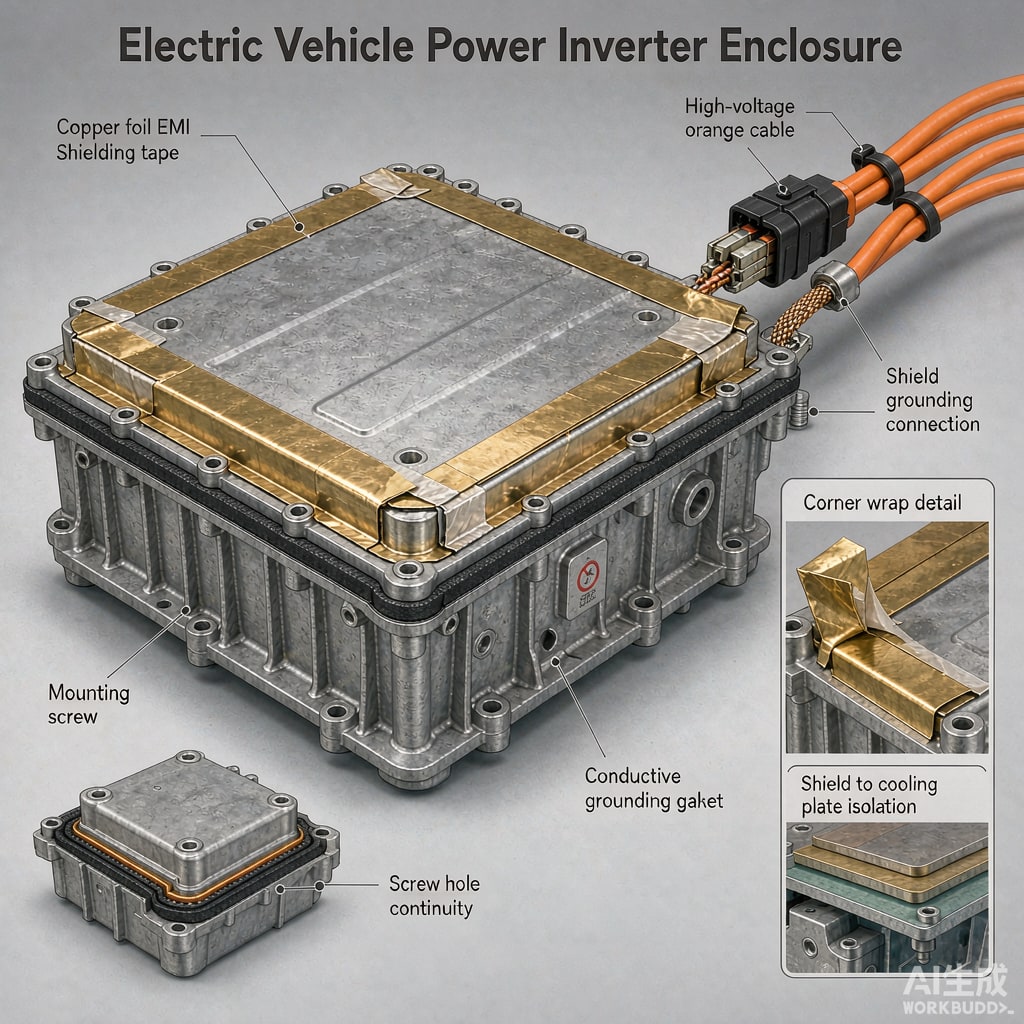
Copper foil tapes with conductive acrylic adhesive offer excellent electrical conductivity and shielding effectiveness above 60 dB across a broad frequency range. They are ideal for wrapping cable bundles, bonding enclosure seams, and repairing shielding continuity. Bare copper provides the best conductivity; tin-plated copper improves corrosion resistance in under-hood environments.
Aluminum Foil Tape
Aluminum tapes are lighter and lower cost than copper, with good performance above 100 MHz. They are commonly used for wrapping high-voltage harnesses and as a moisture barrier. Because aluminum oxidizes quickly, adhesive conductivity and surface preparation are important.
Conductive Fabric Tape
Silver-plated nylon or copper ripstop fabric tapes are flexible and conform well to complex shapes. They are preferred where repeated flexing or vibration occurs, such as around door seals or between moving assemblies.
Grounding Gaskets and Seams
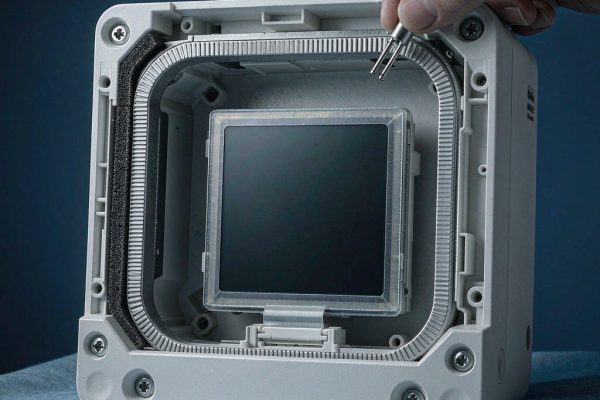
Sheet-metal enclosures for inverters and OBCs are assembled from multiple panels. Conductive elastomer gaskets, metal mesh-over-elastomer gaskets, or finger stock maintain electrical continuity across joints. Material choice depends on environment: silicone-based conductive elastomers tolerate high temperatures, while metal finger stock offers the lowest impedance but requires more mechanical tolerance control.
Installation Best Practices
Clean mating surfaces with isopropyl alcohol before applying tape to remove oil and oxide. Overlap tape ends by at least 25 mm to maintain a continuous shield. For gaskets, use compression stops to prevent over-compression and ensure the gasket recovers after thermal cycling. Always bond shielding to the chassis ground at multiple points, not just one.
Testing and Validation
Verify shielding effectiveness with near-field probes during bench development and with full vehicle EMI chamber testing before production. Pay special attention to cable egress points, where shielding tape termination quality dominates overall performance.