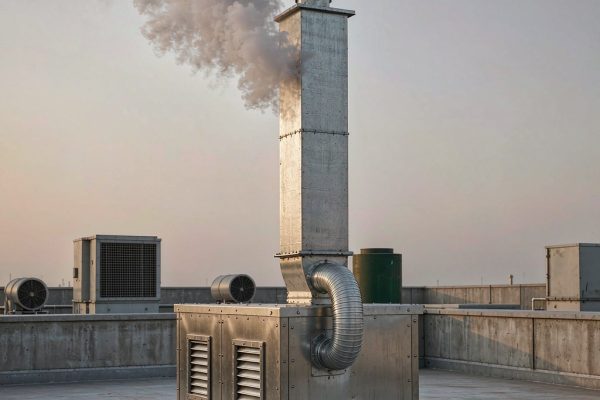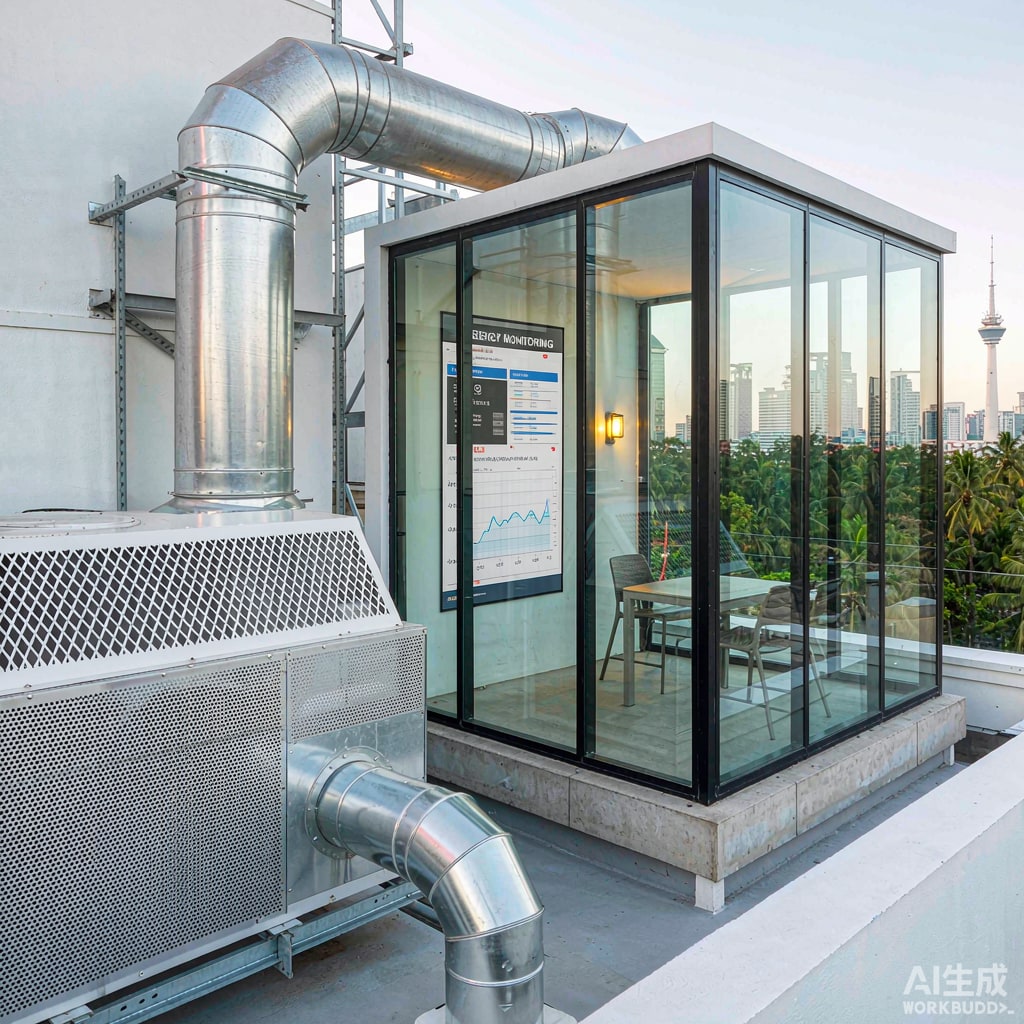
A typical smoking booth or smoking room is sized to clear smoke at 8–12 air changes per hour at peak occupancy. But most booths are empty most of the time — and if the ventilation runs flat-out regardless, you are paying air-conditioning and fan energy for a room full of nobody. Demand-controlled ventilation (DCV), combined with sensible heat recovery, cuts smoking-booth operating cost by 40 to 70 percent in measured retrofits. Here is the engineering.
The Baseline: Constant-Volume Cost
Consider a 6 m² walk-in booth at 10 ACH with 2.7 m ceilings: exhaust volume ≈ 162 m³/h. Fan power at reasonable static pressure is 100–200 W — modest. The real energy sink is conditioning that air. In tropical Southeast Asia, cooling outdoor air from 32 °C/75 percent RH to supply conditions costs roughly 40–60 kJ per kg of dry air. A booth exhausting 162 m³/h continuously consumes roughly 2,800–4,200 kWh per year in cooling energy alone — several times the fan energy. Reducing average exhaust to 30 percent of design flow removes about half of that.
Demand-Controlled Ventilation Architecture
Sensing: what to measure
- Occupancy (PIR or ToF sensors): cheapest and most reliable binary signal. Zero occupancy = setback flow.
- PM2.5 / PM1.0 particle counters: the direct measure of smoke load. A booth can modulate exhaust to hold PM2.5 below a setpoint (typ. 35–50 µg/m³) rather than run a fixed ACH.
- CO2 (optional): useful in multi-person rooms, less so for smoke-specific control.
- Door state: boost mode when the door opens to keep the booth negative and prevent spill-out.
Control logic
- Empty booth: minimum exhaust (2–4 ACH) to maintain slight negative pressure versus surroundings — prevents odor migration without full purge.
- Occupied: modulate VFD-driven fan to hold PM2.5 setpoint, ramping between 4 and 12 ACH.
- Door open: boost to full flow for 60–90 seconds.
- Closed hours: fan off or trickle, with negative-pressure verification interlocked.
Variable-speed EC fans make the modulation cheap: fan power scales roughly with the cube of flow, so 50 percent flow costs about 15 percent of the fan energy.
Setpoint hygiene
Do not chase zero PM — sensor noise will keep the fan surging. Use a proportional band (e.g., 30–60 µg/m³) and a 60-second averaging window. Calibrate particle sensors every 6–12 months; drift is the most common DCV complaint.
Heat and Cooling Recovery Options
Exhaust air from a smoking booth is loaded with tar and odor compounds — recovery equipment must tolerate fouling.
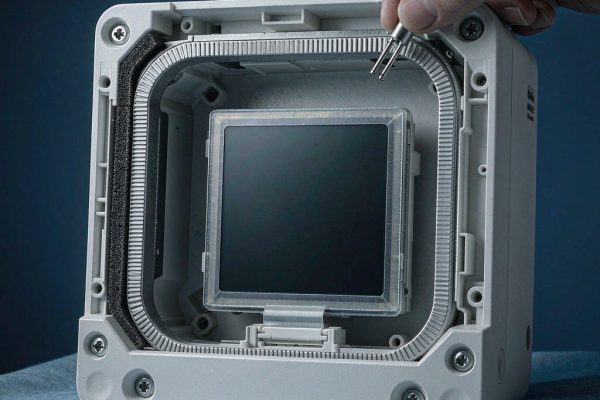
- Sensible plate heat exchangers (cross-flow): 50–65 percent sensible effectiveness. Choose smooth aluminum or polymer plates with accessible clean-in-place ports; standard enthalpy wheels foul quickly with tar and are not recommended.
- Runaround loops (glycol coil-to-coil): isolates exhaust and supply airstreams entirely — the most fouling-tolerant option, at 45–55 percent effectiveness. Best for tropical climates where the priority is cooling recovery, not humidity.
- Heat pipes: passive, no cross-contamination, ~45–60 percent sensible. Pre-cooling incoming air before the DX coil cuts compressor load directly.
In a hot-humid climate, sensible recovery handles temperature but not latent load; the dehumidification coil still does the heavy lifting. Expect overall HVAC energy reduction of 20–35 percent from recovery alone, 40–70 percent combined with DCV.
Filtration Strategy Interacts with Energy
Booths that recirculate through activated carbon (common for odor control) spend fan energy on filter pressure drop. A loaded carbon bed can add 150–300 Pa. Design the fan for end-of-life pressure drop, and use ΔP sensors to trigger carbon replacement at a set resistance rather than a calendar date — replacing too early wastes carbon and money, too late wastes fan energy and lets odor escape.
Retrofit Economics: A Worked Example
Booth in a Singapore commercial building, current state: constant 162 m³/h exhaust, AC tie-in, 6,500 operating hours/year.
- Baseline a
ual cost (cooling + fan): ≈ US$1,900 at local tariffs.
- DCV retrofit (EC fan + PM sensor + controller): hardware ≈ US$900, saves ≈ 55 percent → payback under 1 year.
- Adding a runaround heat-recovery coil: hardware ≈ US$2,400 installed, additional 20 percent saving → payback ≈ 2–3 years.
Larger multi-person smoking rooms and airport smoking lounges see even shorter paybacks because absolute flows are larger.
Compliance Note
Never let energy logic defeat the core safety function: the booth must remain negative to its surroundings whenever smoking is possible, interlocks must boost ventilation on door opening, and any filter-loading alarm must remain independent of the energy-management system. Check local code (e.g., Singapore NEA, Malaysia OSHA guidance, Philippines FDCB rules) for minimum ACH requirements — DCV setback floors must respect them.
Conclusion
Smoking booths are small rooms with disproportionate energy appetite because their design flow assumes the worst case around the clock. Particle-sensor-driven VFD control, a negative-pressure setback floor, and fouling-tolerant heat recovery turn a fixed cost into a proportional one — typically halving a
ual operating expense with paybacks under two years. Design the controls around the code minimums and the sensor physics, not the other way around.