The Growing Need for Ballistic-Rated Guard Booths
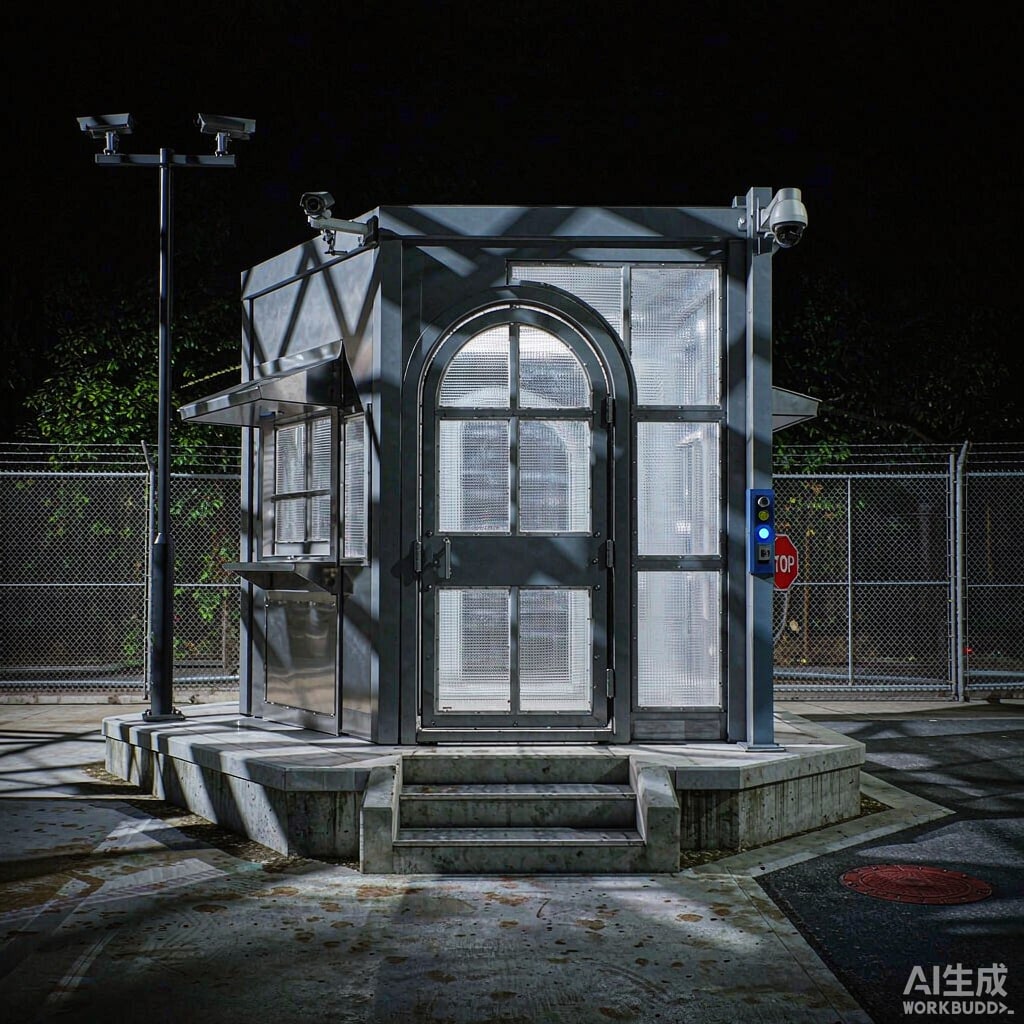
In an era of heightened security concerns, guard booths and sentry posts are no longer simple weather shelters—they are critical protective infrastructure. Military installations, government facilities, embassies, corporate headquarters, and critical infrastructure sites increasingly require ballistic-resistant guard booths capable of withstanding armed threats. Understanding the NIJ ballistic resistance standards, available armor materials, and certification testing protocols is essential for architects, security consultants, and procurement professionals specifying these structures.
NIJ Ballistic Resistance Standards Overview
The National Institute of Justice (NIJ) Standard-0108.01, “Ballistic Resistant Protective Materials,” is the primary reference for rating the ballistic resistance of opaque armor materials used in structures, vehicles, and equipment. While body armor is governed by NIJ Standard-0101.06, the 0108.01 standard applies to fixed installations such as guard booths. The threat levels are defined by the caliber, bullet type, and impact velocity that the material must stop:
NIJ Level IIA
Protects against 9 mm Full Metal Jacket (FMJ) at 373 m/s and .40 S&W FMJ at 325 m/s. This level is generally considered insufficient for guard booth applications but may be specified for low-threat environments.
NIJ Level II
Protects against 9 mm FMJ at 398 m/s and .357 Magnum Jacketed Soft Point (JSP) at 436 m/s. Suitable for commercial and light security applications where handgun threats are the primary concern.
NIJ Level IIIA
Protects against .357 SIG FMJ Flat Nose (FN) at 448 m/s and .44 Magnum Semi-Jacketed Hollow Point (SJHP) at 436 m/s. This is the highest level of protection against handgun threats and is commonly specified for guard booths at corporate campuses, schools, and public buildings.
NIJ Level III
Protects against 7.62 × 51 mm NATO M80 FMJ at 847 m/s (rifle threat). This level requires hard armor plates or reinforced composite panels and is specified for military checkpoints, police stations, and high-risk government facilities.
NIJ Level IV
Protects against .30-06 M2 Armor-Piercing (AP) at 878 m/s. The highest NIJ rating for armor materials, Level IV is reserved for the most critical installations such as embassies, nuclear facilities, and forward military operating bases.
Armor Materials for Guard Booth Construction
Steel Armor Plate
Ballistic-grade steel (typically AR500 or MIL-A-46100) remains the most cost-effective material for opaque armor sections. A 6.5 mm AR500 plate provides Level III protection, while 10–12 mm is required for Level IV. Steel is heavy (approximately 50 kg/m² for Level III), which impacts booth mobility and foundation requirements. Corrosion protection through powder coating or galvanizing is essential for outdoor longevity.
Ceramic Composite Armor
Ceramic-faced composite panels, typically alumina (Al₂O₃), silicon carbide (SiC), or boron carbide (B₄C) tiles bonded to a fiber-reinforced backing, offer weight savings of 30–50% compared to steel at equivalent protection levels. These panels are brittle and require careful handling; they are best suited for permanent installations where weight reduction justifies the higher cost.
Ultra-High-Molecular-Weight Polyethylene (UHMWPE)
UHMWPE laminates such as Dyneema and Spectra provide exceptional strength-to-weight ratios. A 15–20 mm UHMWPE panel can achieve Level III protection at approximately 20 kg/m². These materials are sensitive to temperature (performance degrades above 80–100 °C) and UV exposure, requiring protective facing layers for outdoor use.
Fiberglass-Reinforced Panels (FRP)
Multi-layer fiberglass panels with phenolic or vinyl ester resin matrices offer a middle ground between steel and advanced composites. They provide Level IIIA protection at competitive cost and are electrically non-conductive, making them suitable for booths with integrated communications and surveillance equipment.
Ballistic Glazing Options
Transparent armor is often the most challenging and expensive component of a ballistic guard booth. Common configurations include:
- Laminated glass-polycarbonate: Multiple layers of glass bonded with polyurethane interlayers, backed by polycarbonate spall shields. A typical Level III configuration is 39 mm thick and weighs approximately 80 kg/m².
- All-polycarbonate laminates: Lighter than glass (approximately 50 kg/m² for Level III) but susceptible to scratching and chemical attack. Hard coatings improve durability.
- Glass-clad polycarbonate (GCP): Combines the scratch resistance of glass faces with the impact absorption of polycarbonate core layers. The industry standard for high-clarity ballistic windows.
Testing and Certification Protocols
Sample Preparation
Test samples must be representative of production material in thickness, composition, and manufacturing process. For guard booths, full-scale panel sections (minimum 300 × 300 mm) are typically tested rather than small coupons.
Ballistic Test Procedure
Per NIJ 0108.01, each test consists of firing the specified threat projectile at the sample from a distance of 5 meters. The sample is mounted in a rigid frame with backing material (Roma Plastilina clay) to capture deformation. A “complete penetration” is defined as any perforation of the sample or backing material by the projectile, jacket, or fragment. For guard booth applications, multi-shot testing (3–5 impacts per panel) is typically required to validate real-world performance.
Environmental Conditioning
Military and high-reliability applications require environmental conditioning prior to ballistic testing, including:
- Temperature cycling (-40 °C to +60 °C)
- Humidity exposure (95% RH for 72 hours)
- Salt spray (ASTM B117 for 96 hours for marine/coastal installations)
- UV exposure (ASTM G154 for 500 hours)
Integration with Overall Booth Design
Ballistic protection must be integrated holistically with the booth’s structural, environmental, and functional systems:
- Foundation and anchoring: Ballistic panels add significant weight. The foundation must resist overturning from blast or vehicle impact in addition to supporting static loads.
- Ballistic weak points: Doors, vision panels, ventilation openings, and utility penetrations are potential vulnerability points. Each must be designed to meet or exceed the booth’s overall threat level.
- Blast vs. ballistic trade-offs: Materials optimized for ballistic resistance (hard, brittle ceramics) may perform poorly under blast loading. For combined threats, composite solutions or sacrificial facade systems may be required.
- Operator ergonomics: Thick ballistic glazing and armor panels reduce interior space and visibility. Sight lines, workstation layout, and emergency egress must be carefully pla
ed.
Conclusion
Specifying ballistic-resistant guard booths requires a thorough understanding of NIJ threat levels, material capabilities, and testing protocols. By matching the protection level to the assessed threat, selecting appropriate armor and glazing materials, and ensuring comprehensive certification testing, security professionals can deliver guard booth installations that provide reliable protection for perso
el in high-risk environments.