Smoking booths are compact, enclosed structures that concentrate occupants in a small space. Because they often contain ignition sources and combustible materials, fire safety and emergency egress must be designed into the booth from the earliest pla
ing stage. This article covers the key requirements for exits, lighting, alarms, and fire suppression in both indoor and outdoor smoking booths.
Why Fire Safety Is Critical in Smoking Booths
A smoking booth contains the three elements of the fire triangle: heat from lighters or heated tobacco devices, oxygen from ventilation airflow, and fuel from furnishings, filters, and accumulated dust. The small volume means smoke and heat can build rapidly, and a single exit can become blocked. Proper egress and safety lighting give occupants the seconds they need to evacuate safely.
Occupancy and Exit Requirements
Most building codes determine egress requirements based on occupant load. A typical smoking booth designed for two to four people usually requires only one exit, provided the travel distance to the exit is short and the door swings outward. Larger booths or those located in high-occupancy buildings may require two remote exits. Doors should be easy to open without special knowledge, and panic hardware may be required depending on local regulations.
Emergency Egress Design Principles
The egress path from a smoking booth should lead directly to a safe area without passing through other enclosed spaces. Door widths must meet local accessibility and life safety codes, usually no less than 810 mm clear width. Vision panels in doors help occupants see whether the path outside is clear. Locks, if present, must allow free egress from the inside at all times.
Signage and Wayfinding
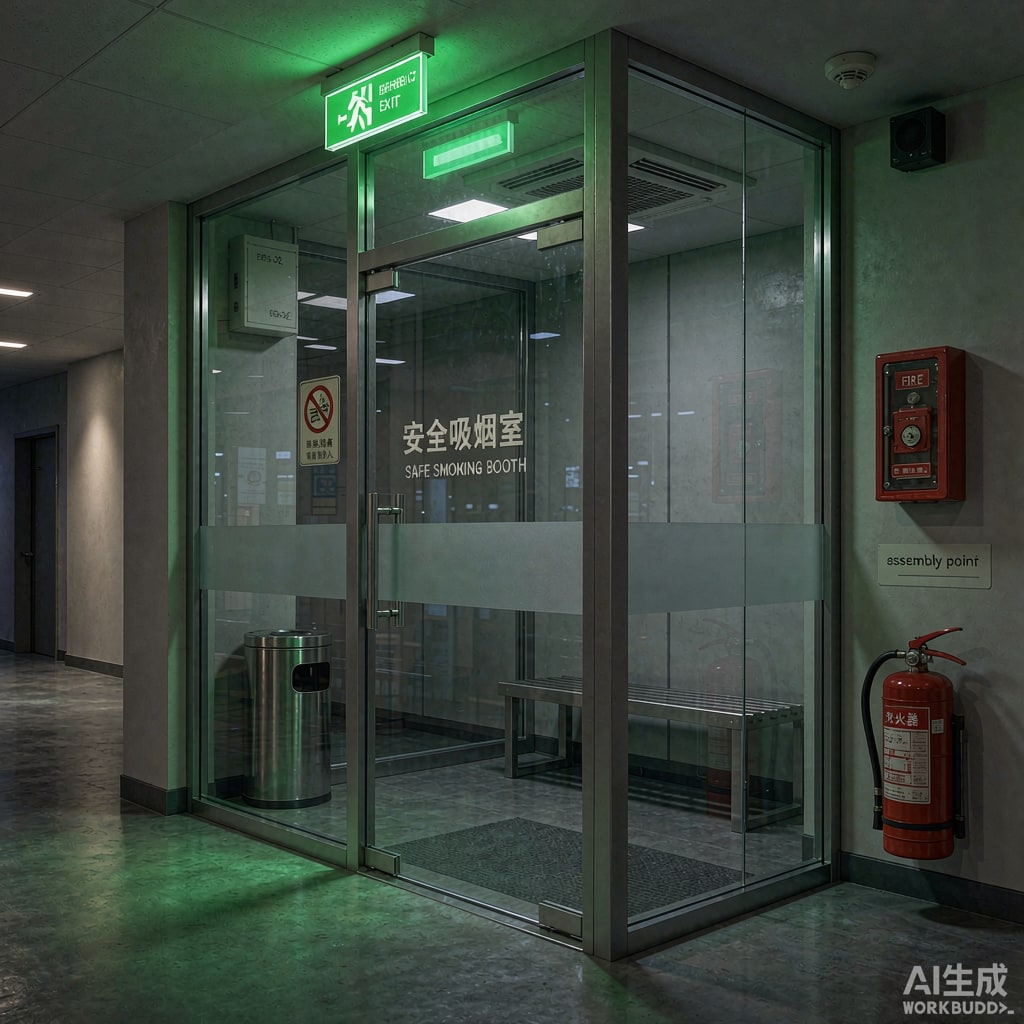
Internally illuminated exit signs should be installed above each egress door. The sign must be visible from any point within the booth, which may require additional directional signs in booths with angled walls or privacy screens. For outdoor smoking booths, signs should be weather resistant and illuminated by emergency power or photoluminescent materials.
Fire Safety Lighting
Emergency lighting provides illumination when normal power fails. In a smoking booth, fixtures should be mounted to avoid damage from bumps or cleaning operations and should provide at least one foot-candle of light along the egress path. Battery-backed LED units are common because of their long life and low maintenance. For larger facilities, central inverter systems may be more economical.
Integration with Building Systems
Smoking booths located inside buildings should co
ect to the building fire alarm system. Duct smoke detectors can trigger ventilation shutdown or pressurization changes. If the booth uses an air filtration system, the controls should allow fire dampers to close automatically upon alarm. Manual pull stations near the exit provide an additional layer of safety.
Fire Suppression and Extinguishers
Portable fire extinguishers rated for Class A and Class C fires should be mounted near the booth entrance, within easy reach and along the egress path. For booths installed in high-value or high-risk facilities, an automatic water mist or clean-agent suppression system may be justified. Any suppression system must be compatible with the booth electrical equipment and filtration media.
Material Selection for Fire Resistance
Booth wall, ceiling, and furnishing materials should have appropriate flame spread and smoke development ratings. Tempered or fire-rated glass, steel frames, and non-combustible insulation reduce fire risk. Upholstered seating, if provided, should meet local upholstery fire standards. Filter media should be replaced on schedule to prevent buildup of combustible tar and dust.
Maintenance and Inspection Schedule
Fire safety equipment requires regular testing. Exit signs and emergency lights should be tested monthly for thirty seconds and a
ually for the full rated duration. Fire extinguishers should be inspected monthly and serviced a
ually. Smoke detectors, alarms, and suppression systems should be tested according to the manufacturer’s recommendations and local fire marshal requirements.
Conclusion
Emergency egress and fire safety lighting are not optional extras for smoking booths; they are fundamental to occupant safety. By designing clear exits, reliable emergency lighting, visible signage, and integrated alarm systems, facility managers can provide a safe smoking environment while meeting building code and insurance requirements.