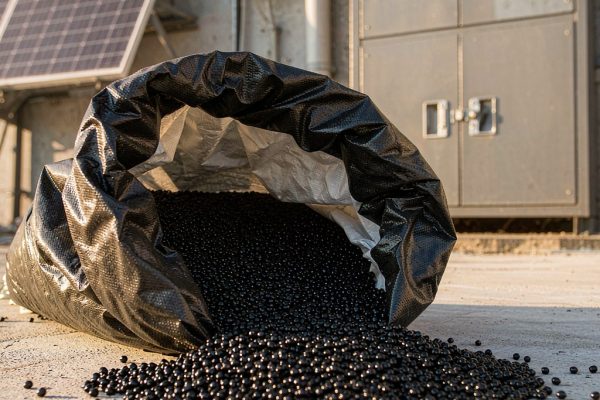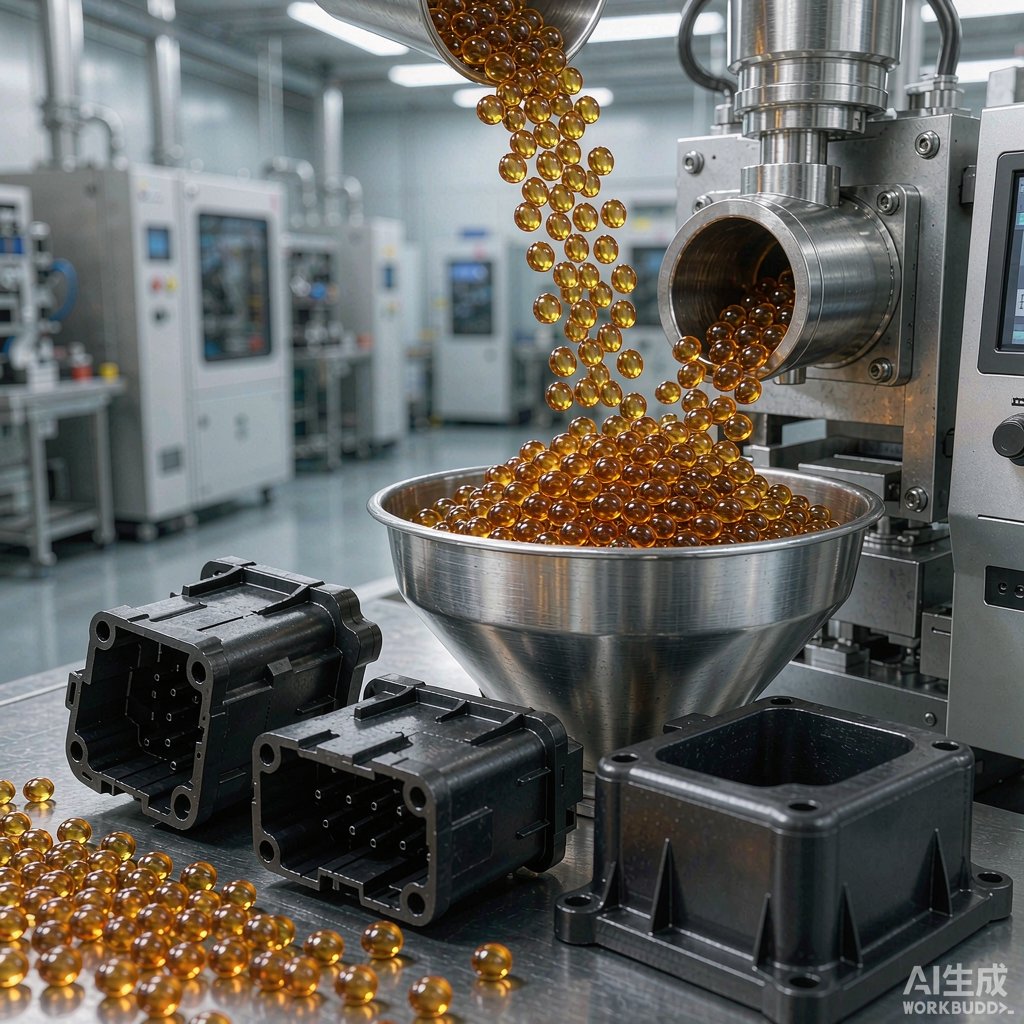
Between the moisture sensitivity of nylon and the cost of high-temperature polymers sits a family that electronics engineers return to again and again: modified polyphenylene oxide, known as PPO or PPE. Supplied as pellets for injection molding, modified PPO blends offer low moisture absorption, tight dimensional stability, strong dielectric properties, easy flame-retardant formulation, and clean, low-warp processing. Those traits make PPO pellets a natural fit for co
ector housings, junction boxes, coil forms, sensor bodies, and countless structural electronics parts. This guide covers why PPO suits SMT-era hardware, how blends and reinforcement change the picture, and how to mold it reliably.
Why Engineers Choose PPO for Electronics Parts
Polyphenylene oxide is an amorphous engineering thermoplastic with a high glass transition temperature around 210 degrees C, but raw PPO is nearly impossible to process. Commercial PPO pellets are therefore modified blends, historically PPO blended with polystyrene, tuned for flow and cost. The blend keeps the PPO backbone’s best properties: very low water absorption, inherently good electrical insulation, high heat capability, and a wide, forgiving processing window.
Low Moisture Absorption and Dimensional Stability
Unfilled PPO blends absorb well under 0.1 percent water at saturation, an order of magnitude less than polyamide 66, which can take on several percent in humid climates. For precision parts this changes everything: dimensions stay put from a dry northern warehouse to a 90 percent RH monsoon season in Southeast Asia, co
ector geometry does not relax, insulation resistance does not sag, and there is no nylon-style drying emergency before molding. For co
ectors and housings shipped across tropical markets, low moisture uptake is often the single strongest argument for PPO.
Heat Resistance for Assembly Processes
Unfilled modified PPO grades handle continuous use around 80 to 105 degrees C and short exposures well above that. Glass-reinforced grades raise heat deflection temperature to roughly 135 to 160 degrees C at 1.8 MPa, which supports selective and wave soldering near the part and many reflow-adjacent fixtures. For co
ector bodies that must survive lead-free reflow directly, designers move to glass-filled PPO grades or step up to PPS or LCP; for housings, shields, card guides, and junction boxes around the assembly, PPO grades cover the duty comfortably at lower cost.
Electrical Properties for Signal and Power
PPO blends bring a low dielectric constant, roughly 2.6 to 2.8, and low dissipation factor around 0.001 to 0.002, stable across frequency and humidity. That makes them attractive for RF co
ector bodies, ante
a parts, and high-speed interposers where nylon’s moisture-driven Dk drift is unacceptable. PPO also offers high comparative tracking index values, commonly 400 to 600 V in suitable grades, strong dielectric strength, and easy formulation with halogen-free phosphorus flame retardants to reach UL94 V-0 and, in thick sections, 5VA.
Blends and Reinforcement Options
- PPO with polystyrene: the classic general-purpose blend, easy flowing, economical, the default for housings and internal structural parts.
- PPO with polyamide: improves chemical resistance and adds electroless-plateability, widely used in automotive electronics enclosures and parts that must survive fluid exposure.
- Glass fiber reinforcement at 10 to 30 percent: raises stiffness and heat deflection temperature, lowers CTE for dimensional matching with metals and PCBs; expect some anisotropic shrinkage and warp pla
ing.
- Conductive and ESD compounds: carbon-filled PPO grades provide dissipative or conductive surfaces for ESD-safe trays, carrier, and equipment parts.
- Halogen-free FR grades: phosphorus-based systems deliver V-0 without bromine or antimony, matching green procurement rules.
Processing Guidelines for PPO Pellets
PPO is forgiving, but a few numbers keep scrap low. Dry pellets at 100 to 120 degrees C for two to four hours even though moisture uptake is low, because surface moisture still causes silver streaks. Melt temperature typically runs 260 to 300 degrees C depending on grade, with mold surface temperature from 60 to 100 degrees C, higher for glass-filled grades to hold surface finish. Shrinkage is low and predictable, about 0.5 to 0.7 percent for unfilled grades, which is why tight-tolerance co
ector housings mold with less warpage than semi-crystalline alternatives. Vent generously, keep shear reasonable, and limit regrind levels as with any amorphous blend; PPO discolors if held at the top of the barrel temperature range for long dwell times.
PPO Versus PA66, PBT, and PPS
A compact decision guide for electronics housings: choose PPO when moisture stability, low Dk drift, high CTI, and low warp matter most and continuous temperature stays below about 105 degrees C. Choose PA66 GF30 where maximum toughness and heat are needed and moisture can be managed. Choose PBT GF30 where chemical resistance and coil-insulation performance dominate at moderate cost. Choose PPS or LCP when parts must ride through lead-free reflow or continuous service above 150 degrees C. Many product families use two of these side by side: PPO for the outer housing and co
ector shells, PPS or LCP for the contacts carrier that enters the soldering process.
Conclusion
Modified PPO pellets occupy a practical sweet spot for electronics: the dimensional calm and electrical quality of an amorphous polymer, heat capability high enough for most assembly environments, and processing that favors thin-wall, tight-tolerance molding. Blending and reinforcement extend the family from general housings to plated automotive parts and ESD-safe carrier components. For manufacturers sourcing modified engineering plastics in China and Southeast Asia, TechMartSe offers PPO and related engineering plastic pellets with full datasheet support, helping molders and electronics assemblers match grade, filler level, and flame-retardant class to each application.