Portable electronics, power tools, and lightweight EV modules rely on compact battery packs where every milliohm of contact resistance matters. The co
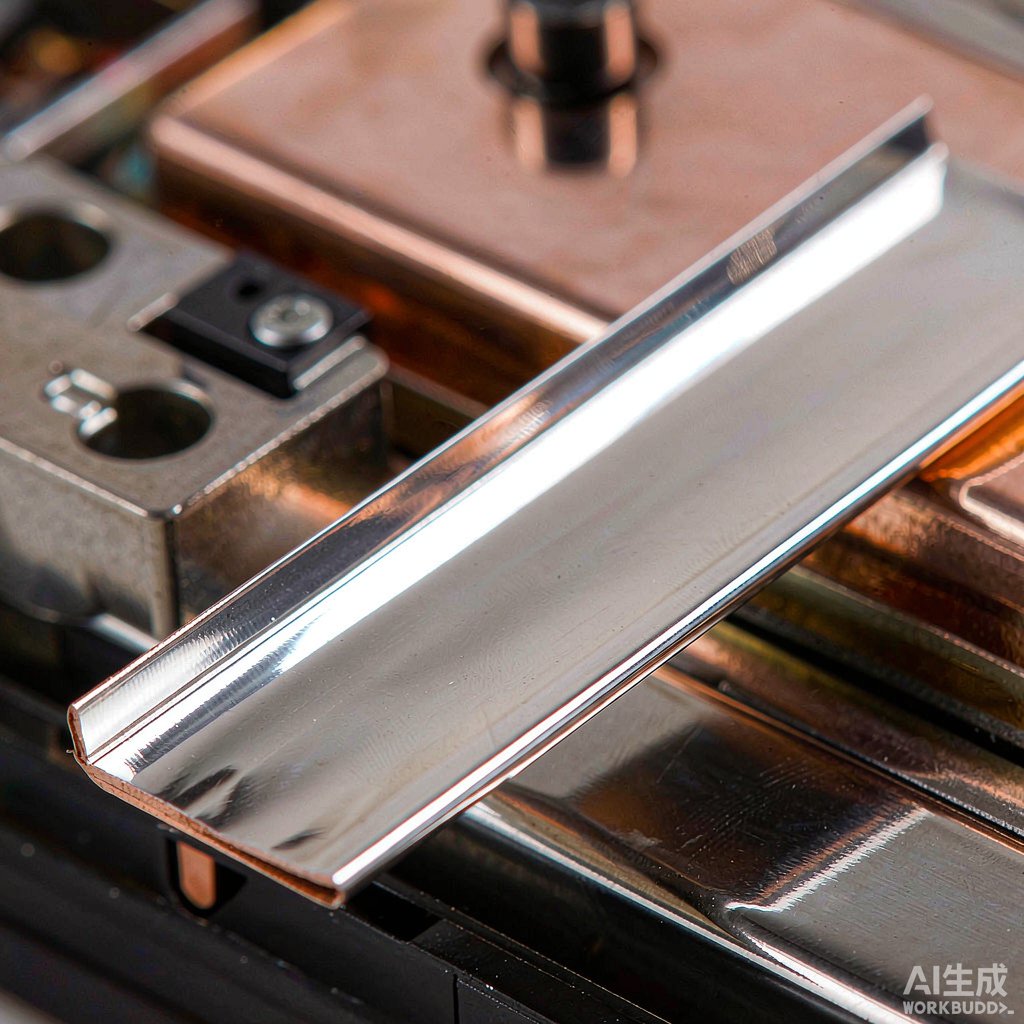
ector tabs that link cells to busbars are often stamped from nickel-plated copper strip, a material that tries to combine the conductivity of copper with the corrosion barrier of nickel. For engineers specifying SMT battery co
ector tabs, the challenge is not choosing copper or nickel, but choosing the right thickness, under-layer, and welding process so the joint survives thousands of charge cycles.
Why Nickel Over Bare Copper for Battery Tabs?
Bare copper offers electrical conductivity near 100% IACS, but it oxidizes quickly in warm, humid environments. Copper oxide raises contact resistance and weakens welded joints. A thin nickel layer slows oxidation and resists the alkaline electrolyte vapors common around lithium-ion cells. Nickel also provides a stable surface for resistance spot welding, which is the dominant tab-to-busbars joining method in cylindrical-cell packs.
Conductivity vs. Plating Thickness
Typical plating for SMT battery tabs ranges from 1 µm to 5 µm per side. Thicker nickel improves corrosion protection but reduces effective conductivity and increases material cost. For high-current packs, a 1–2 µm flash nickel over copper keeps resistive losses low while still offering a solderable and weldable surface. Some suppliers add a 0.1–0.3 µm gold top layer for low-contact-force SMT co
ectors, though this raises price and is usually reserved for signal paths rather than main power tabs.
Stamping and Forming Considerations
Battery tabs are narrow, often 2–10 mm wide, with tight bend radii and pierced holes for weld nuggets or SMT stand-offs. Nickel-plated copper strip must maintain coating adhesion after 90-degree bends and coining. Cracking or flaking of the nickel layer exposes the copper substrate and creates galvanic cells that accelerate corrosion. Specifying a ductile, low-stress nickel deposit and using generous bend radii relative to strip thickness reduces this risk.
Common Strip Alloys
C11000 electrolytic tough pitch copper is the baseline. For applications needing higher strength, C19400 or C70250 copper alloys provide better spring back while still accepting nickel plating. These alloys are useful when the tab must also act as a retention spring or compression contact.
Spot Welding Parameters
Resistance spot welding nickel-plated copper strip to a nickel-plated busbar follows the same principles as welding pure nickel strip, but copper’s high thermal conductivity demands higher current and shorter pulse times. A typical dual-pulse schedule uses a pre-pulse to soften surface oxides and plating, followed by a main pulse at 5–10 kA for 3–8 ms. Hold time and electrode force must be tuned to prevent expulsion and to create a symmetrical nugget. Weld schedules should be validated with peel tests and cross-section metallography.
Reliability and Environmental Testing
Battery tabs see vibration, thermal cycling, and occasional exposure to electrolyte. A robust qualification plan includes 85 °C / 85% relative humidity exposure for 1,000 hours, thermal cycling from -40 °C to 85 °C, and salt spray per ASTM B117 for outdoor or marine packs. After testing, contact resistance should remain within 10% of baseline and no corrosion should propagate under the nickel layer.
Sourcing and Tolerances
When requesting quotes, specify base copper alloy, plating thickness per side, adhesion test method (tape or bend), and whether edges must be free of burrs. Dimensional tolerances for width and thickness should match the stamping die design; typical width tolerance is ±0.05 mm for narrow tabs. Reels should be wound with interleaf film to prevent coating abrasion during automated feeding.
Conclusion
Nickel-plated copper strip is an excellent compromise for SMT battery co
ector tabs that must conduct high current while resisting corrosion and accepting spot welds. Success depends on balancing plating thickness, base alloy strength, and welding parameters. With proper qualification, these tabs deliver the long-term reliability that modern battery packs require.