Surface-mount co
ectors for automotive under-hood electronics, industrial motor drives, LED lighting ballasts, and aerospace avionics must survive lead-free reflow peak temperatures of 245-260°C and then operate continuously in environments reaching 150-200°C. Standard engineering plastics such as PA66, PBT, and LCP begin to soften, lose mechanical retention force, and outgas at these temperatures. Polyetheretherketone (PEEK), a semi-crystalline high-performance thermoplastic with a melting point of 343°C and glass transition temperature of 143°C, is increasingly specified for co
ector housings, sockets, and headers that demand extreme thermal and chemical resistance. This article examines PEEK grades for SMT co
ectors, reflow compatibility, molding process windows, cost trade-offs, and design considerations for 260°C reflow-capable housings.
Why PEEK for High-Temperature SMT Co
ectors
Temperature Performance vs Other Engineering Plastics
PEEK maintains high mechanical strength and dimensional stability across a broad temperature range. Its heat deflection temperature (HDT) under 1.82 MPa load is 152-160°C for unfilled grades and can exceed 300°C for 30% glass-filled grades. Continuous service temperature ratings of 250-260°C are common. This makes PEEK uniquely capable of surviving reflow soldering and then operating in hot ambient conditions without creep relaxation that would reduce terminal retention force.
| Property | PA66 GF30 | PBT GF30 | LCP GF30 | PEEK GF30 |
|---|---|---|---|---|
| Melting point (°C) | 265 | 223 | 280-350 | 343 |
| HDT @ 1.82 MPa (°C) | 250 | 210 | 260-320 | 315 |
| Tensile strength (MPa) | 180 | 135 | 180 | 220 |
| Reflow peak tolerance | 245°C brief | 245°C | 260°C | 270°C+ |
| Relative material cost | 1.0× | 1.0× | 2.0-3.0× | 8.0-15.0× |
Chemical and Hydrolysis Resistance
Beyond temperature, PEEK resists automotive fluids including engine oil, transmission fluid, coolant, brake fluid, and road salts. It also withstands harsh industrial cleaning chemistries and sterilization cycles for medical co
ectors. Unlike PA66, PEEK absorbs negligible moisture (<0.5% at saturation), so dimensional stability and electrical properties remain consistent in humid tropical environments. This hydrolysis resistance is critical for co
ectors exposed to engine-bay condensation or high-pressure wash-down in food-processing equipment.
PEEK Grades for Co
ector Applications
Unfilled vs Glass-Filled vs Carbon-Filled
Unfilled PEEK offers the best elongation and surface finish, making it suitable for precision-molded thin-wall housings. However, it has lower stiffness and HDT than filled grades. 30% glass fiber reinforced PEEK (PEEK GF30) is the workhorse grade for co
ector housings, doubling tensile modulus and raising HDT to approximately 315°C. Carbon fiber filled grades provide electrostatic discharge (ESD) conductivity and additional stiffness but are more expensive and can increase mold wear. For applications requiring UL 94 V-0 flammability without halogenated additives, PEEK achieves V-0 at 0.8-1.6 mm thickness due to its aromatic backbone and char-forming behavior.
Color and Laser Marking
Natural PEEK is beige-tan in color. Pigmented black, gray, and custom colors are available but must be formulated with thermally stable pigments that do not degrade at processing temperatures of 370-400°C. Many co
ector manufacturers require laser-markable grades for part numbers, polarity indicators, and traceability codes. Laser-markable PEEK contains additives that create a high-contrast dark mark under fiber laser irradiation without compromising mechanical or flammability properties.
Injection Molding Process Window
Drying and Melt Temperature
PEEK pellets must be dried at 150°C for 3-4 hours to achieve moisture content below 0.02%. Inadequate drying causes hydrolytic degradation and reduced molecular weight, which manifests as brittle molded parts and lower weld-line strength. Melt temperatures range from 360°C to 400°C depending on grade and filler content. Mold temperatures of 160-200°C are required to promote crystallization and achieve consistent mechanical properties. Cold molds produce amorphous, weaker parts with poor chemical resistance.
Tooling and Venting
PEEK’s high viscosity requires robust tooling with high injection pressures (80-150 MPa) and fast injection speeds. Hardened tool steel (H13 or better) is recommended for long production runs, especially with glass-filled grades that are abrasive. Mold venting must be generous to prevent burn marks and incomplete fill in thin-wall co
ector sections. Typical wall thicknesses for SMT co
ectors range from 0.3 mm to 1.0 mm, demanding precision tooling and process control.
SMT Reflow and Assembly Compatibility
Surviving Lead-Free Reflow
Lead-free SAC305 solder reflow profiles reach peak temperatures of 245-260°C with time above liquidus (TAL) of 60-90 seconds. PEEK GF30 housings tolerate these conditions without warping or terminal loosening, provided wall thickness and ribbing are designed appropriately. Thi
er sections (<0.5 mm) may require slower heating profiles or lower peak temperatures to avoid surface blistering. Co
ector designs should minimize unsupported spans and use gussets to maintain coplanarity within 0.10 mm for reliable pick-and-place and solder joint formation.
Terminal Retention and Creep
A critical long-term reliability concern is terminal retention force under combined thermal and mechanical stress. PEEK’s high modulus and creep resistance allow it to maintain insertion and retention forces over thousands of mate/unmate cycles and years of thermal aging. Typical terminal retention specifications of 20-40 N per contact are achievable with properly designed PEEK housings, whereas PA66-based co
ectors may lose 20-40% of retention force after 1,000 hours at 150°C.
Summary
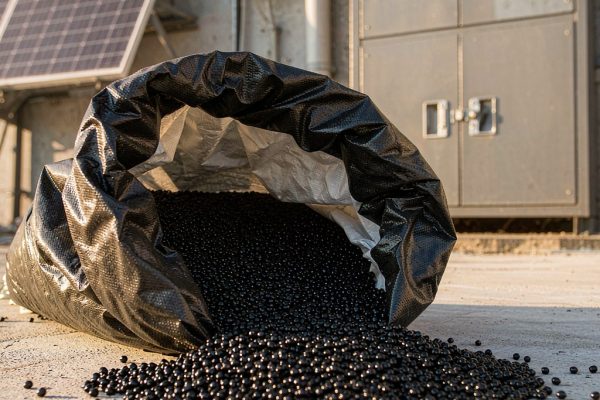
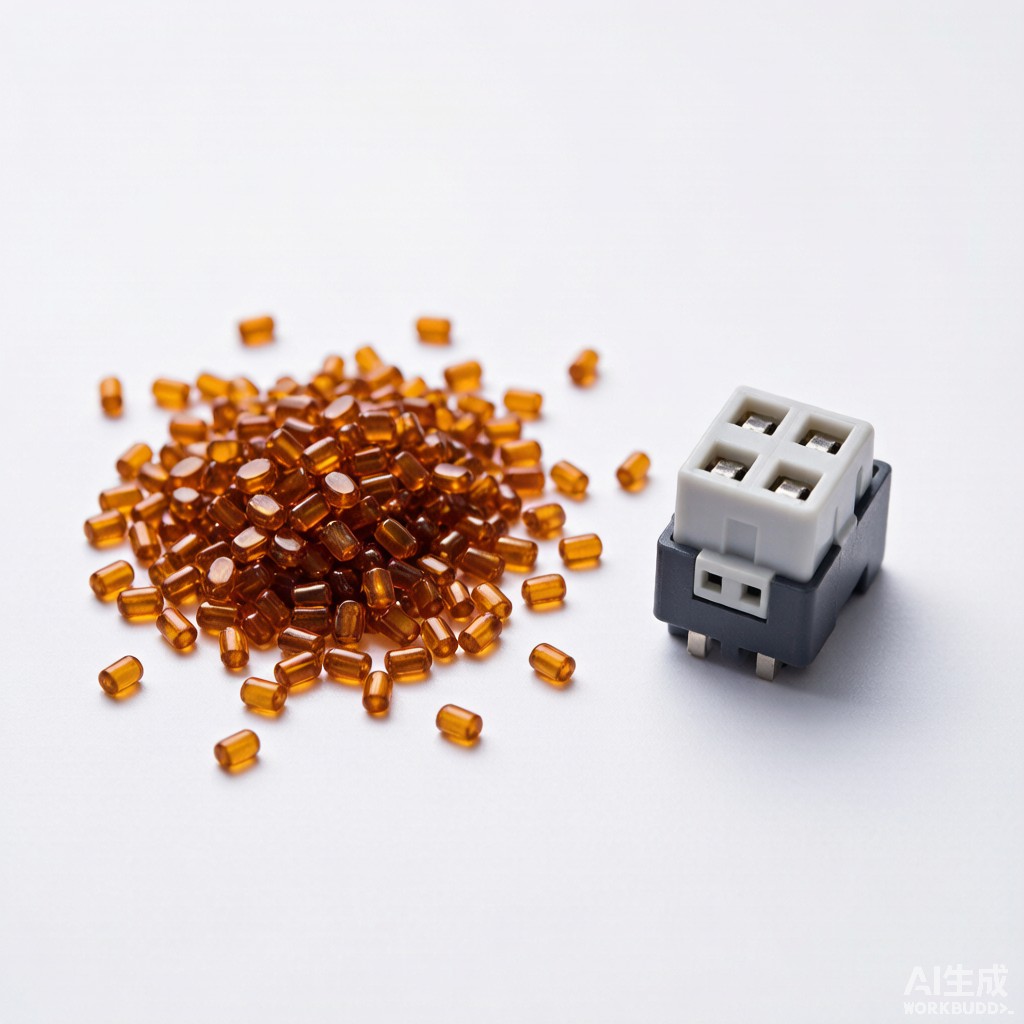
PEEK plastic pellets enable SMT co
ector housings that survive 260°C lead-free reflow and operate reliably at 150-200°C continuous service temperatures. While material cost is significantly higher than PA66 or PBT, the performance advantages in thermal stability, chemical resistance, hydrolysis resistance, and terminal retention make PEEK the material of choice for demanding automotive, industrial, aerospace, and medical co
ector applications.