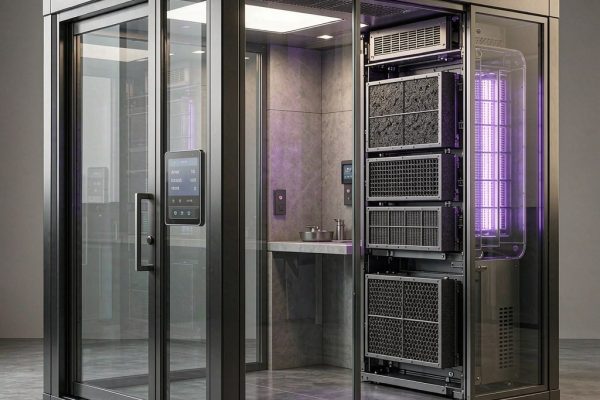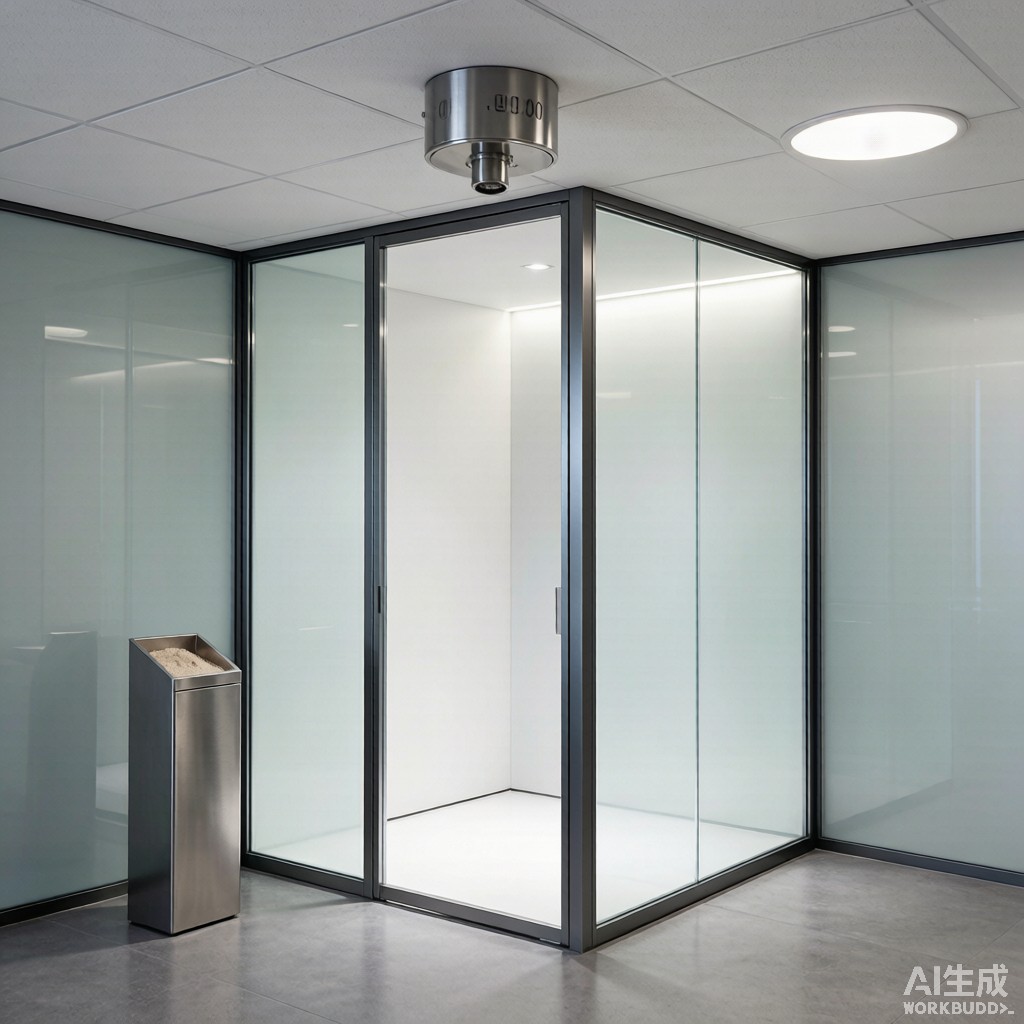
Designated indoor and semi-outdoor smoking booths are commonly installed in airports, hospitals, casinos, factories, and high-rise office buildings to provide a controlled environment for tobacco and vaping product use while preventing smoke migration to adjacent non-smoking areas. The fire safety risk in such booths is uniquely elevated because (1) cigarettes and lighters are routinely introduced into the enclosure, (2) smokers may fall asleep or become incapacitated with a lit cigarette, (3) upholstered or carpeted booth surfaces can ignite from prolonged ember contact, and (4) waste receptacles accumulate cigarette butts, ash, and disposable lighters that retain heat for 30-60 minutes after disposal. The 2018 London Gatwick Airport smoking room fire and 2022 Düsseldorf airport terminal smoking area incident both demonstrated the rapid flame spread and toxic smoke production that can occur in unattended smoking enclosures. This article examines fire suppression system selection (UL 300 wet chemical vs ABC dry chemical vs water mist), NFPA 17A and FM 7-18 standards, ember-extinguishing cigarette receptacles, smoke detection and alarm integration, and OSHA workplace fire safety compliance per 29 CFR 1910.151.
Fire Risk Classification in Smoking Booths
Class A vs Class K Fire Hazard
Smoking booth fires typically originate as Class A fires (ordinary combustibles: paper, fabric, wood, plastic), but once ignited, the high heat release rate and presence of upholstered furniture, vinyl wall covering, or carpet can escalate the fire class. Importantly, cigarette-induced fires are dominated by smoldering combustion with low flame spread and high toxic gas production (CO, HCN, particulates) for the first 5-10 minutes, before transitioning to flaming combustion. This smoldering phase is the most dangerous for occupant exposure because smoke detectors may not alarm until the fire has already produced lethal CO concentrations (200-400 ppm) in the small booth volume.
| Fire Stage | Duration | Smoke/Heat Signature | Detection Method | Toxic Gas Production |
|---|---|---|---|---|
| Smoldering ignition | 0-5 min | Visible smoke, low heat (<100°C) | Photoelectric smoke detector | CO 50-200 ppm, particulates |
| Smoldering growth | 5-15 min | Increasing smoke, 100-300°C | Photoelectric + CO detector | CO 200-600 ppm, HCN 5-20 ppm |
| Transition to flaming | 15-25 min | Visible flame, 300-600°C | Smoke + heat detector | CO 600-2000 ppm, HCN 20-80 ppm |
| Fully developed | 25+ min | Rapid flame spread, 600-1000°C | Heat detector, sprinkler | CO 2000+ ppm, lethal in 1-2 breaths |
Why UL 300 Wet Chemical is the Optimal Agent
Although UL 300 wet chemical fire suppression is formally listed for Class K (cooking oil and grease) fires, the chemistry of potassium acetate / potassium citrate (or more recent potassium carbonate-based) wet chemical agents makes them particularly effective for smoking booth fire scenarios. The agent mechanism involves:
- Saponification reaction: potassium salts react with burning plastics and synthetic fabrics to form a soapy foam layer that excludes oxygen.
- Cooling effect: the aqueous solution provides 1.5-2.5 kJ/g heat absorption (specific heat ~3.5 kJ/(kg·K) for the wet chemical), reducing surface temperature by 200-400°C within 5-10 seconds of discharge.
- Smoke suppression: the fine mist (100-200 µm droplet size) entrains particulates and absorbs soluble toxic gases (HCl, HCN, NH₃), reducing the toxic gas concentration by 30-50% during the discharge period.
Compared to ABC dry chemical (monoammonium phosphate), UL 300 wet chemical has the advantage of not creating a visibility-obscuring dust cloud, not requiring cleanup of corrosive powder residue on booth surfaces, and not damaging the LCD/electronic equipment that may be present in a smoking booth with entertainment systems or air quality displays.
UL 300 Wet Chemical System Design
Agent Selection & Concentration
Commercial UL 300 wet chemical agents include:
| Trade Name | Manufacturer | Chemistry | Concentration | Discharge Time |
|---|---|---|---|---|
| Ansul R-102 | Johnson Controls | Potassium acetate 50-65% + corrosion inhibitors | 50-60% in water | 30-60 sec |
| Amerex KP | Amerex Corporation | Potassium carbonate 40-50% + additives | 40-50% in water | 30-60 sec |
| Piranha | Pyro-Chem (UTC) | Potassium acetate 50-60% + detergent | 50-60% in water | 30-60 sec |
| STAY-FIRE 300 | Fire Suppression Systems | Potassium citrate 45-55% | 45-55% in water | 30-60 sec |
For a typical 2 m × 2 m × 2.5 m (10 m³) smoking booth, the wet chemical agent quantity per NFPA 17A is 1.0-1.5 L/m² of floor area, requiring 4-6 L of agent per booth. The system is typically a 6 L stored-pressure cylinder with 1.4 MPa (200 psi) nitrogen propellant, fitted with a single 1.5-2.0 m spray nozzle that creates a full-volume discharge pattern. Cylinder is mounted outside the booth (in a service vestibule or above the ceiling) with the discharge nozzle inside the booth, so the agent is contained in the enclosure without wetting the surrounding occupied space.
Detection & Actuation
The fire detection chain is designed for early warning of smoldering ignition, with dual-criteria detection (photoelectric smoke + CO sensor) reducing nuisance alarms while providing 30-90 second earlier detection than smoke-only systems:
- Photoelectric smoke detector: 0.5-2.0%/ft obscuration threshold, 30-60 second pre-alarm before suppression discharge
- Carbon monoxide detector: 30-50 ppm threshold (well below OSHA 50 ppm 8-hr TLV but above normal ambient 5-10 ppm)
- Heat detector (fixed temperature or rate-of-rise): 57-68°C fixed, or 8-10°C/min rate-of-rise, providing redundant backup
- Manual pull station: at booth entrance, allowing occupant-triggered discharge
The detection-actuation sequence follows: (1) smoke or CO alarm, (2) 30-second pre-discharge delay with audible/visual alarm inside booth, (3) automatic suppression discharge at 30-60 seconds if manual abort is not activated, (4) audio-visual alarm transmitted to building fire alarm panel, (5) HVAC shutdown to prevent smoke migration, (6) emergency services notification.
Cigarette Ash & Waste Disposal Safety
FM 7-18 Embers Receptacle Specification
FM Global Property Loss Prevention Data Sheet 7-18 (Cigarette and Other Smoking Material Fire Safety) is the de facto standard for cigarette waste receptacles in commercial and industrial facilities. Key specifications:
- Self-extinguishing receptacle: rigid metal or high-density polyethylene (HDPE) body, no flammable decorative finish
- Sand or water-filled base: 5-10 cm depth of sand or 1-2 L of water at base to extinguish dropped butts
- Restricted opening aperture: 50-80 mm diameter opening prevents larger items from being inserted
- Non-combustible lid mechanism: gravity-drop or self-closing spring-loaded metal lid that snuffs embers when closed
- Heat-resistant signage: bilingual warning (e.g., “CAUTION: HOT ASH — DO NOT TOUCH UNTIL COOLED”)
For smoking booth applications, the FM 7-18 receptacle is typically floor-mounted in a corner of the booth with a 5-10 L sand capacity, emptied daily by facility staff with thermal PPE (heat-resistant gloves to 250°C). The daily emptying protocol is critical because accumulated butts can undergo spontaneous combustion if the layer exceeds 30-50 mm depth, particularly in enclosed receptacles with limited air circulation. Industry experience shows that 80% of smoking booth fires involve the waste receptacle as the ignition source.
ButtSafe and Similar Proprietary Systems
Several proprietary cigarette disposal systems go beyond FM 7-18 baseline:
- ButtSafe®: 19 L HDPE cylinder with internal baffle and water reservoir, certified to FM 7-18, designed for high-traffic airport and casino applications.
- Smoke ‘Em Safe: stainless steel pipe-style receptacle, 200-300 mm diameter, sand-filled base, often integrated into the booth’s standing ashtray furniture.
- Justrite® Smokers’ Cease Fire®: 5-15 L stainless steel pail with self-closing lid, FM-approved, popular in hospital and industrial settings.
For premium smoking booths in airports and high-end hospitality, integrated built-in receptacles with concealed waste collection (1-2 L removable stainless insert, emptied via a service-only access panel) provide cleaner aesthetics and reduce the temptation for occupants to leave butts on the booth seat or floor.
Ventilation, Smoke Management & HVAC Integration
Smoke Evacuation vs Smoke Containment
Smoking booths are typically designed for either (1) dedicated exhaust to outside (smoke evacuation) or (2) high-efficiency filtration to recirculate cleaned air back to the building (smoke containment with multi-stage filtration). The fire suppression system must integrate with the HVAC to:
- Shut down supply air on fire alarm to prevent oxygen feeding and smoke spread
- Maintain exhaust at 100% capacity to evacuate combustion products
- Close fire/smoke dampers in supply and return ducts to prevent smoke migration to adjacent zones
- Activate stairwell pressurization (for high-rise installations) to maintain tenable egress paths
Exhaust Air Volume per ASHRAE 161
ASHRAE Standard 161 (Air Quality within Commercial Aircraft Cabins, by analogy) and ASHRAE 62.1 (Ventilation for Acceptable Indoor Air Quality) provide guidance on smoking booth exhaust. Typical design targets:
| Booth Type | Air Changes per Hour (ACH) | Exhaust per Booth (m³/h) | Filtration |
|---|---|---|---|
| 1-2 occupant compact booth | 30-50 | 100-180 | G4 pre-filter + H13 HEPA + KI-impregnated carbon |
| 3-4 occupant standard booth | 25-40 | 200-350 | G4 + H13 + carbon + electrostatic precipitator |
| 6+ occupant lounge booth | 20-30 | 400-700 | G4 + F7 + H13 + 2-stage carbon |
The exhaust fan must be fire-rated (250°C / 2 hours per UL 705) and the ductwork must be smoke-tight per UL 181 Class 1 with welded or flanged seam construction. Smoke management dampers per UL 555 are required at the building penetration.
OSHA & Building Code Compliance
OSHA 29 CFR 1910.151 Workplace Fire Safety
OSHA 29 CFR 1910.151 (Medical services and first aid) and 29 CFR 1910.157 (Portable fire extinguishers) require employers to provide fire extinguishing equipment in workplaces where fires may occur. For designated smoking areas, the relevant interpretations require:
- Portable fire extinguisher within 15 m of any smoking booth, Class K or ABC rated, minimum 2-A:10-B:C rating per NFPA 10
- A
ual maintenance inspection
of portable extinguishers and suppression systems per NFPA 10 and NFPA 17A - 6-year hydrostatic test of stored-pressure suppression cylinders, with periodic nitrogen propellant pressure verification
- Employee training per 29 CFR 1910.157(g) on extinguisher use, evacuation procedures, and alarm notification
International Building Code (IBC) and NFPA 101
Designated smoking rooms in commercial occupancies are addressed in:
- NFPA 101 Life Safety Code: smoking rooms must be separated from non-smoking areas by 1-hour fire-resistance-rated construction if the adjacent space is a sleeping room, or by smoke-tight construction (smoke partitions per NFPA 101) for other occupancies.
- International Building Code (IBC) 2021 Section 420: Group I-2 (hospital) smoking rooms are limited to 100 ft² (9.3 m²) per IBC 420.6 and must be enclosed in smoke barriers.
- Singapore Fire Code (SCDF): designated smoking rooms in non-residential buildings must comply with SS 578 (Code of Practice for use and maintenance of portable fire extinguishers) and SS 532 (Code of Practice for the storage of flammable liquids).
Conclusion
Smoking booth fire suppression engineering requires a layered approach: UL 300 wet chemical automatic suppression with 4-6 L agent per 10 m³ booth volume, dual-criteria photoelectric + CO detection with 30-second pre-discharge delay, FM 7-18-compliant cigarette waste receptacle with sand or water base, and HVAC integration that shuts supply air while maintaining exhaust on alarm. The smoldering combustion phase of cigarette-induced fires is the most dangerous due to CO production (200-600 ppm within 5-15 minutes), and detection must be tuned for early warning rather than relying on heat detection alone. OSHA 29 CFR 1910.151 and 1910.157 require portable extinguisher coverage, employee training, and a
ual maintenance per NFPA 10 and 17A. International installations must additionally satisfy IBC 2021 Section 420 (hospital occupancies), Singapore Fire Code, and EU EN 16282 (extinguishing systems for commercial kitchens, by analogy) for AHJ approval. Properly engineered fire suppression reduces smoking booth fire risk to a level comparable to other commercial cooking and waste-handling occupancies.