Introduction
Southeast Asia presents one of the most challenging environments for electronic co
ectors. Average relative humidity ranges from 70 to 90 percent year-round, with seasonal peaks exceeding 95 percent during monsoon periods. Temperatures consistently hover between 28 and 35°C, creating conditions where copper alloy spring contacts face simultaneous thermal stress relaxation, oxidation, and corrosive degradation. For SMT co
ectors and relay contacts that depend on a stable spring force to maintain reliable electrical contact, understanding how these environmental factors interact is critical for product design and material selection.
How Spring Contact Force Works
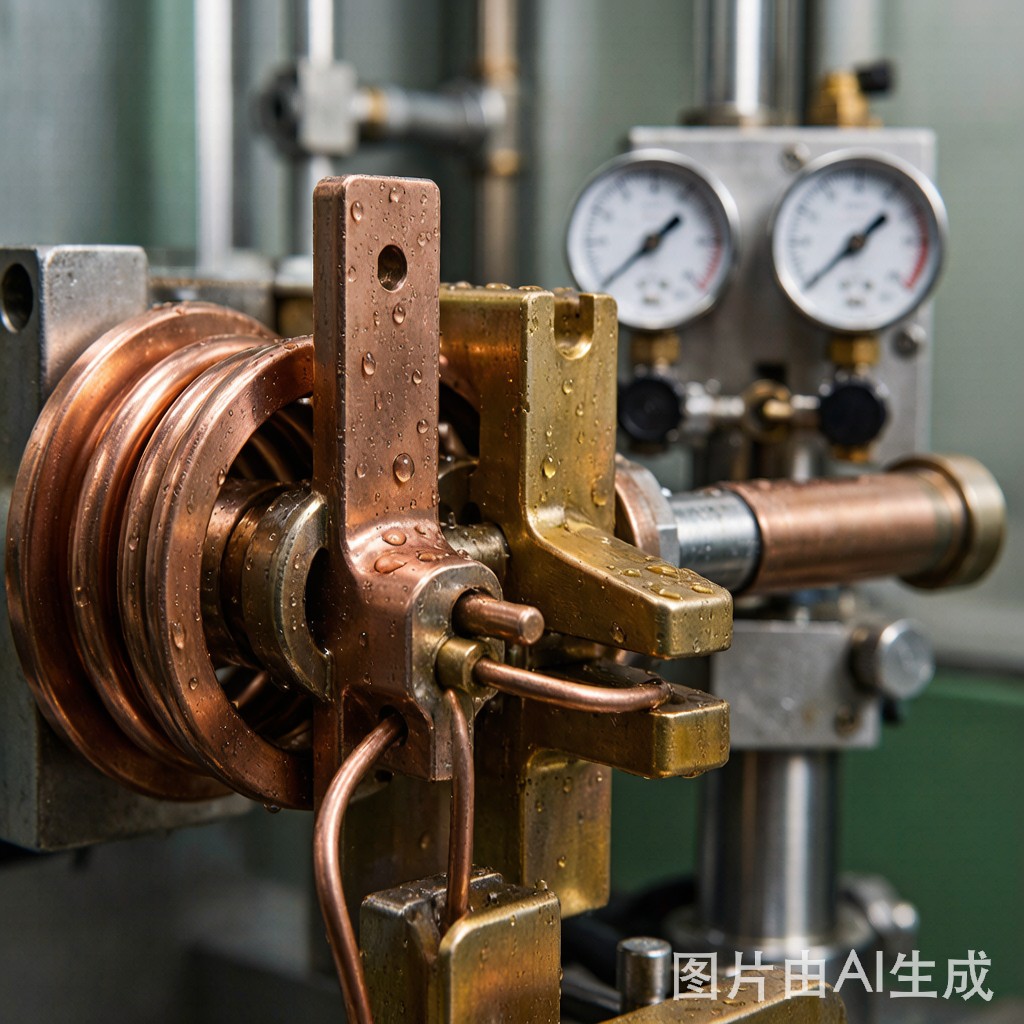
A spring contact maintains electrical continuity through mechanical force. The contact beam, typically made from beryllium copper (BeCu) or phosphor bronze, is deflected during mating and stores elastic energy that presses the contact tip against the opposing surface. This normal force ensures that surface oxide films are broken through, establishing a metal-to-metal contact area with low and stable contact resistance.
The minimum contact force required for reliable operation depends on the contact geometry, surface finish, and environmental conditions. For gold-plated contacts in clean environments, 0.5 to 1.0 N per contact point is typically sufficient. For tin-plated contacts that must break through thicker oxide layers, 2 to 5 N is recommended. In humid tropical environments, the required force may be 30 to 50 percent higher because oxide growth accelerates and corrosion products create additional surface resistance.
Stress Relaxation Mechanisms
Stress relaxation is the gradual loss of spring force over time when a contact beam is held at a constant deflection. Unlike fatigue, which requires cycling, relaxation occurs even when the contact remains mated without any movement. The mechanism involves dislocation creep and grain boundary sliding at the atomic level, driven by the sustained elastic stress in the beam combined with thermal energy from the ambient temperature.
The rate of stress relaxation follows an Arrhenius relationship with temperature: it doubles approximately every 10 to 15°C increase. At 85°C, a BeCu contact may lose 15 to 25 percent of its initial force after 1,000 hours. At 35°C, the same alloy loses only 3 to 8 percent over the same period. However, the cumulative effect over a product lifetime of 5 to 10 years can be significant, especially when combined with corrosion-induced contact area loss.
BeCu vs Phosphor Bronze Relaxation Comparison
| Property | C17200 BeCu (TH04) | C52100 Phosphor Bronze (H08) |
|---|---|---|
| Yield Strength | 1100-1200 MPa | 550-650 MPa |
| Initial Contact Force (typical) | 2.0 – 4.0 N | 1.0 – 2.5 N |
| Force Loss after 1000h at 85°C | 15 – 25% | 25 – 35% |
| Force Loss after 1000h at 35°C | 3 – 8% | 8 – 15% |
| Conductivity (IACS) | 22 – 25% | 13 – 15% |
| Oxidation Rate (tropical RH) | Moderate | Higher (Sn content) |
Humidity-Enhanced Oxidation and Corrosion
High humidity accelerates copper oxidation by providing the water molecules needed for electrochemical reactions on the metal surface. Bare copper in 85 percent relative humidity at 35°C develops visible oxide films within days. These oxide layers increase contact resistance and reduce the effective contact area, requiring higher initial force to penetrate them during mating.
For tin-plated contacts common in consumer electronics, humidity drives whisker growth and intermetallic compound thickening. Tin whiskers are crystalline filaments that grow from stressed tin surfaces and can bridge adjacent contacts, causing short circuits. The risk increases with temperature cycling in humid environments because thermal expansion mismatch between the tin plating and the copper substrate adds mechanical stress to the tin layer.
Salt spray and industrial pollutants in coastal Southeast Asian cities add another corrosion dimension. Chloride ions penetrate oxide films and create localized pitting that dramatically increases contact resistance. For products deployed in coastal areas like Bangkok, Ho Chi Minh City, or Manila, additional protective plating or sealed co
ector housings are essential.
Design Strategies for Humid Environments
The first defense against force relaxation is over-designing the initial contact force. If the product specification requires 1.5 N minimum force at end of life, the initial design should target 2.5 to 3.0 N, providing a 40 to 50 percent margin for relaxation and corrosion losses. This over-deflection approach is the simplest and most reliable strategy, although it increases mating force and may require co
ector housing modifications.
Material selection is equally important. BeCu C17200 in the TH04 temper provides the highest yield strength and the lowest relaxation rate among common contact alloys. For applications where conductivity is secondary to force retention, age-hardened BeCu is the preferred choice. Phosphor bronze is acceptable for low-force signal contacts but requires larger safety margins for tropical deployment.
Plating choices must balance cost, corrosion resistance, and contact reliability. Gold plating over a nickel underplate provides the best corrosion resistance and the lowest contact resistance but at the highest cost. Tin plating is cheaper but requires higher contact force and is vulnerable to whisker growth in humid conditions. A hybrid approach—gold on the contact tip for reliability, tin on the solder tail for assembly—is a common compromise in Southeast Asian products.
Testing and Qualification
Qualifying co
ectors for tropical environments requires accelerated aging tests that simulate years of field exposure in weeks. The standard approach combines thermal aging at 85°C for 500 to 1,000 hours with humidity exposure at 85°C/85% RH for 240 to 500 hours. Contact force is measured before and after aging to quantify the relaxation percentage. Contact resistance is measured at low force to verify that the remaining force still provides reliable contact after oxide growth.
Mixed flowing gas testing per IEC 60512-2 simulates corrosive atmospheres by exposing contacts to controlled concentrations of chlorine, sulfur dioxide, and nitrogen dioxide at elevated humidity. This test reveals whether the plating system can withstand the combined corrosive challenge typical of industrial and coastal Southeast Asian environments. Products that pass MFG testing with less than 10 mΩ contact resistance change are generally considered safe for tropical deployment.
Conclusion
Copper alloy spring contacts face a triple threat in Southeast Asian humid environments: thermal stress relaxation, accelerated oxidation, and corrosive degradation. By selecting high-relaxation-resistance alloys like BeCu C17200, over-designing initial contact force with adequate safety margins, and choosing appropriate plating systems, co
ector designers can ensure reliable operation throughout the product lifecycle in the world’s most demanding humidity conditions.