Introduction
Copper clad laminate (CCL) is the foundation of every printed circuit board. Its performance depends critically on the bond between the copper foil and the dielectric substrate. A weak bond leads to conductor peeling, blistering after soldering, and catastrophic failure under thermal stress. Surface treatment of the copper foil is the primary method for achieving strong, reliable adhesion in CCL manufacturing.
Why Surface Treatment Is Necessary
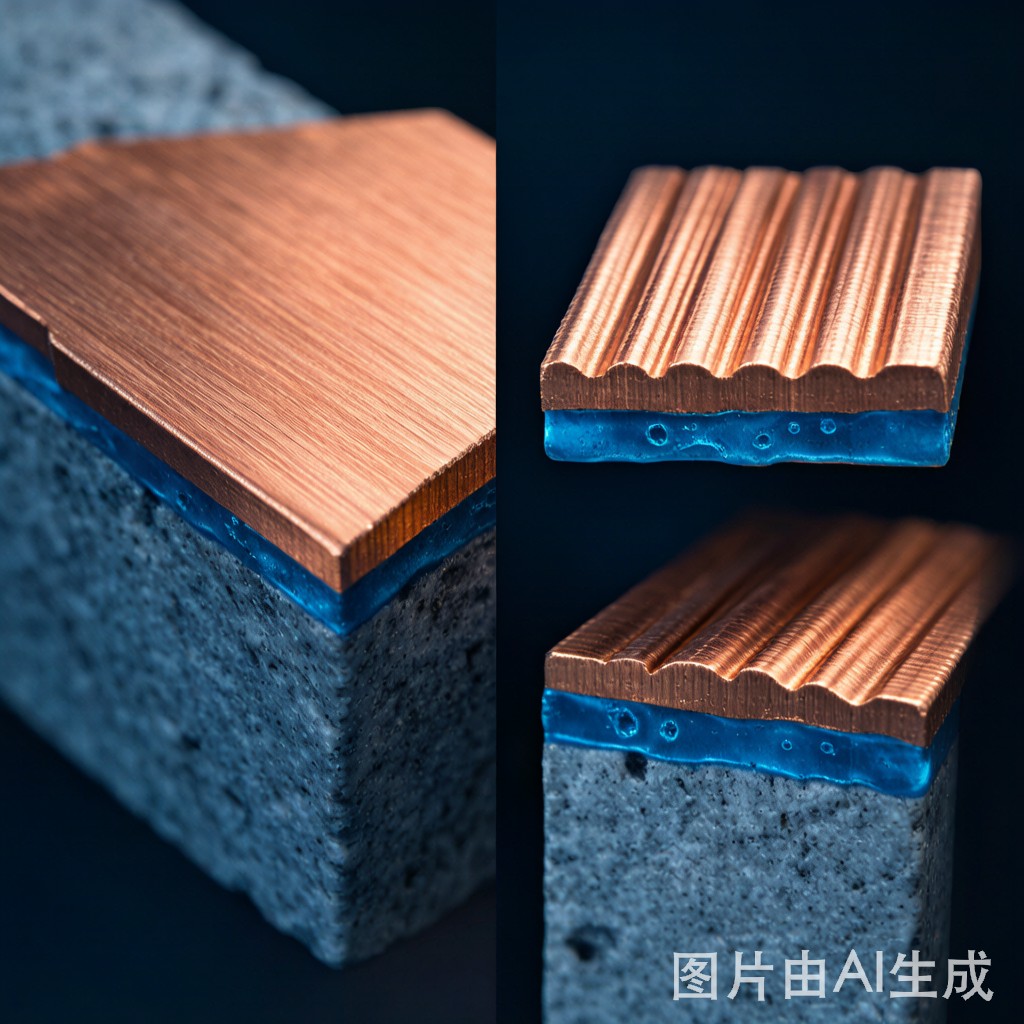
Smooth copper foil has limited mechanical bonding with epoxy resin. Without surface treatment, the interface relies mainly on weak van der Waals forces, which are insufficient for modern PCB reliability requirements. Surface treatment creates microscale roughness, increases surface area, and forms chemical bonds that dramatically improve peel strength.
Untreated copper also oxidizes quickly, forming a weak oxide layer that reduces adhesion. Proper surface treatment stabilizes the copper surface and creates a receptive interface for the resin system during laminate pressing.
Mechanical Roughening and Nodularization
The traditional method for improving copper foil adhesion is electrolytic nodularization. In this process, copper micro-nodules are electrodeposited onto the matte side of the foil, creating a dendritic or granular surface morphology. These nodules mechanically interlock with the cured epoxy resin, significantly increasing peel strength.
Typical nodularized copper foil has a surface roughness (Rz) of 3-10 µm. Standard foils for general-purpose PCBs use moderate roughness, while high-Tg and high-reliability laminates may use optimized nodule structures for enhanced thermal and chemical resistance. However, excessive roughness can create high-frequency signal loss in RF applications, driving demand for low-profile or very-low-profile copper foils.
Chemical and Silane Coupling Treatments
Beyond mechanical roughening, chemical treatments improve adhesion through oxidation and coupling agents. A brown oxide or black oxide treatment creates a thin, stable copper oxide layer that reacts with the epoxy resin. This improves both initial bond strength and resistance to moisture and solder shock.
Silane coupling agents are organosilicon compounds that form molecular bridges between the inorganic copper oxide and the organic resin. They are particularly effective for high-Tg, lead-free compatible, and halogen-free resin systems where traditional oxide treatments may be inadequate. Silane treatment can increase peel strength by 10-30% compared to oxide-only treatments.
Treatment Performance Comparison
| Treatment Type | Typical Peel Strength | Best For |
|---|---|---|
| Untreated | < 0.7 N/mm | Non-PCB applications |
| Nodularized Only | 1.0 – 1.5 N/mm | Standard FR-4 |
| Oxide + Nodular | 1.3 – 1.8 N/mm | General high-reliability |
| Silane + Oxide | 1.5 – 2.2 N/mm | High-Tg / lead-free |
Peel Strength Testing
Peel strength is the standard metric for measuring copper foil adhesion. In a 90-degree peel test, a copper strip of known width is pulled away from the laminate at a controlled angle and speed while the force is recorded. IPC-TM-650 Method 2.4.8 specifies the test procedure and sample preparation.
Test results vary with copper weight, resin system, and thermal history. Post-solder float testing at 288°C for 20 seconds is often used to evaluate thermal stress resistance. A high-quality CCL should retain peel strength above 1.0 N/mm after solder float exposure.
High-Frequency and Low-Loss Considerations
For high-speed and RF applications, traditional rough copper foil creates signal loss at microwave frequencies due to the skin effect. The rough surface forces current to travel a longer path and increases effective resistance. Low-profile (LP) and very-low-profile (VLP) copper foils address this by reducing surface roughness while maintaining adequate adhesion through advanced chemical treatments.
Conclusion
Copper foil surface treatment is a multidisciplinary challenge combining electrochemistry, polymer science, and materials testing. The right treatment balances mechanical interlocking, chemical bonding, and electrical performance for the target application. For standard digital PCBs, nodularized oxide-treated foil remains the workhorse. For high-frequency and harsh-environment applications, advanced silane and low-profile treatments deliver the reliability and signal integrity modern electronics demand.