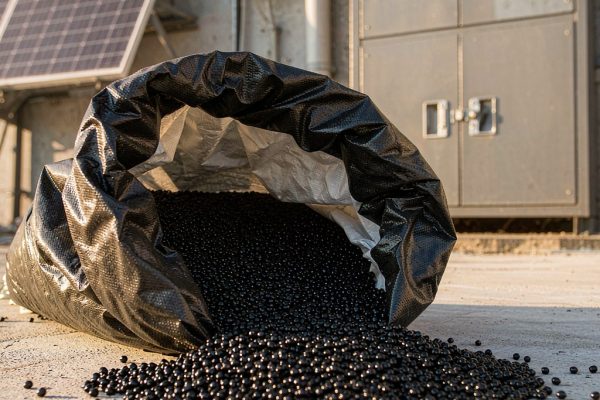
Copper strip destined for SMT lead frame manufacturing must maintain surface cleanliness and dimensional integrity from the rolling mill all the way to the stamping press. A single particle of contamination — a stray fiber, a dust mote, a corrosion speck — embedded in the strip surface can cause a lead frame defect that propagates through the entire semiconductor assembly chain. Cleanroom packaging and handling of copper strip is not a luxury; for semiconductor-grade lead frames, it is a yield-defining process control that separates 99.5% first-pass yield from 95% and below.
Why Copper Strip Packaging Matters for SMT Lead Frames
The semiconductor lead frame is the critical interface between the silicon die and the outside world. Copper strip — typically C19400, C11000, or C19210 alloy, 0.10–0.50 mm thick — arrives at the lead frame stamping facility after a journey that may include multiple transportation legs, warehouse storage periods, and handling steps. At every point in this chain, the strip is vulnerable to:
- Particle contamination: Dust, fibers, metal slivers, and packaging debris that embed in the strip surface. A 10 μm particle on a 150 μm thick lead frame is proportionally equivalent to a 100 μm particle on a standard PCB — well above the defect threshold.
- Moisture absorption and corrosion: Copper strip exposed to humidity above 60% RH begins to tarnish within 24 hours. At 80% RH, visible corrosion appears within 8 hours.
- Mechanical damage: Edge burrs, surface scratches, and coil deformation from improper handling that compromise downstream stamping precision.
- Chemical contamination: Residues from packaging materials, handling gloves, or environmental pollutants that interfere with plating adhesion (silver spot plating for wire bonding pads) or solderability.
Vacuum Sealing and Moisture Barrier Packaging
The industry standard for semiconductor-grade copper strip is vacuum-sealed packaging with moisture barrier performance equivalent to MIL-PRF-81705 Type I Class 1 (WVTR < 0.02 g/100 in²/day). The packaging stack consists of four layers:
- I
er wrap
: Lint-free, sulfur-free polyethylene or polyester film in direct contact with the copper strip. Must pass outgassing test (ASTM E595, TML < 1.0%, CVCM < 0.1%). - Desiccant pouch: Silica gel or molecular sieve desiccant, typically 5–10 g per kilogram of copper strip, placed inside the vacuum bag. Desiccant absorbs residual moisture after sealing and any moisture ingress over the packaging lifetime.
- Moisture barrier bag (MBB): Multi-layer laminate of polyester, aluminum foil, and polyethylene. The aluminum foil layer provides the vapor barrier; the polyethylene provides heat-sealability and puncture resistance. Typical thickness: 0.10–0.15 mm.
- Outer protection: Corrugated cardboard or plastic tote for mechanical protection during transport.
The vacuum sealing process typically evacuates the bag to 50–100 mbar absolute pressure before heat sealing. A humidity indicator card (HIC) is placed inside the bag, visible through a transparent window, to verify dry conditions on receipt. The HIC at 10% RH spot should remain blue for the entire packaging lifetime.
| Packaging Parameter | Specification | Test Method |
|---|---|---|
| Moisture vapor transmission rate | < 0.02 g/100 in²/day | ASTM F1249 |
| Internal humidity after sealing | < 10% RH at 25°C | HIC verification |
| Desiccant capacity | > 20% of own weight H₂O at 40% RH | MIL-D-3464 Type II |
| Shelf life (sealed) | 12 months from date of packaging | Internal qualification |
| Sulfur-free certification | < 0.01% sulfur in packaging materials | XRF or ICP |
Cleanroom Environment Requirements
Copper strip packaging and incoming inspection should be performed in a controlled environment. The minimum classification depends on the lead frame application:
- ISO Class 7 (Fed Std 209E Class 10,000): Minimum for standard lead frame copper strip. 352,000 particles/m³ at ≥ 0.5 μm. Temperature 22 ± 3°C, humidity 45 ± 10% RH.
- ISO Class 6 (Class 1,000): Required for fine-pitch lead frames (≤ 0.4 mm pitch) and high-reliability applications. 35,200 particles/m³ at ≥ 0.5 μm.
- ISO Class 5 (Class 100): Required for semiconductor packaging subcontractors handling bare die attach and wire bonding in the same facility.
Within the cleanroom, operators must wear full cleanroom garments: bouffant cap, face mask, coverall, booties, and nitrile gloves. Cotton gloves are prohibited — cotton fibers are the single most common particle contaminant on copper strip surfaces. Gloves must be changed every 2 hours or after any contact with non-cleanroom surfaces.
Incoming Inspection Protocol
When a vacuum-sealed copper strip shipment arrives at the lead frame manufacturing facility, the inspection protocol follows a strict sequence:
- Package integrity check: Verify the vacuum bag has not lost vacuum. A soft, non-vacuum bag indicates a puncture or seal failure. Reject the entire coil if vacuum is lost.
- HIC verification: Check the humidity indicator card through the bag window. If the 10% RH spot has turned pink, moisture has breached the barrier. Reject or re-bake the coil.
- Surface inspection after unsealing: Under cleanroom lighting (1000+ lux), inspect the strip surface at the coil outer wrap for discoloration, corrosion spots, particle contamination, and mechanical damage. Use a lint-free inspection wipe (Texwipe or equivalent) to collect surface particles for microscopic analysis.
- Dimensional verification: Measure strip thickness, width, and camber per ASTM B152/B152M or EN 1652. Strip thickness variation across width should be < 1% of nominal.
- Surface cleanliness test: Optional for high-reliability applications. A contact angle measurement (water droplet test) or Optically Stimulated Electron Emission (OSEE) measurement quantifies surface cleanliness. A contact angle 60° indicates organic contamination.
Storage and Environmental Control
After opening a vacuum-sealed coil, the copper strip has a limited floor life in the cleanroom environment. The following storage practices preserve strip quality:
- Opened coil storage: Store opened coils in a nitrogen-purged dry cabinet at < 10% RH. Floor life in ambient cleanroom (45% RH): 24 hours maximum. Floor life in dry cabinet (< 10% RH): 7 days maximum.
- Re-sealing partial coils: If only part of a coil is consumed, the remainder must be re-vacuum-sealed with fresh desiccant within 4 hours of opening. Do not leave copper strip exposed overnight, even in a cleanroom.
- Temperature control: Storage temperature 18–25°C. Avoid temperature cycling that causes condensation. A 10°C temperature drop at 45% RH can bring the local humidity near the copper surface to the dew point, causing moisture condensation.
- FIFO inventory management: First-in, first-out. Track packaging date and opened date. Consume opened coils before sealed inventory.
Handling Equipment and Tooling
Copper strip handling equipment must be designed to avoid introducing contamination or mechanical damage:
- Coil handling mandrels: Stainless steel or anodized aluminum mandrels with rounded edges. Steel mandrels that contact the i
er diameter of the coil must be rust-free and regularly inspected.
- Strip guides and rollers: UHMW polyethylene or PTFE-coated surfaces. Avoid metal-to-metal contact that can generate particles. Guide surfaces must be cleaned daily with isopropyl alcohol and lint-free wipes.
- Cutting tools: Carbide or diamond-coated shear blades that produce a clean, burr-free cut. Dull blades smearing the copper create particles and burrs that travel with the strip into the stamping die.
- Transport carts: Dedicated stainless steel carts with ESD-safe casters. Carts must be cleaned before moving between cleanroom zones of different classifications.
Cost of Poor Packaging and Handling
The cost of inadequate copper strip packaging propagates across the supply chain:
At the lead frame stamper: Surface contamination causes stamping defects (burrs, incomplete forming, surface blemishes) that reduce die life by 20–40% and increase scrap rate by 2–5%.
At the plating house: Corroded or contaminated strip surfaces cause plating adhesion failures (blistering, peeling) that are typically discovered only after silver spot plating — when the value of the strip has already increased by $0.50–$2.00 per thousand lead frames.
At the semiconductor assembly: A contaminated lead frame surface causes wire bonding failures (non-stick on pad, NSOP) and die attach voids — defects that scrap the entire packaged IC. The cost of a single IC scrap at this stage ($0.50–$20.00 depending on complexity) dwarfs the incremental cost of proper copper strip packaging ($0.002–$0.005 per lead frame).
For Southeast Asian lead frame manufacturers serving the global semiconductor supply chain, the discipline of cleanroom packaging and handling is a competitive differentiator. Contracts from tier-1 OSATs (Outsourced Semiconductor Assembly and Test providers) typically require ISO Class 7 cleanroom capability, vacuum packaging with HIC verification, and documented incoming inspection protocols. The capital investment in cleanroom and packaging equipment ($500,000–$2,000,000 for a mid-scale facility) is recovered through higher yields, fewer customer returns, and eligibility for higher-margin contracts.