Healthcare-associated infections (HAIs) impose an a
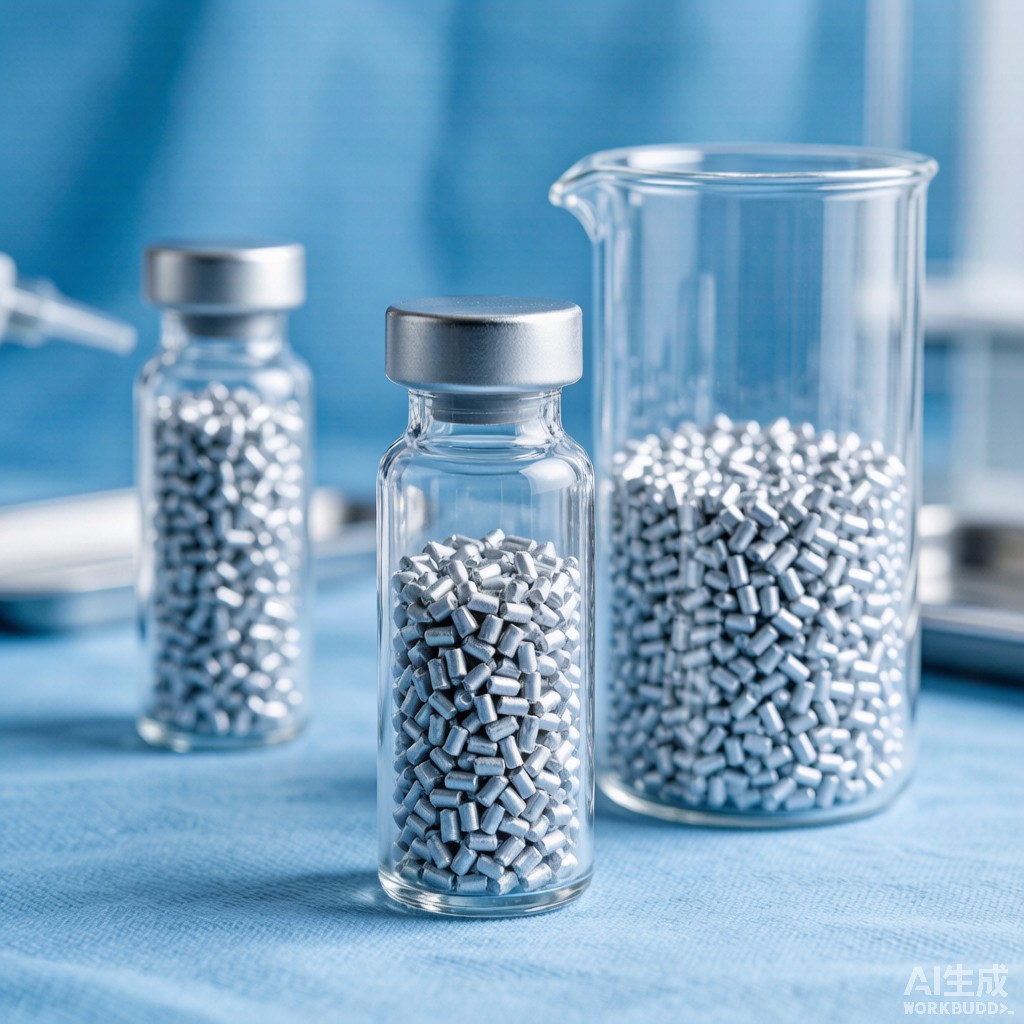
ual cost burden exceeding $30 billion globally and result in approximately 100,000 deaths in US hospitals alone. The role of high-touch surfaces in pathogen transmission has elevated the importance of anti-microbial materials in hospital electronics enclosures, including patient monitoring device housings, infusion pump panels, bedside infotainment enclosures, and medical cart surfaces. Anti-microbial modified plastic pellets incorporating silver-ion, zinc pyrithione, or quaternary ammonium compound additives provide sustained pathogen reduction without the operational burden of chemical disinfection protocols. This article examines the engineering selection, efficacy testing, and regulatory considerations for anti-microbial modified plastic pellets in healthcare electronics applications.
Anti-Microbial Additive Chemistry
Silver-Ion Additives
Silver-ion anti-microbial additives are the most widely deployed active ingredient in healthcare-grade plastic. The mechanism involves controlled release of Ag+ ions that bind to bacterial cell membrane thiol groups, disrupting enzyme function and generating reactive oxygen species (ROS). Commercial silver additives include:
-
<l
- Silver zeolite (Ag-Zn): Silver-exchanged zeolite carrier, Ag content 2-5 wt%. Provides sustained ion release over 5-10 years; suitable for polyolefins, styrenics, polyamides, polycarbonates.</l
- <l
- Silver glass (Ag-SiO₂): Silver-containing glass ceramic, Ag content 0.5-2 wt%. Lower discoloration than zeolite, suitable for transparent or light-colored parts.</l
- <l
- Silver zirconium phosphate: Highest thermal stability (processing to 320°C), suitable for high-temperature engineering plastics.</l
Typical loading rates: 0.5-3.0 wt% for Ag-zeolite in polyolefin, achieving log reduction values of 3-5 against Staphylococcus aureus and Escherichia coli per ISO 22196.
Zinc Pyrithione and Zinc Compounds
Zinc pyrithione (ZnPT) and zinc oxide provide anti-fungal and anti-bacterial activity through ROS generation and membrane disruption:
-
<l
- Zinc pyrithione: Effective against MRSA, fungi including Candida albicans. Loading 0.5-1.0 wt% in polyolefins. Limited thermal stability above 200°C — restricts use to lower-temperature polymers.</l
- <l
- Zinc oxide nano: 50-200 nm particle size, anti-bacterial and UV-blocking dual function. Loading 1-3 wt% in polyolefins.</l
Quaternary Ammonium Compounds
Organosilane-based quaternary ammonium compounds (e.g., 3-(trimethoxysilyl)propyldimethyloctadecyl ammonium chloride) covalently bond to plastic surface after migration. The ‘kill-on-contact’ mechanism provides immediate anti-microbial effect, but surface regeneration is limited (1-3 years). Typical loading 1-2 wt% in polyolefin or as surface treatment solution.
Additive Selection for Modified Plastic Pellets
Polymer Matrix Compatibility
| Polymer | Recommended Anti-Microbial | Loading (wt%) | Max Process Temp (°C) | Notes |
|---|---|---|---|---|
| PP | Ag-zeolite, Ag-glass, ZnPT | 0.5-2.0 | 220-240 | Good retention, no discoloration at <1% Ag-zeolite |
| ABS | Ag-zeolite, Ag-glass | 0.5-1.5 | 230-250 | Avoid ZnPT (thermal degradation causes yellowing) |
| PC/ABS | Ag-zirconium phosphate, Ag-glass | 0.5-1.0 | 260-280 | Best color stability for medical white/light gray |
| PC | Ag-zirconium phosphate, Ag-glass | 0.3-1.0 | 280-310 | Zirconium phosphate preferred for clarity retention |
| PA66 | Ag-zeolite, Ag-glass | 0.5-2.0 | 270-290 | Avoid ZnPT (amide reaction reduces efficacy) |
| PBT | Ag-zeolite, Ag-glass | 0.5-1.5 | 240-260 | Good overall stability, no color shift |
Color Stability and Aesthetic Considerations
Silver-ion additives are notorious for causing yellow-brown discoloration in white or transparent medical-grade plastics. The discoloration mechanism involves:
-
<l
- Photoreduction: UV exposure reduces Ag+ to metallic Ag nanoparticles, producing yellow-brown tint.</l
- <l
- Sulfide tarnishing: Atmospheric H₂S reacts with Ag+ to form Ag₂S, producing black discoloration at high humidity.</l
Mitigation strategies include: (1) using Ag-glass or Ag-zirconium phosphate instead of Ag-zeolite for 70-80% reduced discoloration; (2) adding UV stabilizers (HALS + benzotriazole UVA) at 0.3-0.5 wt%; (3) using titanium dioxide white pigment at 2-4 wt% as optical brightener; (4) pre-coloring with carbon black at 0.1-0.3 wt% for parts where color shift is acceptable.
Efficacy Testing Standards
ISO 22196 (JIS Z 2801) Anti-Bacterial Activity
The ISO 22196 standard quantifies anti-bacterial activity on plastic surfaces using a film-contact method. Test organisms typically include Staphylococcus aureus ATCC 6538 and Escherichia coli ATCC 8739. Specimens are inoculated with 400 µL of 2.5-10 × 10⁵ CFU/mL bacterial suspension, covered with film, incubated 24 hours at 35°C, then viable bacteria are enumerated. Results expressed as log reduction value (R) = log(viable count on untreated control) – log(viable count on test specimen):
-
<l
- Effective: R ≥ 2 (99% reduction)</l
- <l
- Strongly effective: R ≥ 3 (99.9% reduction)</l
- <l
- Highly effective: R ≥ 4 (99.99% reduction)</l
Healthcare-grade anti-microbial plastic typically targets R ≥ 3.0 against S. aureus and E. coli, with extended testing including MRSA (ATCC 33591) and Pseudomonas aeruginosa (ATCC 15442).
ISO 846 Anti-Fungal and Anti-Microbial Activity
ISO 846 evaluates fungal growth on plastic surfaces using mixed spore suspensions of Aspergillus niger, Penicillium funiculosum, and other fungi. Ratings from 0 (no growth) to 4 (heavy growth) determine suitability for hygiene-sensitive applications. Healthcare electronics enclosures typically require ISO 846 ≤ 1 (slight growth, sparse colonization).
ISO 21702 Anti-Viral Activity on Plastics
The 2019 standard ISO 21702 evaluates anti-viral activity against enveloped and non-enveloped viruses including influenza A and human coronavirus 229E. For post-pandemic healthcare electronics, antiviral activity (R ≥ 2.0 against SARS-CoV-2 surrogate virus) is increasingly required. Silver-ion additives typically deliver R = 2.0-3.5 against coronavirus 229E at 1-2 wt% loading.
Regulatory and Biocompatibility
FDA and EU Regulatory Pathways
For medical device enclosures with direct patient contact, anti-microbial plastic must comply with:
- <l
- ISO 10993-1: Biological evaluation of medical devices. Anti-microbial plastic enclosure requires cytotoxicity (ISO 10993-5), sensitization (ISO 10993-10), and irritation testing.</l
- <l
- FDA 21 CFR: Indirect food contact applications require food contact substance notification (FCN) for silver additives.</l
- <l
- EPA registration: In the US, anti-microbial plastic products with public health claims require EPA registration under FIFRA. Silver zeolite and zinc pyrithione are registered as anti-microbial pesticides.</l
- <l
- EU BPR: European Biocidal Products Regulation (528/2012) requires approval of active substances. Silver and zinc compounds are under review for product type 9 (fibre, leather, rubber and polymerised materials preservatives).</l
Non-Contact and Limited-Contact Electronics
For medical electronics with limited patient contact (e.g., nurse call buttons, infusion pump housings), ISO 10993 cytotoxicity testing at 100% extract concentration must show no cytotoxic effect. Anti-microbial additives at typical loading rates (≤2 wt% Ag-zeolite) generally pass cytotoxicity testing when the additive is properly encapsulated in the polymer matrix and migration is below 0.1 mg/L silver extract.
Manufacturing and Long-Term Performance
Processing Considerations
Anti-microbial plastic pellets require careful processing to maintain efficacy:
-
<l
- Compounding: Twin-screw extruder with vacuum venting, melt temperature 200-260°C (polymer dependent), residence time < 90 seconds to prevent additive degradation.</l
- <l
- Injection molding: Melt temperature 220-280°C, mold temperature 60-80°C, hold pressure 30-60% of injection pressure to avoid over-packing-induced stress cracking around additive particles.</l
- <l
- Recycled content: Anti-microbial efficacy remains through 2-3 reprocessing cycles, with ~10% efficacy loss per cycle due to additive migration and surface depletion.</l
Long-Term Efficacy and Replenishment
Silver-ion additives provide sustained anti-microbial activity for 5-10 years in typical healthcare use environments. Efficacy monitoring through periodic ISO 22196 testing (every 12-24 months) is recommended. The active surface replenishes through migration from the bulk polymer, but the rate slows as concentration gradient decreases. Surface abrasion (cleaning, repeated wipe-down with alcohol) accelerates depletion. Re-application is not feasible on molded parts — replacement is the only option when efficacy drops below R = 2.0.
Conclusion
Anti-microbial modified plastic pellets with silver-ion, zinc pyrithione, or quaternary ammonium additives provide healthcare electronics with sustained pathogen reduction meeting ISO 22196, ISO 846, and ISO 21702 efficacy standards. Successful implementation requires careful additive selection based on polymer matrix compatibility, processing temperature constraints, color stability requirements, and regulatory compliance. For Southeast Asian medical device manufacturers targeting export to global healthcare markets, the combination of silver-zirconium phosphate additives in PC or PC/ABS matrix provides the optimal balance of efficacy, color stability, and biocompatibility compliance. The integration of anti-microbial enclosures with regular cleaning protocols and patient isolation practices establishes a multi-layered defense against healthcare-associated infections.