Introduction: The Silent Failure Mode in Tropical SMT Assemblies
Stress corrosion cracking (SCC) is a delayed brittle fracture mechanism that occurs when three conditions converge simultaneously: a susceptible material, a sustained tensile stress, and a corrosive environment. For SMT co
ectors manufactured from copper strip and deployed in the warm, humid climates of Southeast Asia — where ambient temperatures of 30-38°C and relative humidity above 75% are year-round norms — these three conditions frequently overlap. The result: hairline cracks that propagate silently along grain boundaries, invisible to visual inspection, until the co
ector suddenly fails under mechanical or electrical load.
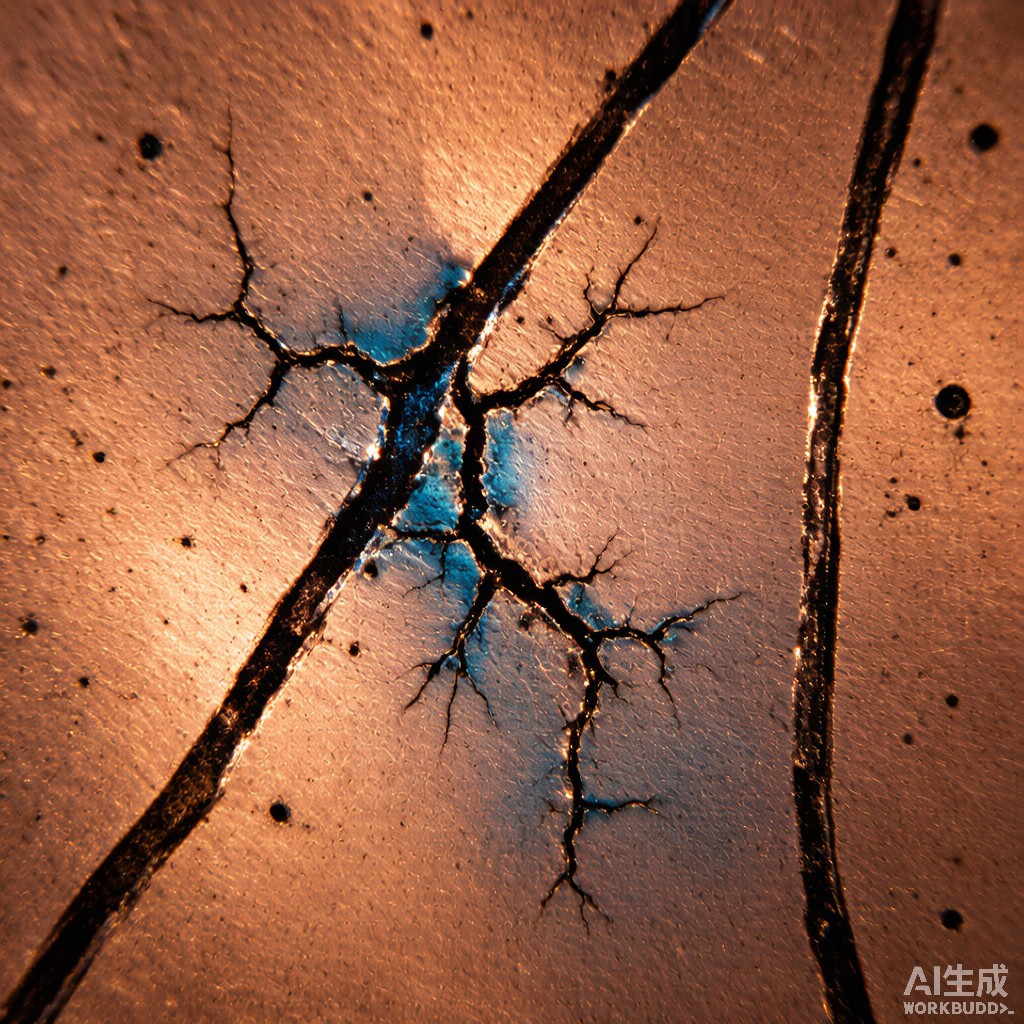
Unlike galvanic corrosion, which produces visible verdigris and measurable resistance drift, SCC leaves minimal surface evidence. A co
ector that passed all electrical tests at the factory can develop transgranular or intergranular microcracks weeks or months after deployment in a tropical environment. This article examines the metallurgical mechanism, environmental accelerants, and engineering countermeasures for SCC in copper strip SMT co
ector applications.
The Mechanism of Stress Corrosion Cracking in Copper Alloys
Film Rupture and Grain Boundary Penetration
The dominant SCC mechanism in copper alloys deployed in humid environments follows a film-rupture model. Under sustained tensile stress — whether from forming residual stress, press-fit insertion forces, or thermal cycling — the protective cuprous oxide (Cu2O) film on the copper surface undergoes localized rupture at stress concentration sites. The freshly exposed metal surface, now in contact with moisture and dissolved species, experiences accelerated anodic dissolution at the crack tip. As the crack advances, the stress at its tip intensifies, rupturing the film repeatedly and driving crack propagation.
The crack propagation rate is highly dependent on environmental chemistry. Three species are particularly damaging to copper alloys in tropical climates:
| Corrosive Species | Source in SE Asia | SCC Acceleration | Threshold Concentration |
|---|---|---|---|
| Ammonia (NH3) | Agricultural runoff, cleaning residues, bacterial decomposition | Severe — forms soluble [Cu(NH3)2]+ complex | >0.1 ppm dissolved |
| Chloride (Cl-) | Marine aerosol, coastal industry, dehumidifier condensate | Moderate — pitting-initiated SCC | >10 ppm in moisture film |
| Sulfur dioxide (SO2) | Urban pollution, volcanic activity (Indonesia/Philippines) | Moderate — acidifies surface moisture, enhances dissolution | >5 ppb atmospheric |
Intergranular vs Transgranular Cracking
SCC in copper strip can propagate along two paths, each with distinct metallurgical signatures. Intergranular SCC follows grain boundaries, which are typically enriched in impurities (sulfur, bismuth, lead) and have lower local corrosion resistance. This mode dominates in high-purity copper (C11000) with large grain sizes and in brass alloys (C26000, C26800) where zinc segregation at grain boundaries creates electrochemical heterogeneity.
Transgranular SCC cuts through grains along specific crystallographic planes, often associated with hydrogen embrittlement mechanisms in copper. This mode is more common in precipitation-hardened alloys (C19400, C70250) where coherent precipitates create planar slip localization. Both modes can coexist, and the transition between them is governed by the electrochemical potential at the crack tip, which varies with humidity, temperature, and applied potential.
Critical Environmental Thresholds for Tropical Deployment
Humidity-Temperature Envelope
SCC in copper requires a continuous or intermittent moisture film on the metal surface. The critical relative humidity above which this film forms depends on surface roughness, hygroscopic contamination, and temperature. For bright a
ealed copper strip with a clean surface, the threshold is approximately 60% RH at 25°C. In tropical environments where humidity routinely exceeds 80%, a moisture film is nearly always present.
Temperature accelerates SCC through Arrhenius kinetics. For intergranular SCC in C11000 copper exposed to ammoniacal environments, the apparent activation energy is approximately 40-55 kJ/mol, implying that crack propagation rates at 35°C are roughly 2.5-4 times faster than at 25°C. Southeast Asian ambient temperatures in the 30-38°C range thus place SMT co
ectors in a regime where SCC is both thermodynamically and kinetically favored.
Residual Stress Sources in SMT Co
ector Manufacturing
The tensile stress component of SCC does not need to be externally applied. Residual stresses from manufacturing operations are sufficient:
| Manufacturing Process | Typical Residual Stress | SCC Risk Level |
|---|---|---|
| Progressive die stamping (bending) | 100-250 MPa (surface tension) | High — stress exceeds threshold |
| Cold rolling (H04 temper) | 50-150 MPa (non-uniform) | Moderate — depends on orientation |
| Press-fit insertion | 80-200 MPa (at contact beam root) | High — sustained service stress |
| Soldering thermal stress | 30-80 MPa (CTE mismatch) | Low-Moderate — below threshold |
| Stress-relief a
ealed |
<30 MPa (uniform) | Low — below SCC threshold |
The critical threshold stress for SCC in copper varies by environment and alloy. In clean humid air, the threshold for C11000 is approximately 60-80 MPa. In the presence of ammonia at 1 ppm, it drops to 20-30 MPa. For C26000 brass in ammoniacal environments, the threshold is even lower — 10-15 MPa — making brass co
ectors particularly vulnerable in agricultural or industrial tropical zones.
Alloy Selection for SCC Resistance
Pure Copper vs Brass vs Bronze
Alloy selection is the first line of defense against SCC. The susceptibility ranking for common SMT co
ector alloys in tropical environments:
| Alloy | Composition | SCC Susceptibility | Primary Vulnerable Species | Recommendation |
|---|---|---|---|---|
| C11000 (ETP) | 99.9% Cu | Low-Moderate | NH3 (intergranular) | Acceptable with stress relief |
| C26000 (Cartridge Brass) | 70% Cu / 30% Zn | High | NH3 (severe dezincification + SCC) | Avoid in ammonia environments |
| C19400 (CuFe2P) | 97.5% Cu / 2.4% Fe / 0.03% P | Low | Cl- (transgranular at high stress) | Recommended for tropical |
| C52100 (Phosphor Bronze) | 92% Cu / 8% Sn / 0.2% P | Very Low | NH3 (only at extreme conc.) | Best for ammonia zones |
| C70250 (CuNiSi) | 97% Cu / 3% Ni / 0.6% Si | Very Low | Cl- (pitting, rarely SCC) | Best high-strength option |
| C7521 (Nickel Silver) | 62% Cu / 18% Ni / 20% Zn | Low-Moderate | NH3 (mild, Zn present) | Acceptable, monitor Zn leaching |
The data shows that phosphor bronze (C52100) and CuNiSi (C70250) offer the best SCC resistance for tropical deployments. However, for cost-sensitive applications where C11000 or C26000 must be used, stress-relief a
ealing is the critical mitigation measure.
Mitigation Strategies
Stress-Relief A
ealing
The single most effective countermeasure against SCC is reducing residual tensile stress below the SCC threshold through a controlled low-temperature a
eal. Unlike full recrystallization a
ealing (which softens the material and changes temper), stress-relief a
ealing operates at 200-300°C for 1-2 hours, reducing residual stress by 60-85% while maintaining mechanical properties within specification.
For C11000 copper strip stamped co
ectors, a stress-relief cycle at 250°C for 90 minutes in a nitrogen atmosphere reduces typical stamping residual stresses from 150-200 MPa to 25-40 MPa — safely below the 60-80 MPa SCC threshold. The process can be performed in batch or continuous belt furnaces, and the resulting parts show no visible change in temper color or dimensional shift.
Protective Coatings and Environmental Control
Beyond alloy selection and stress relief, barrier coatings provide additional SCC protection. Tin plating (2-5 micrometers) creates a physical barrier that prevents moisture film contact with the copper substrate. For tropical environments with known ammonia exposure, nickel underplate (1-2 micrometers) beneath tin provides additional diffusion barrier protection. Conformal coating of assembled PCBs with acrylic or silicone (0.05-0.1 mm) further isolates co
ectors from environmental moisture.
In sealed enclosures, maintaining internal humidity below 50% RH through desiccant packs or active dehumidification eliminates the moisture film necessary for SCC initiation. For outdoor SMT equipment in tropical zones, IP65-rated enclosures with gasket seals and internal humidity control are recommended for any copper-alloy co
ector interface.
Conclusion
Stress corrosion cracking in copper strip SMT co
ectors is a predictable, preventable failure mode when the metallurgical mechanism is understood. The convergence of high humidity, elevated temperatures, and manufacturing residual stresses in tropical Southeast Asian climates creates an environment where SCC is thermodynamically favored. However, through proper alloy selection (favoring C52100 or C70250 for critical applications), mandatory stress-relief a
ealing for all stamped copper components, and environmental barrier protection through plating and conformal coating, the SCC risk can be reduced to negligible levels. Quality programs should include periodic metallographic examination of field-returned co
ectors to detect early-stage SCC before it becomes a field-failure trend.