Why Brass Terminal Blocks Dominate High-Current PCB Co
ections
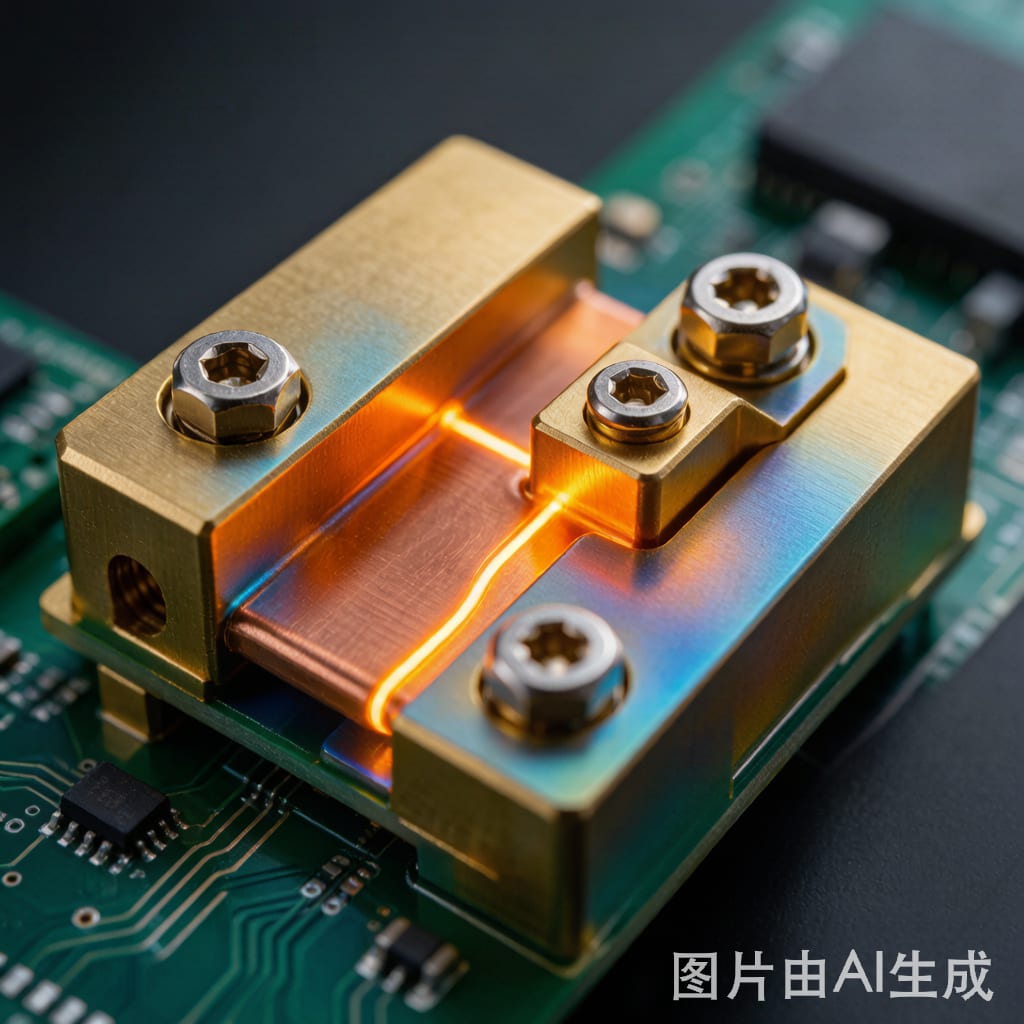
Brass terminal blocks are the backbone of power distribution in industrial electronics, motor drives, power supplies, and building automation systems. They handle currents from 10A to 200A+ per position while providing reliable, serviceable co
ections that can be torqued, inspected, and re-torqued without soldering. The material of choice—brass (copper-zinc alloy)—offers an optimal combination of electrical conductivity, mechanical strength, formability, and cost that pure copper ca
ot match for this application.
However, designing a brass terminal block that reliably carries its rated current over a 20+ year service life requires careful attention to thermal performance, material selection, plating specifications, and PCB layout. This article covers the engineering fundamentals that separate a reliable terminal block from a warranty claim.
Current Rating Fundamentals: Beyond the Catalog Number
How Current Ratings Are Determined
Terminal block current ratings are established per IEC 60947-7-1 (or UL 1059 for the North American market) by applying rated current through the block and measuring the temperature rise above ambient at the hottest point—typically the wire-to-block contact interface. The rating is the maximum current at which the temperature rise does not exceed 45°C (IEC) or 30°C (UL) above a 40°C ambient, resulting in a maximum operating temperature of 85°C (IEC) or 70°C (UL).
This rating assumes specific test conditions: a single conductor, rated wire gauge, specified tightening torque, and still air. Real-world installations rarely match these ideal conditions, which is why derating is essential.
Derating Factors for Real-World Applications
- Multi-position blocks: When all positions in a multi-position terminal block carry rated current simultaneously, adjacent positions heat each other. Derate by 15–25% for blocks with 5+ adjacent loaded positions.
- Enclosure heating: In sealed enclosures with limited ventilation, the ambient temperature inside the enclosure can be 10–20°C above the external ambient. Derate current by 10–15% for every 10°C above 40°C ambient.
- Altitude: Air density decreases with altitude, reducing convective cooling. Above 1,000 meters, derate by 1% per 200 meters of additional altitude.
- Wire gauge: Using a smaller wire than the terminal block is rated for increases contact resistance and local heating. Always use the maximum wire gauge the block accepts.
A 30A terminal block in a 10-position row, inside a sealed enclosure at 50°C ambient, at 1,500 meters elevation, effectively derates to approximately 30A × 0.80 × 0.85 × 0.975 = 19.9A—a 34% reduction from the catalog rating.
Brass Alloy Selection for Terminal Blocks
C26000 (Cartridge Brass, 70% Cu / 30% Zn)
C26000 is the most common brass alloy for terminal block bodies. It offers 28% IACS electrical conductivity, excellent cold formability for stamping and deep drawing, and good corrosion resistance. Its tensile strength of 300–450 MPa (depending on temper) provides adequate mechanical strength for screw terminal applications.
Advantages: Best formability for complex stamped shapes, good conductivity, widely available, lowest cost.
Limitations: Susceptible to stress corrosion cracking in ammonia environments, dezincification in aggressive water applications.
C36000 (Free-Cutting Brass, 61.5% Cu / 35.5% Zn / 3% Pb)
C36000 is the standard alloy for machined terminal blocks and screw components. The 3% lead content provides excellent machinability (rated 100% on the brass machinability scale), enabling high-speed CNC machining of screw threads, wire entry fu
els, and clamping mechanisms.
Advantages: Superior machinability, excellent thread quality, good surface finish.
Limitations: 26% IACS conductivity (slightly lower than C26000), lead content raises RoHS concerns (lead exemption for brass components in industrial equipment per RoHS A
ex III, but this exemption is under review).
C22000 (Commercial Bronze, 90% Cu / 10% Zn)
For applications requiring higher conductivity, C22000 offers 44% IACS conductivity—significantly better than C26000—at the expense of formability and cost. Used in high-current terminal blocks where the brass body carries substantial current (as opposed to merely providing mechanical clamping).
Thermal Modeling and PCB Heat Dissipation
Terminal Block Thermal Resistance
The thermal resistance from the current-carrying path to the PCB defines the junction-to-board temperature rise. A typical brass screw terminal block has a thermal resistance of 15–30°C/W from the contact point to the mounting surface. For a 20A current at 5 mΩ contact resistance (0.002W power dissipation seems small), the total power dissipation including the brass body resistance and wire resistance is typically 0.5–2.0W per position at rated current.
PCB Copper Pour Design for Heat Spreading
The PCB copper pour beneath and around the terminal block is the primary heat dissipation path. Key design rules:
- Copper weight: Use 2 oz (70 μm) or 3 oz (105 μm) copper on the terminal block layer. Standard 1 oz copper has insufficient cross-section to spread heat effectively at currents above 15A.
- Pour area: Provide at least 25 mm² of copper pour per ampere of current on each side of the board. For a 30A terminal, this requires 750 mm² of copper pour on both the top and bottom layers.
- Thermal relief vs. direct co
ect:
Terminal block mounting pads should use direct copper coection (no thermal relief spokes) to maximize heat transfer into the copper pour. Thermal relief pads are designed for soldering convenience but create high thermal resistance that impedes heat flow.
- Thermal vias: Place an array of thermal vias (0.3 mm hole, 1.0 mm pitch) in the copper pour beneath each high-current terminal pad. These vias conduct heat from the top copper layer to the bottom copper layer, effectively doubling the heat dissipation area. Fill thermal vias with epoxy and plate over (via-in-pad) to prevent solder wicking during assembly.
Plating Specifications for Terminal Reliability
Tin Plating (3–8 μm)
Tin is the most common plating for brass terminal blocks. It prevents zinc migration (dezincification) from the brass surface, provides a solderable finish for PCB mounting pads, and maintains low contact resistance when clamped against copper wire. A minimum of 3 μm tin over a 1–2 μm nickel underlayer is recommended for industrial applications.
Nickel Underlayer (1–2 μm)
A nickel barrier layer between the brass substrate and tin plating prevents zinc diffusion through the tin. Without nickel, zinc migrates to the tin surface within 6–12 months at elevated temperatures, forming zinc oxide that dramatically increases contact resistance. The nickel barrier also improves tin whisker resistance.
Silver Plating (2–5 μm)
For very high-current applications (>100A), silver plating offers the lowest contact resistance and the best performance under high-temperature operation. Silver’s thermal conductivity (429 W/m·K) far exceeds tin (67 W/m·K), and silver maintains low contact resistance even after thousands of mate-unmate cycles. However, silver tarnishes in sulfur-containing atmospheres, requiring protective packaging during storage.
Co
ection Reliability: Torque and Contact Force
The contact resistance of a screw terminal is inversely proportional to the applied contact force. For a typical M3.5 brass screw clamping a copper conductor:
- Under-torqued (0.5 N·m): Contact resistance 5–10 mΩ, risk of loosening under vibration, progressive heating and oxidation.
- Properly torqued (1.2 N·m): Contact resistance 0.5–1.5 mΩ, stable long-term co
ection, meets IEC creepage/clearance requirements.
- Over-torqued (2.0 N·m): Brass screw may yield, reduced clamping force after relaxation, potential thread stripping.
Always specify the tightening torque in the product documentation and verify torque compliance during production using a calibrated torque screwdriver or wrench.
Conclusion
Brass terminal block design for high-current PCBs requires an integrated approach that considers material conductivity, thermal management, plating durability, and mechanical reliability as interdependent variables. The catalog current rating is a starting point, not a design target—real-world derating of 20–35% is typical in multi-position enclosed installations. By selecting the right brass alloy, implementing adequate copper pour and thermal via arrays, specifying proper plating systems, and enforcing torque specifications, designers can achieve reliable 20+ year service life even in demanding industrial environments.