Why Thermal Management Matters for LED PCBs
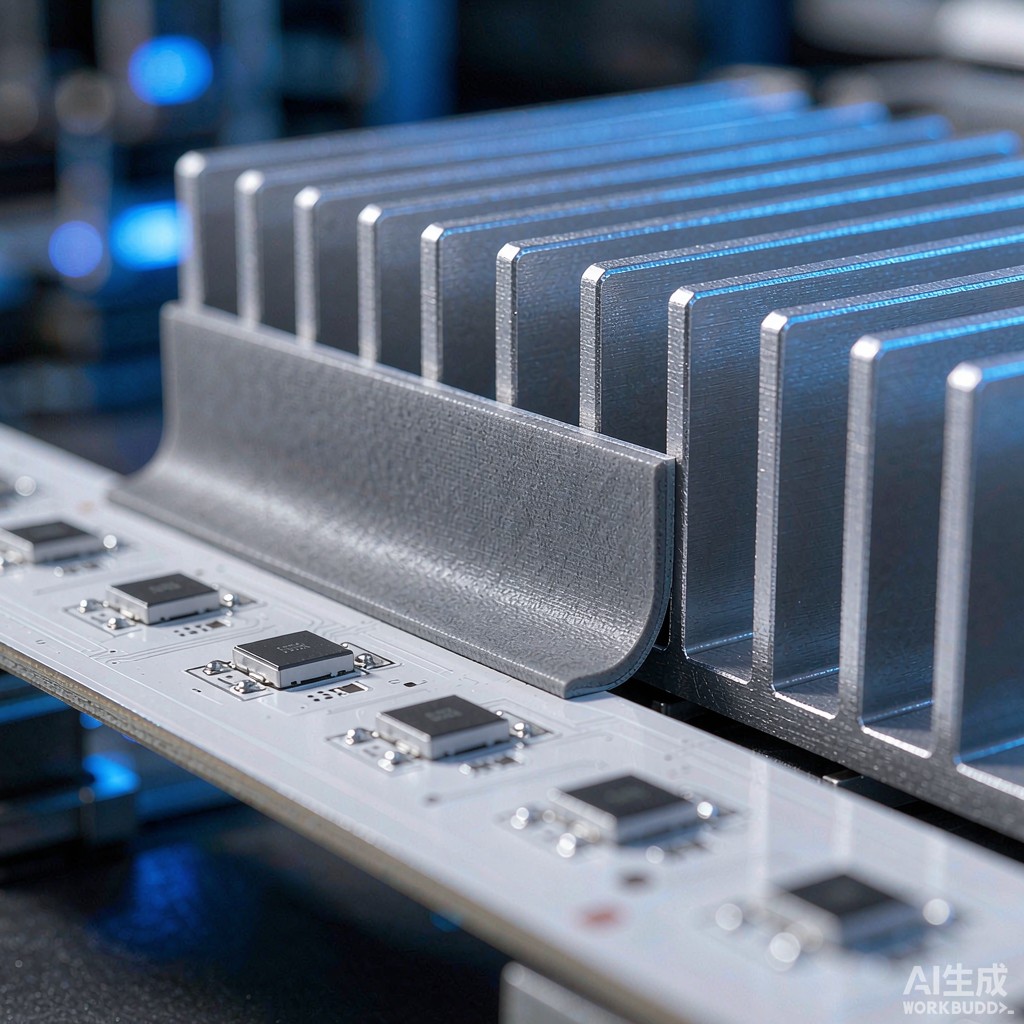
Light-emitting diode (LED) modules have transformed illumination, signage, automotive lighting, and display backlighting by delivering high efficacy and long service life. However, LEDs convert a significant portion of input electrical power into heat rather than light. When junction temperatures exceed manufacturer recommendations—typically 85–125 °C for mid-power devices and up to 150 °C for some high-power chips—luminous efficacy drops, color coordinates shift, and catastrophic failure risk rises. Effective heat dissipation from the LED package through the PCB to a heatsink or metal enclosure is therefore essential for reliable LED product design.
Thermally conductive adhesive tapes have become a popular thermal interface solution for LED assemblies because they combine mechanical attachment, electrical isolation, and heat conduction in a single, clean, reworkable material. Unlike thermal greases that can pump out or dry over time, and unlike mechanical fasteners that require drilling and tooling, pressure-sensitive thermal tapes bond LED PCBs to metal substrates quickly and without curing ovens. This article examines the composition, performance, and selection criteria for thermally conductive adhesive tapes in LED PCB heat dissipation applications.
How Thermal Tapes Conduct Heat
Thermally conductive adhesive tapes consist of a polymer adhesive matrix loaded with thermally conductive ceramic fillers and supported on a thin carrier film. Common fillers include aluminum oxide (Al₂O₃), boron nitride (BN), aluminum nitride (AlN), and zinc oxide (ZnO). The filler particles form percolating pathways through which phonons can travel, raising the effective thermal conductivity of the composite well above that of the base polymer alone. Typical thermal conductivity values range from 0.5 W/m·K for entry-level acrylic tapes to 3.0–4.0 W/m·K for advanced silicone or acrylic formulations loaded with high-performance ceramics.
The total thermal resistance of a tape joint is determined not only by bulk conductivity but also by bond-line thickness, contact area, and interface quality. Thin tapes—0.1–0.3 mm—minimize bulk resistance, while soft, conformable adhesives reduce air gaps at the LED PCB and heatsink surfaces. Because air has a thermal conductivity of only 0.026 W/m·K, eliminating even microscopic voids dramatically improves heat transfer compared with a dry mechanical joint.
Acrylic vs Silicone Adhesive Systems
Acrylic Thermal Tapes
Acrylic-based thermal tapes offer strong adhesion to a wide variety of substrates, including aluminum, FR-4, metal-core PCBs, and anodized surfaces. They provide high initial tack, excellent room-temperature bonding, and good environmental resistance. Acrylic tapes are generally lower in cost than silicone alternatives and are well suited to indoor LED lighting, consumer electronics, and commercial display applications where service temperatures remain below 90–100 °C. Their primary limitation is reduced performance at elevated temperatures, where the adhesive can soften and lose bond strength over time.
Silicone Thermal Tapes
Silicone-based thermal tapes maintain adhesion and mechanical integrity across a wider temperature range, typically −40 °C to 180 °C and sometimes higher for short excursions. Silicone’s inherent flexibility and low modulus allow it to accommodate thermal expansion mismatches between aluminum heatsinks and FR-4 or ceramic PCBs. This makes silicone thermal tapes the preferred choice for outdoor LED luminaires, automotive headlamps, high-bay industrial lighting, and other applications subject to thermal cycling, humidity, and UV exposure. The trade-off is higher cost and somewhat lower initial tack compared with acrylic systems.
Dielectric Strength and Electrical Isolation
Many LED PCB assemblies mount directly onto metal chassis or heatsinks that may carry electrical potential. In these cases, the thermal tape must also function as an electrical insulator. Ceramic-filled thermal tapes typically offer dielectric strengths of 5–20 kV/mm and volume resistivity greater than 10¹³ Ω·cm, providing reliable isolation between live circuitry and grounded metalwork. Designers should select a tape thickness that provides adequate creepage and clearance distance for the operating voltage, while keeping thermal resistance as low as possible. For high-voltage LED drivers or outdoor luminaires, certifying the tape to UL 94 V-0 flammability and IEC 60664 insulation coordination requirements is often necessary.
Application Best Practices
To maximize the performance of thermally conductive adhesive tapes in LED assemblies, follow these guidelines:
- Clean mating surfaces with isopropyl alcohol to remove oils, dust, and oxide layers before tape application.
- Apply uniform pressure across the bond area using a roller or press to eliminate air pockets and maximize contact.
- Choose the minimum practical thickness to reduce bulk thermal resistance while maintaining dielectric requirements.
- Allow dwell time for acrylic adhesives to reach full bond strength, typically 24–72 hours at room temperature.
- Design for thermal expansion by selecting softer silicone tapes when dissimilar materials experience large temperature swings.
Conclusion
Thermally conductive adhesive tapes provide a practical, cost-effective thermal interface solution for LED PCB heat dissipation. By combining adhesion, electrical isolation, and moderate thermal conductivity in a thin, easy-to-apply format, they simplify assembly and improve reliability compared with grease-and-screw alternatives. Selecting the right tape requires balancing thermal conductivity, adhesive chemistry, dielectric strength, and operating temperature range. Engineers who match these properties to the specific demands of their LED application will achieve lower junction temperatures, longer LED life, and more consistent optical performance.