## Introduction
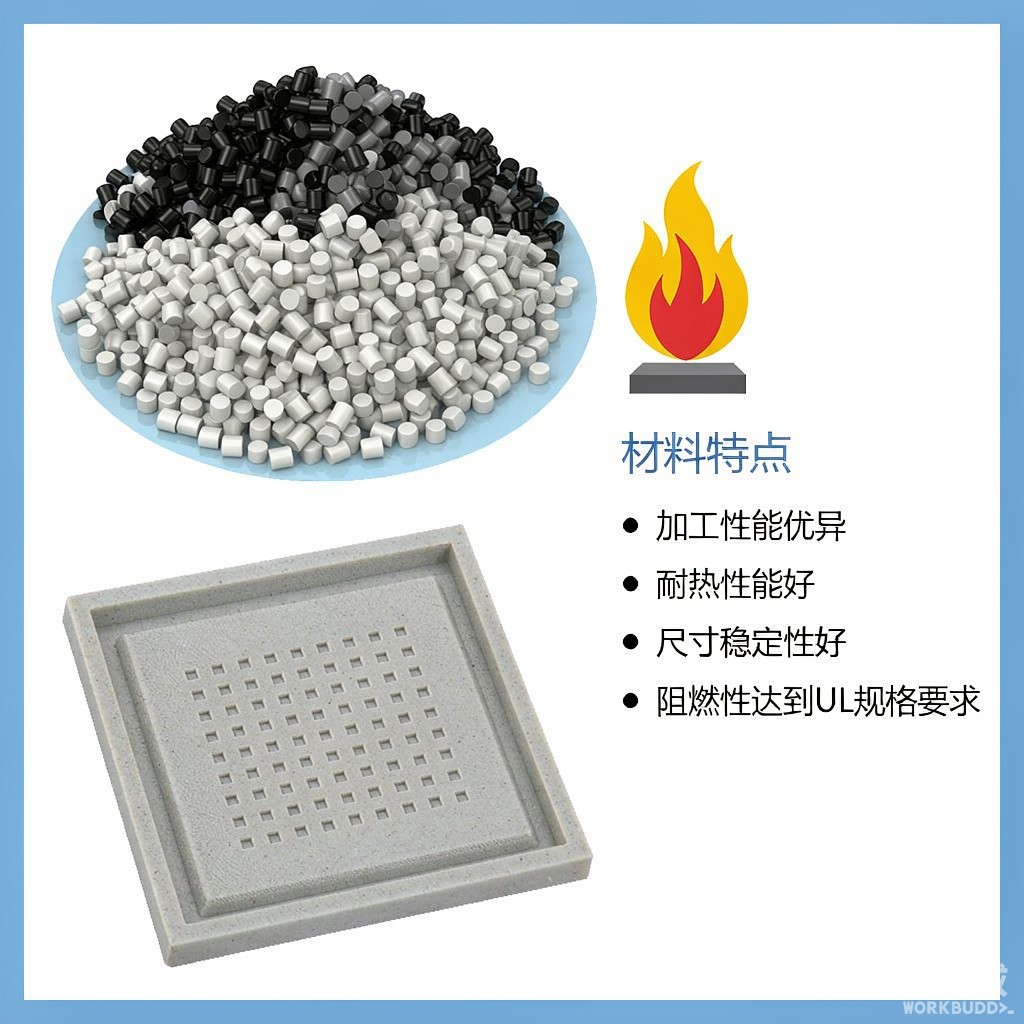
Polycarbonate-acrylonitrile butadiene styrene (PC/ABS) blends combine the heat resistance and dimensional stability of polycarbonate with the processability and impact strength of ABS. When compounded with flame-retardant additives, these materials become the material of choice for notebook housings, charger enclosures, server bezels, and consumer electronics that must pass UL94 flammability testing.
This article examines how different flame-retardant systems affect the properties of PC/ABS plastic pellets and provides selection guidance for electronics enclosure applications.
## Flame-Retardant Systems for PC/ABS
### Brominated Flame Retardants
Brominated additives, often combined with antimony trioxide as a synergist, have been used for decades to achieve UL94 V-0 at low loadings. They offer excellent melt-flow enhancement and preserve much of the base resin’s impact strength. However, environmental regulations such as RoHS and REACH restrict certain brominated compounds in consumer electronics, and market pressure increasingly favors halogen-free alternatives.
### Phosphorus-Based Flame Retardants
Phosphorus-based systems, including triphenyl phosphate, resorcinol bis(diphenyl phosphate), and oligomeric phosphonates, are the most common halogen-free route to UL94 V-0 in PC/ABS. They act in both the condensed phase, forming a protective char layer, and the gas phase, scavenging free radicals.
The challenge with phosphorus systems is hydrolytic stability. Some phosphate esters can migrate to the surface during aging, causing plate-out and electrical contact issues. They can also reduce the heat deflection temperature (HDT) and long-term hydrolysis resistance compared with brominated grades.
### Sulfonate and Silicone Synergists
Emerging halogen-free systems use sulfonate salts or silicone resins as char-promoting synergists at low loadings. These additives can achieve V-0 with minimal impact on HDT but are generally more expensive and may require tighter process control to avoid streaking or surface defects.
## Property Balance in Electronics Enclosures
### Impact Strength
PC/ABS is valued for its notched Izod impact strength, typically 400–600 J/m in unfilled grades. Adding flame retardants reduces impact, sometimes by 20–40%. For handheld devices and laptop housings, it is important to specify a grade with room-temperature and low-temperature impact data rather than relying solely on the base resin specification.
### Heat Deflection Temperature
The HDT of unfilled PC/ABS is usually 95–115 °C at 1.82 MPa. Brominated V-0 grades tend to retain HDT near the upper end of this range, while phosphorus-based grades may drop toward the lower end. For power adapters and LED drivers that operate near 85 °C internally, a higher HDT grade reduces the risk of warpage and screw boss creep.
### Dimensional Stability and Moisture
PC/ABS absorbs moisture at roughly 0.2–0.3% at equilibrium. Pellets should be dried at 80–100 °C for 3–4 hours before injection molding to avoid hydrolysis and surface splay. Flame-retardant grades are often more sensitive to moisture and shear than standard grades, so consistent drying and moderate screw speeds are recommended.
## Processing Considerations
### Mold Design
Wall thickness should be uniform where possible to minimize sink marks and internal stress. Gate placement affects weld line strength, which is particularly important in flame-retardant grades where weld lines can be weaker than the bulk material. Venting must be adequate to prevent burn marks from the flame-retardant decomposition products.
### Color and Aesthetics
Natural PC/ABS is light-colored and easy to pigment. Black is common for consumer electronics because it hides surface defects and provides a premium appearance. Some flame-retardant additives can shift color over time under UV exposure, so outdoor or high-UV applications may require additional stabilization.
### Regulatory and Sustainability Trends
Regulatory pressure continues to push electronics OEMs away from halogenated flame retardants. The EU RoHS directive restricts certain brominated compounds, and voluntary eco-labels such as TCO Certified and EPEAT favor halogen-free systems. Many brand owners now specify halogen-free PC/ABS for laptops, monitors, and peripherals even where regulations do not yet require it.
Sustainability considerations also include recycled content. Post-industrial recycled PC/ABS can be compounded with flame-retardant additives, but lot-to-lot consistency is critical for maintaining uniform color and mechanical properties. Some suppliers now offer bio-circular mass-balanced grades that maintain UL94 V-0 while reducing cradle-to-gate carbon footprint.
### Testing and Quality Assurance
Before approving a flame-retardant PC/ABS grade, request a full data sheet including UL94 rating, glow-wire ignition temperature, comparative tracking index, and HDT. Molded plaques should be submitted for mechanical testing, and production parts should be audited for sink marks, weld-line strength, and surface appearance. A well-documented incoming inspection plan prevents field failures and reduces the risk of supply-chain substitutions that compromise flame retardancy.
## Conclusion
Flame-retardant PC/ABS plastic pellets offer an excellent balance of impact, heat resistance, and moldability for electronics enclosures. The choice between brominated, phosphorus, and emerging halogen-free systems should be driven by regulatory requirements, operating temperature, impact requirements, and total cost. With proper drying, mold design, and process control, PC/ABS can meet UL94 V-0 while delivering the durability expected of modern electronics housings.