Introduction: Choosing Copper Strip for SMT Bus Bars
Bus bars in surface-mount technology (SMT) assemblies carry DC power across printed circuit boards, distributing current from input co
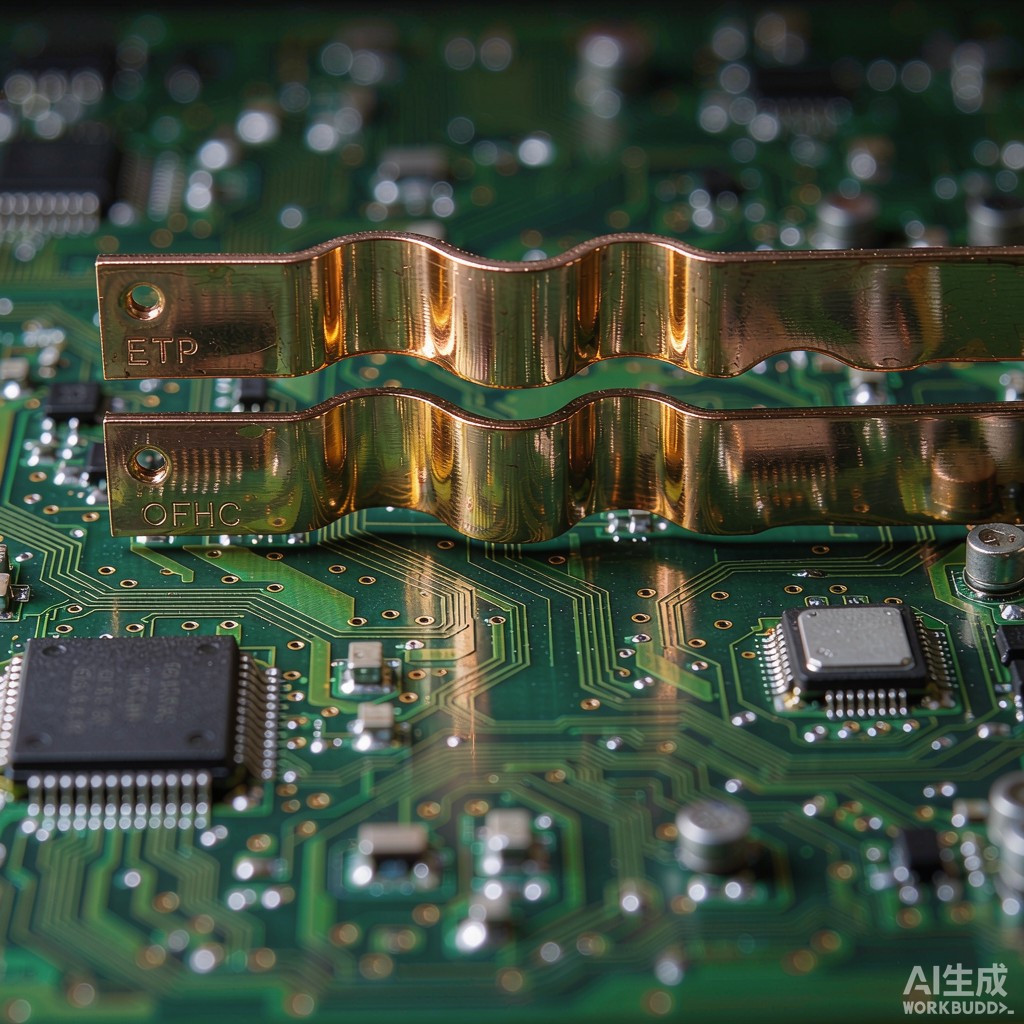
ectors to voltage regulator modules, motor drivers, LED arrays, and RF power amplifiers. The material selected for these conductive paths directly affects voltage drop, joule heating, solderability, and long-term reliability. While engineers often focus on trace geometry and copper weight, the metallurgical grade of the copper strip itself is equally important. The two most common grades specified for SMT bus bars are electrolytic tough pitch (ETP, C11000) and oxygen-free high-conductivity (OFHC, C10200) copper strip.
Both grades offer excellent electrical conductivity, but they differ in oxygen content, cost, a
ealing response, and suitability for high-temperature or hydrogen-bearing environments. This article compares ETP and OFHC copper strip for SMT bus bar applications, providing a practical selection framework based on conductivity requirements, thermal processing, solderability, and budget constraints.
Metallurgical Differences Between ETP and OFHC Copper
ETP copper is produced by electrorefining and contains a controlled amount of oxygen—typically 200–400 ppm—as copper oxide inclusions dispersed throughout the matrix. These oxide particles refine grain structure during a
ealing and improve the material’s resistance to softening at moderate temperatures. ETP copper strip is the workhorse of the electronics industry, used in stamped terminals, lead frames, heat sinks, and power bus bars where ultimate purity is not required.
OFHC copper is manufactured in an oxygen-free environment, typically through vacuum casting or a reduction process, resulting in oxygen content below 10 ppm. The absence of oxide inclusions gives OFHC copper exceptionally high electrical and thermal conductivity, superior creep resistance at elevated temperatures, and immunity to hydrogen embrittlement. For SMT bus bars that will be exposed to high-current densities, thermal cycling, or hermetic sealing operations involving reducing atmospheres, OFHC copper strip is often the preferred choice despite its higher cost.
Conductivity and Current-Carrying Capacity
The electrical conductivity of a
ealed ETP copper strip is typically 100–101% IACS, while OFHC copper can reach 101–102% IACS. Although the difference appears small on paper, it becomes meaningful in high-current SMT bus bars where every micro-ohm of resistance contributes to power loss and temperature rise. For a bus bar carrying 50 A with a resistance of 0.1 mΩ, a 1% improvement in conductivity reduces resistive losses by approximately 25 mW—a modest saving per trace, but significant when multiplied across hundreds of devices in a data center power distribution system or electric vehicle battery management module.
More importantly, OFHC copper maintains conductivity more consistently after thermal processing. ETP copper can experience slight conductivity degradation if a
ealed in strongly reducing atmospheres because copper oxide inclusions react with hydrogen to form water vapor at grain boundaries, a phenomenon known as hydrogen embrittlement. OFHC copper is immune to this issue, making it the safer choice for brazed or furnace-brazed assemblies used in aerospace, military, and high-reliability industrial electronics.
Formability, Stamping, and Solderability
Both ETP and OFHC copper strip are highly formable in the a
ealed temper, with elongation values exceeding 35%. For SMT bus bars that require bending, coining, or piercing, either grade will perform well on standard stamping equipment. However, ETP copper tends to have slightly better machinability and chip breaking during high-speed stamping because the copper oxide particles act as internal lubricants and crack initiators. This can translate into longer tool life and cleaner edges in high-volume production.
Solderability is excellent for both grades when the surface is clean and properly activated. In practice, bare copper bus bars are rarely used without a surface finish. Tin plating, immersion silver, or selective nickel-gold finishes are applied to ensure reliable solder joints during lead-free reflow. ETP and OFHC copper respond similarly to these plating processes, although OFHC’s cleaner grain structure can yield marginally smoother plated surfaces, which is advantageous for fine-pitch SMT terminations where plating uniformity affects joint quality.
Cost Considerations and Supply Availability
ETP copper strip is generally 10–25% less expensive than OFHC copper strip for equivalent dimensions and temper. The cost difference stems from the additional processing required to exclude oxygen during OFHC production. For consumer electronics, appliance controls, and automotive modules where cost pressure is intense, ETP copper provides more than adequate performance for most bus bar applications.
OFHC copper becomes cost-justified when the application demands maximum conductivity, resistance to hydrogen embrittlement, or operation in vacuum, cryogenic, or high-temperature environments. Medical imaging equipment, particle accelerator power supplies, satellite electronics, and high-frequency RF power systems frequently specify OFHC copper for these reasons. For SMT bus bars in such systems, the premium for OFHC is usually small relative to the total bill of materials and the cost of field failure.
Selection Guidelines for SMT Bus Bar Designers
When specifying copper strip for SMT bus bars, use the following decision criteria:
- Choose ETP (C11000) when the application operates at moderate temperatures, is assembled by standard reflow soldering, and cost is a primary concern. ETP is ideal for consumer electronics, LED lighting drivers, and general-purpose industrial controls.
- Choose OFHC (C10200) when the design requires maximum conductivity, hydrogen-bearing thermal processes are involved, or the product must operate at elevated temperatures or in vacuum environments. OFHC is preferred for aerospace, medical, scientific, and high-power RF applications.
Conclusion
ETP and OFHC copper strip each have a well-defined place in SMT bus bar design. ETP offers an outstanding balance of conductivity, formability, and economy for mainstream electronics manufacturing. OFHC provides the highest conductivity and thermal stability for demanding, high-reliability applications. By matching the copper grade to the electrical, thermal, and environmental requirements of the assembly, engineers can optimize both performance and cost while ensuring long-term solder joint reliability and current-carrying capacity.