## Introduction to Beryllium Copper in SMT Applications
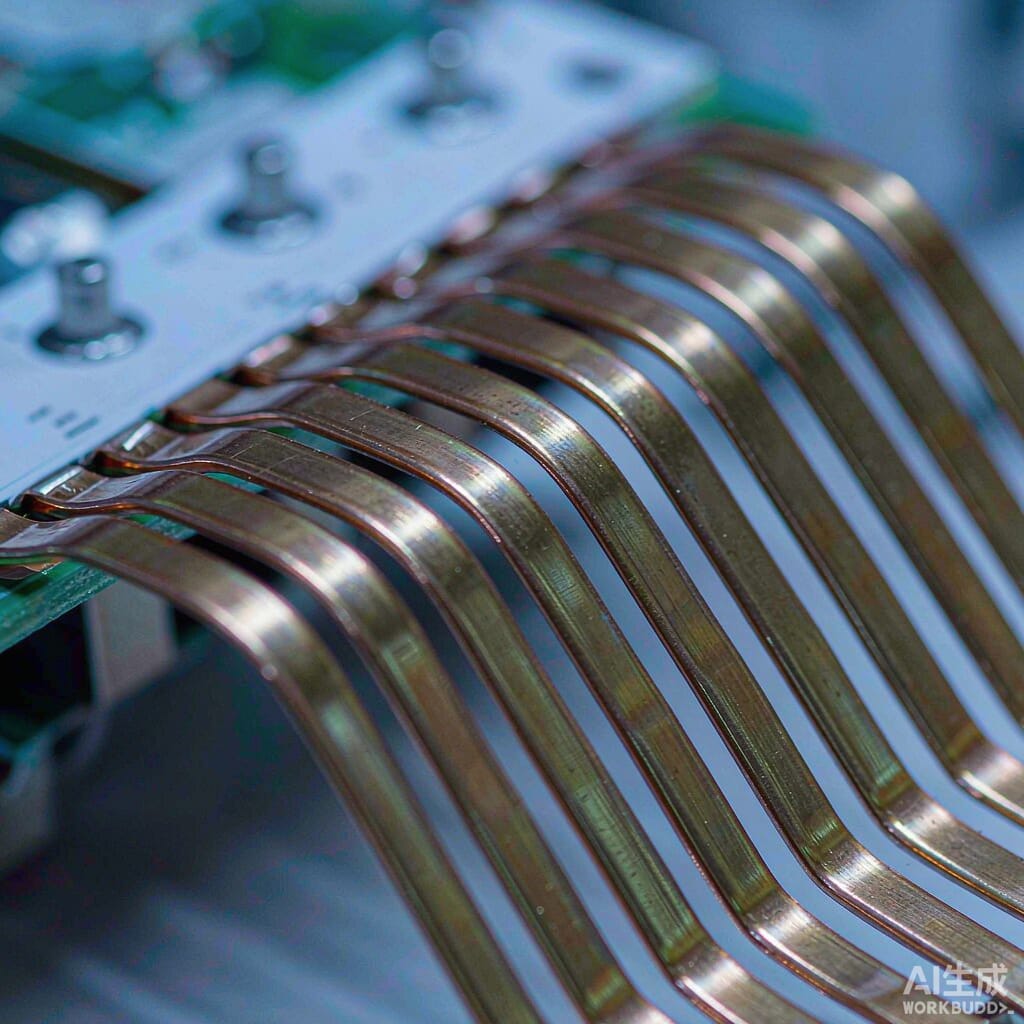
When electronics engineers need a spring contact material that maintains reliable normal force across thousands of mating cycles, beryllium copper strip is almost always the first choice. Unlike phosphor bronze or stainless steel, beryllium copper (BeCu) combines high electrical conductivity with exceptional elastic properties, making it ideal for battery contacts, co
ector sockets, switch blades, and EMI gasket fingers in surface mount technology (SMT) assemblies.
This guide covers the key alloys, mechanical properties, and selection criteria for beryllium copper strip in SMT spring contact applications.
## Key Beryllium Copper Alloys for SMT
### C17200 (UNS C17200) — The Industry Standard
C17200, also known as Alloy 25, is the most widely used beryllium copper grade for spring contacts. After age hardening (precipitation hardening at 315°C for 2–3 hours), it reaches:
– Tensile strength: 1,200–1,500 MPa
– Yield strength: 1,000–1,380 MPa
– Conductivity: 22–28% IACS
– Hardness: 38–42 HRC
The high yield-to-tensile ratio means the material can be deflected significantly without permanent set, which is critical for spring contacts that must maintain contact pressure over thermal cycling and mechanical vibration.
### C17300 — Free-Machining Variant
C17300 contains a small addition of lead (approximately 0.2–0.6%) that improves machinability without significantly degrading mechanical properties. This grade is preferred when contacts require secondary machining operations such as drilling, tapping, or milling after stamping.
### C17410 — Low-Beryllium Alternative
For applications where cost sensitivity is paramount and slightly lower performance is acceptable, C17410 (including only 0.15–0.50% beryllium) provides:
– Tensile strength: 850–1,100 MPa
– Conductivity: 45–60% IACS
– Hardness: 28–34 HRC
The higher conductivity makes C17410 attractive for power contacts where current-carrying capacity matters more than spring deflection range.
## Why Beryllium Copper Outperforms Alternatives
### Stress Relaxation Resistance
Stress relaxation is the gradual loss of spring force when a material is held under load at elevated temperature. This is the single most important property for SMT contacts that must survive reflow soldering (peak 260°C) and long-term operating temperatures of 85–125°C.
At 105°C over 1,000 hours, C17200 retains approximately 85% of its initial stress, compared to only 65–70% for C52100 phosphor bronze. This directly translates to more stable contact resistance over the product lifetime.
### Fatigue Life
SMT contacts in test sockets may undergo thousands of insertion cycles. Beryllium copper’s fatigue endurance limit at 10⁷ cycles reaches approximately 400 MPa, roughly 50% higher than phosphor bronze. For socket contacts rated at 10,000+ mating cycles, this difference is decisive.
### Conductivity vs. Spring Trade-off
The table below compares BeCu with common alternative materials:
| Material | Conductivity (% IACS) | Yield Strength (MPa) | Stress Relaxation @105°C/1000h |
|—|—|—|—|
| C17200 (BeCu) | 22–28 | 1,000–1,380 | ~85% retained |
| C52100 (Phosphor Bronze) | 15–20 | 700–900 | ~65% retained |
| C26000 (Cartridge Brass) | 28–32 | 500–700 | ~50% retained |
| 301 Stainless Steel | 2–3 | 950–1,100 | ~90% retained |
Stainless steel has excellent stress relaxation but very poor conductivity, requiring plating or a separate current path. Beryllium copper offers the best balance for most SMT contact designs.
## Strip Thickness and Tolerances for SMT
Spring contacts for SMT assemblies typically use strip thicknesses between 0.10 mm and 0.30 mm. Critical considerations include:
### Thickness Tolerance
Precision-rolled beryllium copper strip for SMT contacts should meet tolerance bands of ±0.005 mm or better. Variation in thickness directly affects the spring constant of stamped contacts, which in turn affects contact force distribution.
### Temper Selection
Beryllium copper strip is supplied in several tempers before age hardening:
– 1/2 Hard (TB00): Suitable for moderate forming, stamped into contact shapes, then age hardened
– 1/4 Hard (TB00): Easier forming for complex geometries with multiple bends
– Mill Hardened (TM00–TM08): Pre-hardened material that eliminates the need for post-stamp heat treatment, reducing manufacturing complexity
For most SMT contact applications, mill-hardened tempers (TM02 or TM04) are preferred because they eliminate the batch-to-batch variability associated with in-house age hardening.
## Surface Finishes for SMT Compatibility
Beryllium copper contacts for SMT assembly typically require a surface finish that provides solderability and corrosion resistance:
### Nickel + Gold Flash
A 1.5–3.0 µm nickel underplate followed by 0.05–0.15 µm hard gold flash is the standard finish for high-reliability contacts. The nickel barrier prevents copper migration into the gold, while the gold provides tarnish resistance and low contact resistance.
### Tin Plating for SMT Soldering
For contacts that will be reflow-soldered to the PCB, matte tin or tin-bismuth plating (3–5 µm) over a thin nickel or copper underplate provides good solderability. Tin-bearing contacts must be stored in nitrogen-sealed packaging to prevent whisker growth.
### Pre-ti
ed Strip
Some suppliers offer pre-ti
ed beryllium copper strip with 0.5–1.5 µm tin coating applied during rolling. This eliminates post-stamp plating and reduces cost, though the solderability shelf life is shorter than post-plated alternatives.
## Design Guidelines for SMT Spring Contacts
When designing a stamped beryllium copper spring contact for SMT assembly, follow these principles:
### 1. Minimize Stress Concentration
Radii at bend corners should be at least 1.5× the strip thickness. Sharp internal corners create stress risers that can initiate fatigue cracks during thermal cycling.
### 2. Design for Deflection Range
A well-designed SMT contact should operate at 60–75% of its yield deflection. This provides sufficient contact force (typically 50–150 grams per contact point) while leaving margin for manufacturing tolerance and thermal expansion mismatch.
### 3. Account for Reflow Survivability
The contact must survive peak reflow temperatures of 260°C without permanent set. Because age-hardened C17200 has been heat-treated at 315°C, the 260°C reflow peak is below the treatment temperature, and dimensional stability is maintained.
### 4. Consider Normal Force Distribution
For multi-contact co
ectors, the normal force per contact should be balanced within ±15% across all positions. This requires uniform stamping and consistent temper across the strip width.
## Cost Considerations and Alternatives
Beryllium copper strip is significantly more expensive than phosphor bronze — typically 2.5–4× the cost per kilogram. For high-volume consumer electronics, engineers often specify beryllium copper only for the most critical contacts and use phosphor bronze for secondary contacts.
However, the total cost equation should include:
– Lower defect rates during assembly due to consistent spring force
– Longer tool life (BeCu is easier to stamp than work-hardened phosphor bronze)
– Reduced field failures in applications with thermal cycling
For applications requiring 10,000+ mating cycles or operation above 105°C, the lifetime cost advantage of beryllium copper is clear.
## Conclusion
Beryllium copper strip remains the benchmark material for SMT spring contacts where reliability, fatigue life, and stress relaxation resistance are paramount. By selecting the appropriate alloy (C17200 for maximum performance, C17410 for cost-constrained conductivity applications), specifying correct temper and thickness tolerance, and applying the right surface finish, electronics manufacturers can achieve contact reliability that no alternative material can match.
For sourcing precision-rolled beryllium copper strip in Southeast Asia, TechMartSE offers C17200 and C17410 grades in thicknesses from 0.10 mm to 0.50 mm, with mill-hardened and solution-treated tempers, and optional nickel-gold or tin plating.