The Science Behind Copper Conductivity
In the world of electrical engineering and electronics manufacturing, few materials have proven as enduring and essential as copper. Despite decades of research into alteative conductors, copper conductivity remains the benchmark against which all other materials are measured. Understanding why copper maintains this position helps engineers and designers make informed decisions for their electronic systems.
What Determines Electrical Conductivity?
Electrical conductivity measures a material ability to allow the flow of electric current. This property depends on several atomic and crystalline factors:
Atomic Structure
Copper atoms have a single electron in their outer shell that moves freely through the crystal lattice. This “free electron” is responsible for copper excellent electrical conductivity. The face-centered cubic crystal structure of copper also contributes to efficient electron flow with minimal resistance.
Purity and Impurities
The presence of even trace impurities can significantly impact conductivity:
- Oxygen content – Must be controlled to parts per million for maximum conductivity
- Alloying elements – Even beneficial additions like beryllium reduce conductivity
- Crystal defects – Manufacturing processes that introduce defects increase resistance
Copper vs. Alteative Conductors
How does copper compare to other materials used in electronics?
Silver
- Conductivity – Highest of any metal at approximately 105% IACS
- Cost – 100-200 times more expensive than copper
- Application – Reserved for specialized RF and microwave components
Gold
- Conductivity – Approximately 73% IACS (significantly lower than copper)
- Advantages – Excellent corrosion resistance, non-oxidizing
- Application – Used as plating for contacts and co
ectors, not as primary conductor
Aluminum
- Conductivity – Approximately 61% IACS
- Advantages – Lightweight, lower cost, abundant
- Limitations – Higher resistance requires larger cross-sections
- Application – Power transmission lines, some PCB applications
The IACS Standard
The Inteational A
ealed Copper Standard (IACS) provides a universal measure for comparing conductor materials:
- Pure copper (C11000) – 101% IACS
- ETP copper (C11040) – 100% IACS (the reference standard)
- Nickel-silver alloys – 5-25% IACS depending on composition
- Stainless steel – Approximately 2.5% IACS
Thermal Conductivity of Copper
Copper excels not only in electrical conductivity but also in thermal conductivity, making it ideal for applications requiring heat management:
- Thermal conductivity – 401 W/(m·K) at room temperature
- Comparison – Aluminum is 237 W/(m·K), steel is approximately 45 W/(m·K)
This dual excellence in electrical and thermal conductivity explains copper popularity in power electronics, LED systems, and EV battery applications where both current carrying and heat dissipation are critical.
Factors Affecting Copper Performance in Electronics
Temperature Effects
Copper conductivity decreases as temperature increases (negative temperature coefficient). Understanding this relationship is essential for:
- Power distribution systems subject to heating
- Precision measurement circuits
- High-current applications with thermal conces
Skin Effect at High Frequencies
At radio frequencies and above, current concentrates near the conductor surface (skin effect). This phenomenon affects:
- RF transmission lines and waveguides
- High-speed data co
ectors
- Power electronics operating at high frequencies
Silver plating or gold plating of copper conductors can improve high-frequency performance by providing a lower-resistance surface path.
Mechanical Stress
Cold working copper increases its strength but also raises electrical resistance. A
ealed copper offers maximum conductivity but lower mechanical strength. Applications must balance these competing requirements.
Modern Applications Leveraging Copper Conductivity
Electric Vehicles
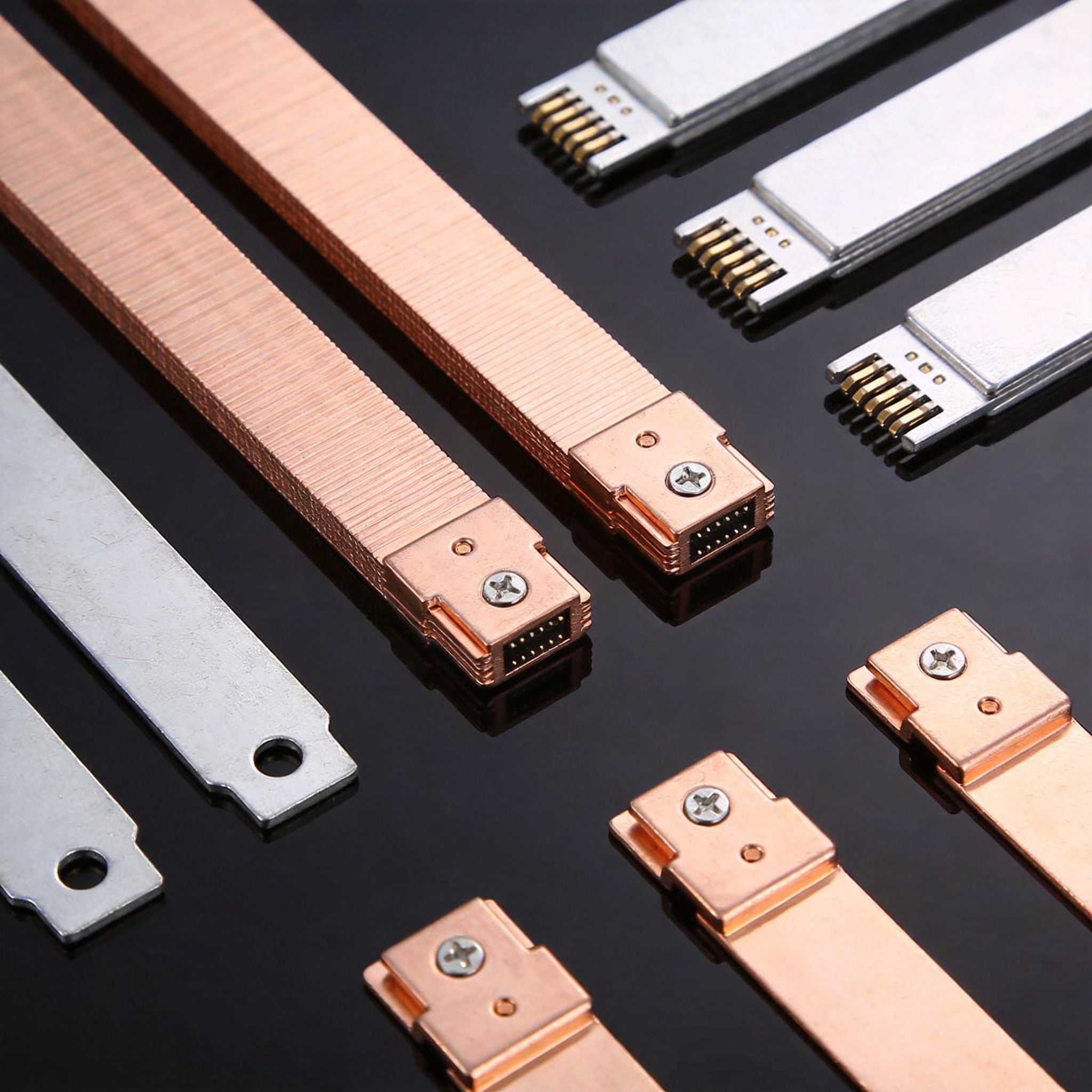
EV battery systems require conductors that can handle hundreds of amps while managing heat generation. Copper strips and bus bars provide the necessary combination of high conductivity and thermal management capability.
Renewable Energy Systems
Solar inverters, wind turbine generators, and energy storage systems all depend on copper conductors for efficient power conversion and distribution.
Consumer Electronics
From smartphone charging circuits to laptop power delivery, copper traces and components enable compact, efficient designs that meet consumer expectations for performance and battery life.
Industrial Motor Controls
Variable frequency drives (VFDs) and motor starters rely on copper bus bars and co
ections for efficient power conversion and minimal losses.
The Economics of Copper Conductivity
While copper prices fluctuate with commodity markets, its superior conductivity often makes it the most economical choice:
- Lower material costs – Less copper required compared to aluminum for equivalent current capacity
- Reduced losses – Higher conductivity means less energy wasted as heat
- Smaller designs – Higher conductivity enables more compact, lightweight products
- Recyclability – Copper is 100% recyclable without loss of properties
Future Outlook
Research continues into advanced copper alloys and composite materials that may further enhance copper performance characteristics:
- Copper-graphene composites – Potential for dramatically improved conductivity
- Nanocrystalline copper – Enhanced strength with maintained conductivity
- Surface treatments – Advanced platings improving solderability and reliability
Conclusion
Copper remains the gold standard for electrical conductivity in electronics not because alteatives do not exist, but because copper offers the best balance of conductivity, workability, availability, and cost for most applications.
For electronics manufacturers, understanding copper conductivity properties enables better component selection, more efficient designs, and products that meet performance and reliability expectations.
TechMart SE supplies premium copper strips and components engineered to deliver maximum conductivity for demanding electronics applications. Our technical team can help you select the right materials for your specific requirements.