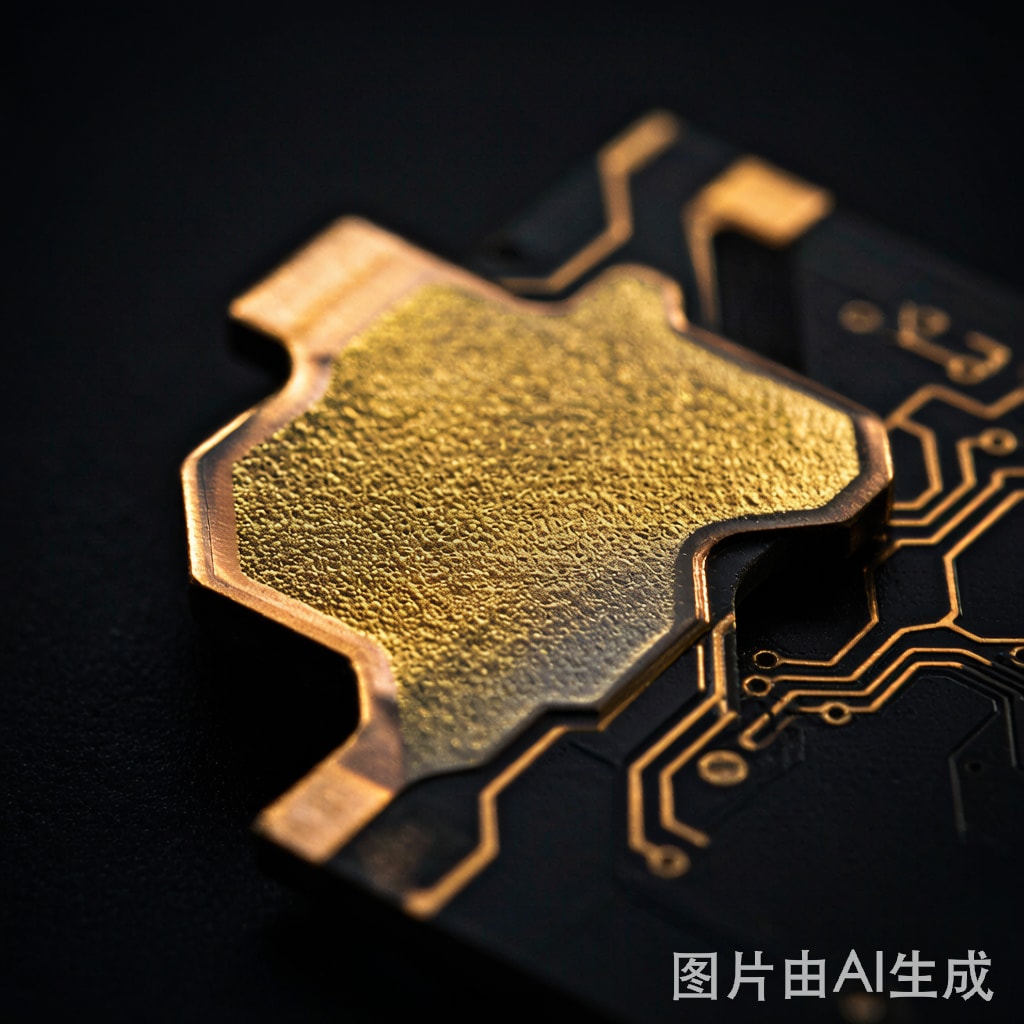
The choice of PCB surface finish shapes every subsequent SMT assembly decision — from stencil aperture design and paste printing parameters to reflow profile and rework strategy. Among the half-dozen finishes in production today, two dominate the cost-versus-performance conversation: HASL (Hot-Air Solder Leveling), the 50-year veteran, and chem-tin (immersion tin), the flat-surface challenger that has captured roughly 20–25% of the global PCB surface finish market.
For Southeast Asian SMT manufacturers serving consumer electronics, industrial controls, and automotive electronics, the choice between these finishes is rarely “which is better” — it is “which is better for this specific design“.
How Each Finish Is Produced
HASL process: The bare PCB is fluxed, then immersed briefly in molten SnPb or lead-free solder (typically SAC305 at ~250°C). As the board exits the solder pot, hot-air knives (top and bottom) blow away excess solder, leaving a thin, irregular coating of eutectic solder on exposed copper. Final thickness varies from 1 to 40 μm depending on surface orientation and process parameters.
Chem-tin process: The bare PCB is cleaned and micro-etched, then immersed in an aqueous solution containing tin fluoborate or tin methane sulfonate plus organic additives. Through a controlled displacement reaction, a thin layer (0.8–1.2 μm typical) of pure tin deposits on the copper surface. The process is purely chemical — no electricity, no high temperature — making it ideal for boards with sensitive components or tight thermal budgets.
Surface Planarity: The Decisive Difference
Planarity is where the two finishes diverge most dramatically, and it is the single biggest reason chem-tin has displaced HASL in fine-pitch assembly.
| Parameter | HASL (SnPb) | HASL (Lead-Free) | Chem-Tin (Immersion Tin) |
|---|---|---|---|
| Surface planarity | ±25–40 μm coplanarity | ±15–25 μm coplanarity | ±2–5 μm coplanarity |
| Typical thickness | 1–40 μm (variable) | 1–25 μm (variable) | 0.8–1.2 μm (uniform) |
| Composition | Sn63/Pb37 eutectic | Sn96.5/Ag3.0/Cu0.5 | Pure tin (Sn >99%) |
| Suitable for 0.4 mm pitch BGA | Marginal | Marginal | Excellent |
| Suitable for 0.3 mm pitch WLCSP | Not recommended | Not recommended | Acceptable with care |
The variable HASL thickness — particularly the meniscus that forms at pad edges where solder drains during the air-knife step — can cause inconsistent solder paste volume deposition. For BGA packages with 0.5 mm pitch or smaller, this non-planarity directly contributes to head-in-pillow defects and non-wet opens at outer rows of balls. Chem-tin’s near-perfect planarity eliminates this failure mode.
Solderability and Shelf Life
HASL finish, being already solder alloy, wets instantly during reflow. Its shelf life is essentially unlimited when stored in dry conditions — a sealed HASL board remains solderable for years.
Chem-tin, by contrast, has a finite solderability window similar to OSP. Industry data shows:
- 0–6 months: Excellent solderability, wetting time typically 0.8–1.2 seconds at 255°C (wetting balance test per IPC J-STD-003).
- 6–12 months: Marginal but acceptable for most applications, wetting time 1.5–2.5 seconds.
- 12+ months: Tin-copper intermetallic (Cu₆Sn₅) growth through the tin layer reaches the surface, forming a rough “scab” appearance with degraded wetting. Wetting times may exceed 3 seconds and boards should be reworked or rejected.
The shelf-life limitation can be partially mitigated by storing chem-tin boards in nitrogen-purged cabinets at <10% RH, extending the usable window to 12–18 months. However, for high-volume consumer electronics where board inventory turns in weeks rather than months, this is rarely a concern.
Whisker Risk Considerations
Tin whiskers — spontaneous filament growths from pure tin surfaces — pose a long-term reliability risk for chem-tin. Although post-reflow tin (where the chem-tin is consumed and replaced by solder alloy during assembly) is generally low-risk, un-reflowed chem-tin on through-hole pads, edge co
ectors, and test points remains whisker-prone.
Modern chem-tin chemistries incorporate anti-whisker additives (typically 0.5–2% bismuth or silver co-deposition) that significantly reduce whisker growth. When specifying chem-tin finish, verify that the supplier’s chemistry is whisker-mitigated per IPC-4552 and that the process has been qualified per IPC-9201 whisker growth testing.
HASL finishes, being eutectic alloy rather than pure tin, have essentially zero whisker risk.
Cost Analysis
Approximate cost comparison for a 1.6 mm thick 4-layer 100×150 mm board (in Southeast Asia, 2026):
| Finish | Process Cost (USD/m²) | Relative Cost | Min. Order Premium |
|---|---|---|---|
| Lead-free HASL | $1.20–1.80 | 1.0× (baseline) | None |
| SnPb HASL | $1.00–1.40 | 0.85× | None |
| Chem-tin (immersion tin) | $2.50–3.50 | 2.0–2.5× | None |
| ENIG | $5.00–7.00 | 4–5× | None |
| OSP | $1.50–2.20 | 1.2–1.5× | None |
Chem-tin is typically 2–2.5× more expensive than HASL on a per-area basis, but the premium narrows when factoring in the downstream cost of HASL-induced defects at fine pitch.
Process Window Comparison for SMT Assembly
Reflow profile compatibility: Both finishes accommodate standard SAC305 lead-free reflow profiles (peak 235–245°C, TAL 60–90 seconds). Chem-tin is slightly more sensitive to multiple reflow cycles because each excursion grows additional Cu-Sn intermetallic. For double-sided assembly, plan second-side processing within 24 hours of first-side reflow.
Stencil design: HASL’s non-planar surface requires slightly oversized stencil apertures (5–10% increase) to ensure consistent paste release. Chem-tin’s flat surface allows standard aperture design with no compensation.
Rework compatibility: Chem-tin is more sensitive to repeated rework cycles than HASL. Limit total thermal exposures (initial reflow + rework) to 3 cycles maximum to avoid copper exposure and pad lift risk.
Selection Decision Matrix
Choose HASL when:
- Board pitch is ≥0.65 mm (SOIC, TSSOP, larger BGAs)
- Long shelf life is required (military, aerospace, low-volume spares inventory)
- Cost is the dominant constraint (consumer disposables, educational electronics)
- Multiple rework cycles are anticipated during product development
Choose chem-tin when:
- Board pitch is ≤0.5 mm (fine-pitch BGA, QFN, QFP, LGA)
- Planarity directly affects yield (≥95% first-pass yield required)
- Press-fit co
ectors are used (chem-tin provides excellent press-fit surface)
- Wire bonding is required downstream (chem-tin is bondable with proper process control)
For the bulk of Southeast Asian consumer electronics production, the trend continues toward chem-tin and away from HASL. The planarity advantage is decisive as 0.4 mm pitch BGAs and 0.3 mm pitch QFNs become standard rather than premium. HASL retains a meaningful share in industrial, automotive, and budget-tier consumer products where fine pitch is rare and cost sensitivity is high — but the finish’s long-term market share is steadily declining as chem-tin process refinements continue to improve its already-strong cost-to-performance ratio.