Why EMI Shielding Is Critical in Modern Automotive Electronics
Modern vehicles contain over 100 electronic control units (ECUs) and generate vast amounts of electromagnetic interference from switching power supplies, electric motors, ignition systems, and increasingly, high-voltage battery systems in EVs and HEVs. As vehicles become more electrified and autonomous, EMI management has evolved from a compliance checkbox to a fundamental safety requirement.
Electromagnetic interference in vehicles can disrupt radio reception (AM/FM/DAB), GPS navigation, Bluetooth and cellular communications, and—most critically in safety contexts—ADAS sensor data from radar and camera systems. Understanding automotive EMI shielding requirements is essential for electronics engineers designing for automotive qualification.
Key Automotive EMI Standards
CISPR 25: Vehicle Radiated Emissions
CISPR 25 (IEC CISPR 25) defines limits and measurement methods for radio frequency disturbances from electronic equipment intended for use in vehicles. It covers conducted and radiated emissions across 150 kHz to 2.5 GHz (extended to 6 GHz in recent revisions for 5G compatibility).
CISPR 25 defines five severity class levels (Class 1–5), with Class 5 being the most stringent (used by premium OEMs and electric vehicle platforms). Component-level compliance is verified using:
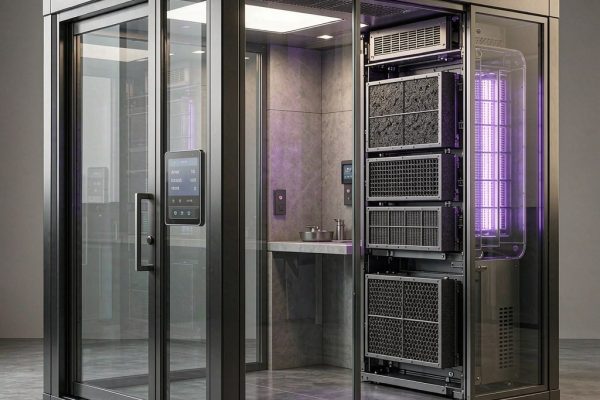
- Absorber-lined shielded enclosure (ALSE) for radiated measurements
- Artificial network/LISN for conducted emission measurements
- Line impedance stabilization network (LISN) for power supply noise
ISO 11452: Vehicle EMC Immunity
ISO 11452 (component-level EMC testing) defines the immunity requirements—how well vehicle electronics withstand incoming electromagnetic disturbances. Key sub-standards include ISO 11452-2 (absorber-lined shielded room), ISO 11452-4 (bulk current injection/BCI), and ISO 11452-7 (direct RF power injection).
Safety-critical systems (steering, braking, ADAS) must meet higher immunity thresholds than infotainment systems, reflecting their failure consequence severity.
OEM-Specific Requirements
Major automotive OEMs supplement CISPR/ISO standards with proprietary specifications that often exceed international limits. Toyota’s TS-T001, Volkswagen VW80000, Ford ES-3U5T-1B257, and BMW GS 95003 all impose stricter limits for specific frequency bands and performance criteria relevant to their vehicle architectures.
EMI Shielding Materials for Automotive Applications
Cold-Rolled Steel and Galvanized Steel
Steel offers excellent shielding effectiveness at low frequencies (below 100 kHz) through absorption and reflection mechanisms. Mild steel housings are commonly used for ECU enclosures in cost-sensitive applications. Typical shielding effectiveness: 60–80 dB at 10 MHz, declining to 30–40 dB at 1 GHz due to skin-depth limitations.
Aluminum Die-Cast Enclosures
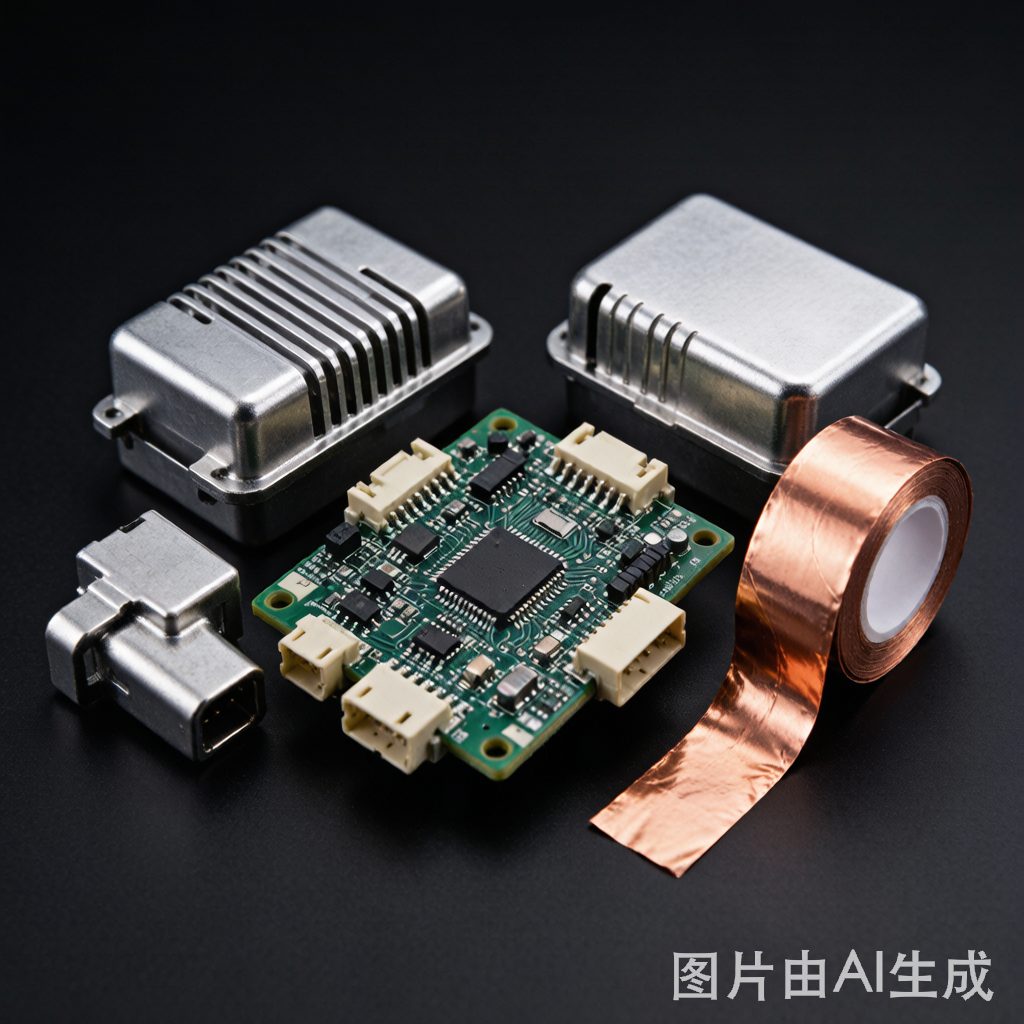
Aluminum is the dominant ECU enclosure material in modern vehicles, offering excellent high-frequency shielding (50–70 dB from 100 MHz to 1 GHz), light weight (critical for EV weight budgets), and superior thermal dissipation. Seam integrity is critical—gasket selection and surface contact resistance at enclosure interfaces must be managed to maintain shielding effectiveness across the full EMC frequency range.
Copper and Nickel-Plated Copper Shielding Strips
Copper’s superior electrical conductivity (59.6 MS/m vs. 35.5 MS/m for aluminum) makes copper-based shielding extremely effective at high frequencies. Applications in automotive electronics include:
- PCB-level shielding cans: Tin-plated or nickel-plated copper cans soldered directly to the PCB ground plane, shielding sensitive RF circuits (GPS, Bluetooth, cellular modems)
- EMI shielding tape: Self-adhesive copper foil tape for cable shielding, co
ector wrap-around, and enclosure seam sealing
- Conductive gaskets: Beryllium copper (BeCu) finger spring gaskets and spiral wound wire gaskets for ECU enclosure mating surfaces
- Busbars and high-current interco
ects
: Tied copper busbars in battery management systems (BMS) require careful EMI design to prevent high dV/dt switching noise from radiating into sensitive signal circuits
Nickel-Plated Steel Shielding Cans
For PCB-level shielding at component level, nickel-plated steel combines ferromagnetic low-frequency shielding with good high-frequency performance. Nickel plating prevents corrosion and provides a solderable surface. Typical applications include shielding of automotive infotainment tuner sections, GPS receiver front-ends, and ADAS processor power management sections.
Design Strategies for Automotive EMI Shielding
Partitioning and Zoning
The most effective EMI design strategy is partitioning: separating high-noise circuits (switching power stages, PWM motor drives) from sensitive signal processing circuits using physical shielding barriers and dedicated PCB grounding zones. In automotive ADAS ECUs, the LIDAR/radar signal processing section is typically shielded from the power management and motor control sections.
Seam Integrity
Even the best shielding material fails if enclosure seams allow EMI leakage. A 1 mm gap in a copper shield can reduce shielding effectiveness by 20–40 dB at frequencies where the gap is a significant fraction of a wavelength (λ/20 rule: gap must be <λ/20 for <20 dB degradation). EMI gaskets must maintain contact pressure throughout the vehicle’s vibration and thermal cycling life.
Cable and Co
ector EMC
Shielded cables and filtered co
ectors are essential complements to enclosure shielding. Automotive-grade shielded twisted pair (STP) cables for CAN FD, 100BASE-T1 Ethernet, and high-speed LVDS camera links must be properly terminated at both ends to ground, using 360° backshell co
ections rather than pigtail grounding (which creates common-mode noise injection points).
EV-Specific EMI Challenges
Battery electric vehicles (BEVs) and hybrid electric vehicles (HEVs) introduce high-voltage, high-current switching systems (400V–800V battery, SiC MOSFET inverters switching at 20–100 kHz) that generate significantly more EMI than traditional 12V automotive electrical systems. EMI shielding in EVs must address:
- High-voltage harness routing and shielding between battery, inverter, and motor
- Isolated DC-DC converter switching noise coupling into 12V auxiliary systems
- On-board charger (OBC) conductive and radiated emissions during charging
- Battery management system (BMS) cell balancing circuit EMI
Conclusion
Automotive EMI shielding has become increasingly sophisticated as vehicle electronics density and high-voltage content grow. Understanding the relevant standards (CISPR 25, ISO 11452), selecting appropriate shielding materials (aluminum enclosures, copper/nickel shielding strips, conductive gaskets), and applying partitioning and seam integrity strategies are the foundations of effective automotive EMC design. Early integration of EMI shielding considerations in the PCB layout and mechanical design phase is far more effective—and cost-efficient—than EMC remediation after prototype testing reveals compliance failures.