Die Attach in Power SMT Module Assembly
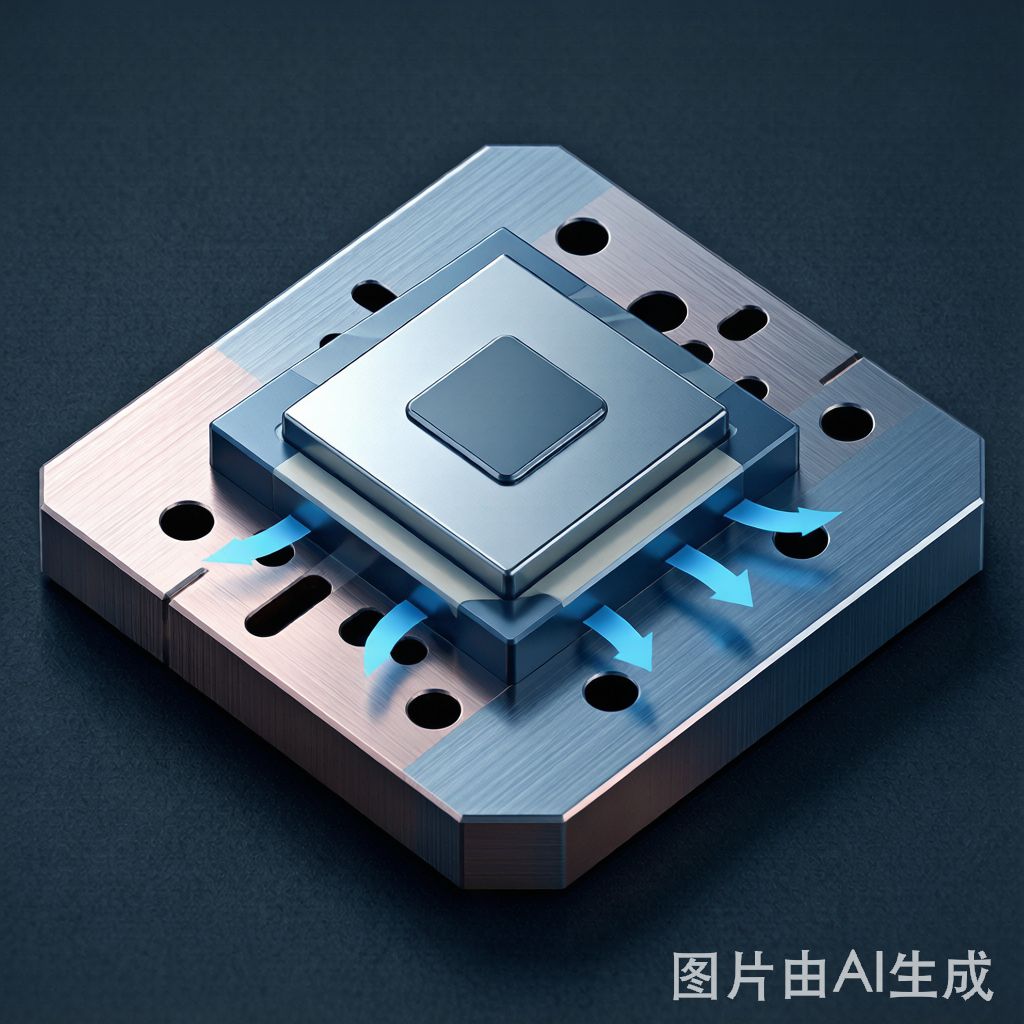
Die attach — the process of bonding a semiconductor die to its substrate or package base — is one of the most critical steps in power SMT module assembly. In power electronics, the die attach material serves dual functions: it mechanically secures the die to the copper substrate (typically a direct bonded copper DBC substrate or copper baseplate) and provides the primary thermal conduction path for heat generated by the device.
The choice between solder die attach and epoxy (adhesive) die attach significantly impacts the module’s thermal resistance, power handling capability, reliability under thermal cycling, and manufacturing cost. As power densities continue to increase in applications like electric vehicle inverters, solar power converters, and industrial motor drives, selecting the optimal die attach material becomes increasingly important.
This article compares solder and epoxy die attach materials for copper-based power SMT modules, providing practical guidance for engineers making material selection decisions.
Solder Die Attach: Technology and Performance
Solder die attach uses metallic alloys to form a metallurgical bond between the die backside and the copper substrate. The solder joint is created through reflow in a controlled atmosphere, typically nitrogen or forming gas.
Common Solder Die Attach Alloys:
Sn-Ag-Cu (SAC305/SAC405): The industry-standard lead-free solder for die attach, offering a melting point of 217-221°C. Thermal conductivity of approximately 58 W/mK. Widely used in commercial and industrial power modules with junction temperatures up to 175°C.
Sn-Sb (95/5): Higher melting point (240°C) with good creep resistance. Suitable for applications with higher operating temperatures. Thermal conductivity around 47 W/mK.
Au-Sn (80/20 Eutectic): Premium die attach alloy with a melting point of 280°C and thermal conductivity of 57 W/mK. Provides excellent fatigue resistance. Standard for high-reliability aerospace and defense applications.
High-Pb Alloys (Pb-5Sn): Traditional high-temperature solder (melting point 308°C) with excellent thermal fatigue performance. Still used in automotive and industrial applications where lead exemptions apply under RoHS.
Solder Die Attach Advantages: Highest thermal conductivity among die attach materials; excellent electrical conductivity; established reliability data spa
ing decades; reprocessable; hermetic seal capability.
Epoxy Die Attach: Technology and Performance
Epoxy die attach (also called adhesive die attach) uses polymer-based materials loaded with conductive fillers to bond the die to the substrate.
Silver-Filled Epoxy: The most common conductive epoxy for die attach. Silver particles (70-80% by weight) provide both electrical and thermal conductivity. Typical thermal conductivity ranges from 3-20 W/mK. Cured at 150-200°C for 30-60 minutes.
Non-Conductive Epoxy: Used when electrical isolation between the die and substrate is required. Filled with ceramic particles for thermal conductivity. Typical thermal conductivity of 1-4 W/mK.
Sintered Silver: Silver nanoparticles or flakes compressed and sintered at 250-300°C to form a near-bulk-silver bond. Thermal conductivity of 200+ W/mK, approaching pure silver. The fastest-growing die attach technology for wide-bandgap semiconductor modules (SiC and GaN).
Epoxy Die Attach Advantages: Lower processing temperature (150-200°C vs 220-310°C for solder); compatible with temperature-sensitive components; flexibility accommodates CTE mismatch; lower material cost (except sintered silver).
Thermal Performance: Critical Comparison
Thermal resistance of the die attach layer directly impacts maximum power handling and operating temperature:
SAC305 Solder: 58 W/mK, typical BLT 25-50μm, Rth 0.43-0.86 mm²·°C/W
Au-Sn Eutectic: 57 W/mK, typical BLT 10-25μm, Rth 0.18-0.44 mm²·°C/W
High-Pb Solder: 33 W/mK, typical BLT 25-50μm, Rth 0.76-1.52 mm²·°C/W
Silver Epoxy: 8-20 W/mK, typical BLT 15-30μm, Rth 0.75-3.75 mm²·°C/W
Non-Conductive Epoxy: 1-4 W/mK, typical BLT 25-50μm, Rth 6.25-50 mm²·°C/W
Sintered Silver: 200+ W/mK, typical BLT 5-20μm, Rth 0.025-0.10 mm²·°C/W
Solder die attach consistently provides the lowest thermal resistance. Sintered silver approaches or exceeds solder performance but requires specialized processing equipment.
Reliability Under Thermal Cycling
Thermal cycling reliability is arguably the most important consideration for power module die attach:
Solder Fatigue: Solder die attach layers accumulate damage through creep and fatigue during thermal cycling. SAC305 solder typically shows initial crack formation after 1,000-3,000 thermal cycles (-40°C to +150°C), with progressive degradation until failure.
Epoxy Fatigue Resistance: Conductive epoxies generally exhibit better thermal cycling performance than lead-free solders because the polymer matrix absorbs mechanical strain through viscoelastic deformation.
Sintered Silver Advantage: Sintered silver die attach demonstrates dramatically superior thermal cycling life — often 5-10× that of SAC305 solder. The silver-silver bond does not suffer from the creep-fatigue mechanism that limits solder.
For applications with aggressive thermal cycling requirements (automotive >1000 cycles, railway >5000 cycles), sintered silver is becoming the preferred die attach technology.
Process Requirements and Manufacturing Considerations
Solder Die Attach Process: Apply solder preform or paste to copper substrate, place die (accuracy ±25μm), reflow in nitrogen (peak 240-320°C), cool under controlled rate. Process time: 5-10 minutes per batch.
Epoxy Die Attach Process: Dispense epoxy in controlled pattern, place die onto heated substrate (60-80°C), cure in oven (150-200°C for 30-120 minutes). Process time: 1-2 hours including cure cycle.
Key Equipment Investment: Solder requires controlled-atmosphere reflow furnace ($50K-200K). Epoxy requires standard curing oven ($5K-30K). Sintered silver requires high-pressure sintering press ($100K-500K) plus furnace.
Application Selection Guide
Use Solder Die Attach When: Maximum thermal performance is required; electrical backside co
ection is needed; rework capability is important; medium-volume production with standard SMT equipment.
Use Silver Epoxy When: Processing temperature must stay below 200°C; die or substrate is temperature-sensitive; CTE mismatch accommodation is critical; low-to-medium power applications (<50W/cm²).
Use Sintered Silver When: Ultra-high power density requirements (>100W/cm²); extreme thermal cycling life is required; wide-bandgap semiconductors (SiC, GaN); automotive or railway applications with stringent reliability standards.
Conclusion
The choice between solder and epoxy die attach for copper-based power SMT modules involves balancing thermal performance, reliability, processing requirements, and cost. Solder remains the workhorse material for most power electronics, offering the best thermal conductivity and electrical performance with well-established reliability.
Conductive epoxy provides a flexible, lower-cost alternative for temperature-sensitive and lower-power applications, while sintered silver represents the cutting edge for next-generation wide-bandgap power modules requiring extreme reliability.
As power semiconductor technology advances and power densities continue to increase, the importance of optimized die attach selection will only grow. Engineers who understand these trade-offs will be well-positioned to make informed material choices for their specific application requirements.