Why PCB Surface Finish Matters for SMT Assembly
Every copper pad on a bare PCB will oxidize when exposed to air, creating a layer that prevents effective solder wetting during SMT reflow. The PCB surface finish serves as a protective barrier between the raw copper and the environment, preserving solderability from board fabrication through the assembly process.
Choosing the right surface finish directly impacts solder joint quality, assembly yield, long-term reliability, and manufacturing cost. For SMT operations, two of the most widely used surface finishes are Electroless Nickel Immersion Gold (ENIG) and Organic Solderability Preservative (OSP).
This article provides a comprehensive comparison of ENIG and OSP finishes, examining their performance characteristics, cost implications, and best-fit applications to help SMT engineers and procurement teams make informed decisions.
Electroless Nickel Immersion Gold (ENIG) Explained
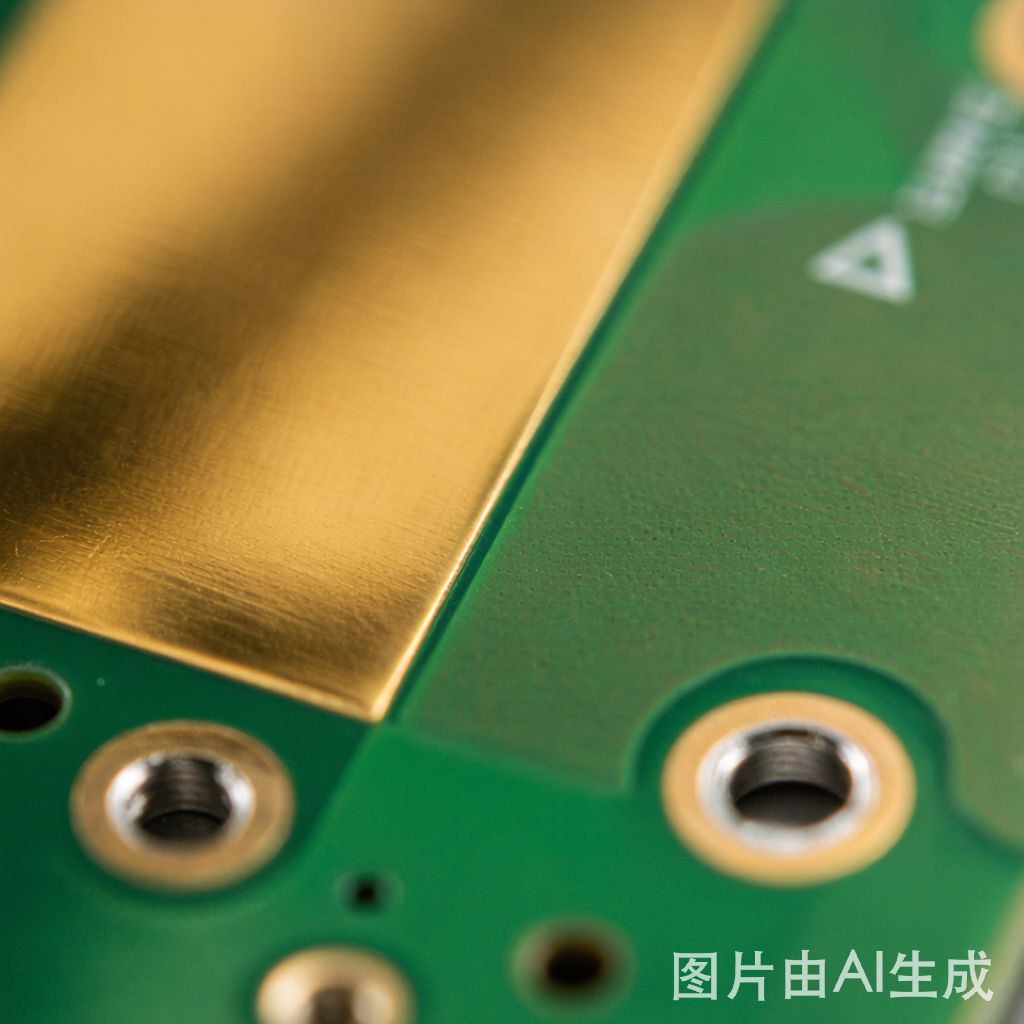
ENIG is a two-layer metallic surface finish consisting of a thin layer of gold (0.03-0.08μm) deposited over a thicker layer of electroless nickel (3-5μm). The nickel acts as a barrier between the copper substrate and the gold surface, while the gold provides excellent solderability protection.
Key Characteristics of ENIG:
• Excellent solderability preservation — shelf life of 12+ months when properly packaged
• Gold surface is flat and planar, ideal for fine-pitch SMT and BGA components
• Wire-bondable surface suitable for direct chip attachment
• Electrically conductive, enabling reliable press-fit co
ector contacts
• Compatible with all common SMT solder pastes and reflow profiles
ENIG Limitations:
• Higher cost compared to organic finishes ($8-15 per panel)
• Risk of “black pad” phenomenon — intermetallic growth causing brittle solder joints
• Gold dissolves into solder during reflow, potential embrittlement if exceeding 3-5% by weight
• Longer processing time in board fabrication (multiple chemical baths)
Organic Solderability Preservative (OSP) Explained
OSP is a thin organic compound coating applied to bare copper pads through a chemical process. It forms a protective layer that prevents copper oxidation while dissolving completely during soldering, exposing fresh copper for wetting.
Key Characteristics of OSP:
• Very low cost — typically $2-4 per panel, the most economical surface finish option
• Flat, coplanar surface similar to ENIG, suitable for fine-pitch components
• Simple application process with no heavy metals — environmentally friendly
• Produces copper-rich solder joints with excellent mechanical strength
• Multiple rework cycles possible with re-application of OSP
• Near-zero thickness — does not affect PCB trace impedance
OSP Limitations:
• Limited shelf life (3-6 months depending on storage conditions)
• Sensitive to handling — fingerprints, moisture, and UV exposure degrade the coating
• Not suitable for press-fit co
ectors (non-conductive surface)
• Ca
ot be wire-bonded
• Less tolerant to multiple reflow passes
Head-to-Head Performance Comparison
Let us examine how ENIG and OSP compare across key SMT performance metrics:
Solderability Shelf Life: ENIG 12+ months vs OSP 3-6 months
Surface Flatness: Both excellent
Cost (per panel): ENIG $8-15 vs OSP $2-4
Multiple Reflow Passes: ENIG excellent (3+) vs OSP good (1-2)
Press-Fit Compatible: ENIG yes vs OSP no
Wire Bonding: ENIG yes vs OSP no
Solder Joint Strength: ENIG good (gold risk) vs OSP excellent (copper-rich)
Storage Sensitivity: ENIG low vs OSP high (humidity/UV)
Black Pad Risk: ENIG yes vs OSP no
For most standard SMT assemblies with BGA and fine-pitch components, both finishes perform well. The choice typically comes down to shelf life requirements, budget constraints, and specific application needs.
Solder Joint Quality: ENIG vs OSP in Practice
ENIG Solder Joints: During reflow, the thin gold layer dissolves into the solder paste, and the nickel layer forms a nickel-tin intermetallic compound (IMC) with the solder. If the IMC layer is too thick or contains phosphorus from the electroless nickel process (black pad defect), joints may be brittle and prone to cracking under thermal cycling or mechanical stress.
Modern ENIG processes with mid-phosphorus nickel (6-9% P) have significantly reduced black pad incidence, but quality-conscious manufacturers still specify incoming inspection and cross-section analysis for critical applications.
OSP Solder Joints: Since OSP dissolves completely during reflow, the solder bonds directly to the copper pad, forming a copper-tin IMC (Cu6Sn5). Copper-rich solder joints are generally stronger and more ductile than ENIG joints, with excellent resistance to thermal fatigue. The absence of gold eliminates embrittlement concerns entirely.
For high-reliability applications such as automotive, aerospace, and medical electronics, OSP is increasingly preferred when storage and handling conditions can be controlled.
Application-Specific Recommendations
Choose ENIG When: Long shelf life is required; the board includes press-fit co
ectors or requires wire bonding; products must pass rigorous compliance testing; mixed assembly with multiple reflow passes plus wave soldering is needed.
Choose OSP When: Cost optimization is a priority; fast-turn manufacturing with short fab-to-assembly cycle times; high-reliability applications where maximum solder joint strength is needed; consumer electronics with controlled storage environments; environmental sustainability is a design consideration.
Future Trends in PCB Surface Finishes
The PCB surface finish landscape continues to evolve with several emerging technologies:
ENEPIG: Adds a thin palladium layer between nickel and gold, virtually eliminating black pad issues. Gaining adoption for high-reliability and fine-pitch applications.
Immersion Silver: Offers a flat, solderable surface at moderate cost. Shelf life of 6-12 months but susceptible to tarnishing and creep corrosion in sulfur-containing environments.
Immersion Tin: Provides a very flat surface ideal for fine-pitch components. Limited shelf life (3-6 months) and risk of tin whisker growth restrict its use to consumer electronics.
Conclusion
Both ENIG and OSP are proven, reliable PCB surface finishes that serve SMT assembly well. ENIG offers the versatility and shelf life needed for complex, multi-process assemblies, while OSP provides the lowest cost and strongest solder joints for applications with controlled handling and shorter lead times.
The right choice depends on your specific requirements — product shelf life, assembly process complexity, component types, reliability standards, and budget. Many manufacturers use both finishes strategically, applying ENIG to boards that require long storage or press-fit co
ectors, and OSP to cost-sensitive products with fast turnaround times.