Introduction
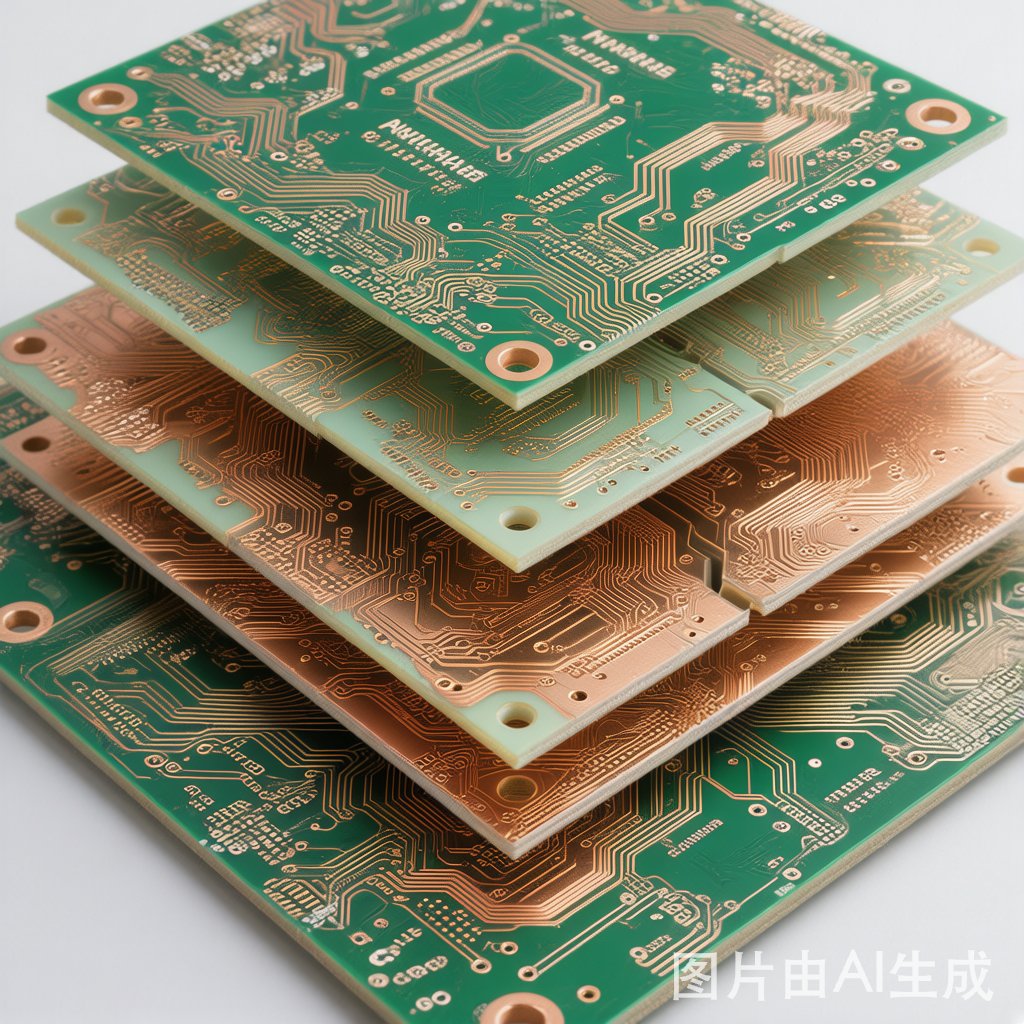
Copper weight — the thickness of copper foil laminated onto a PCB substrate — is one of the most consequential design decisions for power electronics, LED lighting, automotive modules, and any PCB carrying more than a few amps. Yet many designers default to 1oz copper without fully evaluating whether 2oz or 3oz would deliver better performance, reliability, or cost efficiency. This guide breaks down the key trade-offs to help you make informed copper weight decisions for your next SMT project.
What Copper Weight Actually Means
Copper weight is specified in ounces per square foot (oz/ft²), but its practical meaning is thickness:
- 0.5 oz: 17.5 μm (0.7 mil) — typical for i
er layers of multilayer boards
- 1 oz: 35 μm (1.4 mil) — standard for most commercial PCB outer layers
- 2 oz: 70 μm (2.8 mil) — common for power supplies and automotive electronics
- 3 oz: 105 μm (4.2 mil) — heavy copper for high-current paths
- 4 oz+: 140+ μm — specialized power distribution and bus bar replacement
Current Carrying Capacity: The Primary Driver
The most common reason to increase copper weight is current handling. Per IPC-2221 guidelines, a 10°C temperature rise scenario shows:
| Trace Width | 1oz Capacity | 2oz Capacity | 3oz Capacity |
|---|---|---|---|
| 1.0 mm (40 mil) | ~2.5 A | ~4.0 A | ~5.7 A |
| 2.5 mm (100 mil) | ~5.0 A | ~8.5 A | ~12.0 A |
| 5.0 mm (200 mil) | ~8.3 A | ~14.0 A | ~20.0 A |
Doubling copper weight does not quite double current capacity because the trace cross-section increases but heat dissipation does not scale proportionally. However, the improvement is substantial — roughly 60–70% more current capacity when moving from 1oz to 2oz.
Thermal Management Benefits
Heavier copper provides significant thermal advantages beyond just current capacity:
- Heat spreading: 2oz copper spreads heat approximately 40% more effectively than 1oz across the same area, reducing hot spot temperatures on power components
- Via thermal resistance: Combining 2oz planes with thermal vias can reduce junction-to-ambient thermal resistance by 15–25% compared to 1oz designs
- Transient response: Higher copper mass provides thermal capacitance that smooths temperature fluctuations during pulsed power operation
SMT Manufacturing Trade-offs
Heavier copper presents several manufacturing challenges that must be managed:
1. Etching Accuracy
The isotropic nature of chemical etching means thicker copper produces wider etch undercut. On 3oz copper, the minimum reliable trace/space specification is approximately 0.2 mm (8 mil), compared to 0.1 mm (4 mil) on 1oz. This limits routing density on high-current layers.
2. Solder Paste Volume
Heavy copper planes act as heat sinks during reflow. Components soldered to 2oz+ planes may require:
- Extended soak time (additional 15–30 seconds above 180°C)
- Higher peak temperature (3–5°C above normal profile)
- Increased solder paste volume for through-hole components on thick copper
3. Warpage Risk
Asymmetric copper distribution (e.g., 3oz on layer 1, 1oz on layer 4) creates unbalanced stress during thermal cycling. Design rules should maintain copper balance across the layer stack to prevent warpage that compromises SMT coplanarity.
Cost Considerations
Heavier copper increases PCB cost through:
- Material cost: Copper foil price scales roughly linearly with weight
- Processing time: Longer etch times for thicker copper reduce throughput
- Yield impact: Tighter process windows mean more scrapped boards
As a rough benchmark, moving from 1oz to 2oz on outer layers typically adds 20–35% to bare board cost for a 4-layer PCB. The 3oz option adds 50–80%. For high-reliability applications (automotive, aerospace), this premium is often justified by the performance benefits.
Design Recommendations
- Use mixed copper weights: Specify heavier copper only on the layers that need it — e.g., 2oz on outer layers for high-current paths, 1oz on i
er layers for signal routing
- Widen traces before increasing copper: If layout space permits, widening traces on 1oz copper is often cheaper than moving to 2oz
- Validate with thermal simulation: For designs pushing current limits, thermal simulation with actual copper weight values provides more accurate results than IPC-2221 charts alone
- Communicate with your fabricator early: Not all PCB manufacturers have equal capability for heavy copper etching — confirm capabilities during the design phase
Conclusion
Copper weight selection directly impacts current capacity, thermal performance, SMT manufacturability, and cost. While 1oz copper serves most general-purpose designs well, any PCB carrying sustained currents above 3–5 A per trace should seriously consider 2oz or heavier copper. The key is to evaluate the full system requirements — electrical, thermal, mechanical, and economic — rather than defaulting to convention.