Introduction to IPC-4562
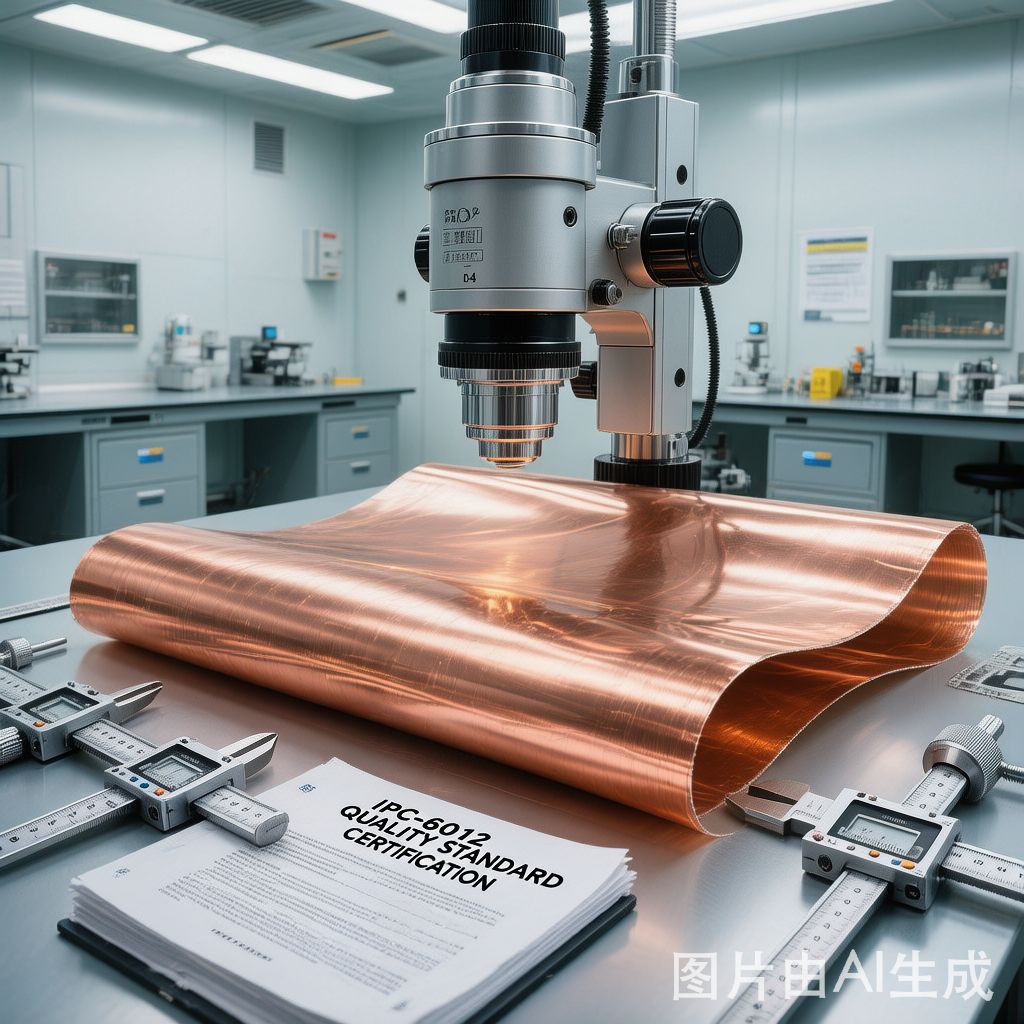
In the world of printed circuit board (PCB) manufacturing and SMT assembly, copper foil is the foundational material that determines the electrical performance, thermal behavior, and reliability of every electronic product. The IPC-4562 standard, formally titled “Metal Foil for Printed Board Applications,” is the industry’s definitive specification for copper foil quality, establishing the grades, properties, and test methods that SMT engineers and PCB designers must understand.
Originally developed to replace the older IPC-MF-150, IPC-4562 has become the universally referenced standard across the global electronics supply chain, including the rapidly growing manufacturing bases in Southeast Asia.
Copper Foil Types and Grades
IPC-4562 defines several types of copper foil, each with distinct manufacturing processes and characteristics:
Electrodeposited (ED) Foil
Electrodeposited foil is manufactured by electroplating copper onto a rotating drum, producing foil with a smooth “drum side” and a rougher “matte side.” IPC-4562 designates ED foils with the following grade codes:
- Grade 1: Standard electrodeposited foil for general-purpose applications. The most cost-effective option for standard FR-4 laminates.
- Grade 2: Electrodeposited foil with improved elongation. Better suited for applications requiring some degree of forming or bending after lamination.
- Grade 3: High-temperature elongation (HTE) foil, also known as “double-treated” foil. This grade maintains ductility at elevated temperatures, making it essential for lead-free soldering processes that reach 260°C and above.
Rolled (RA) Foil
Rolled a
ealed foil is produced by mechanically rolling copper ingots to the desired thickness. This process creates foil with a more uniform grain structure:
- Grade 4: Standard rolled foil. Offers superior flexibility compared to ED foil, making it the preferred choice for flexible circuits and dynamic flex applications.
- Grade 5: Light rolled foil for flexible printed wiring. Optimized for applications requiring repeated flexing.
- Grade 6: Rolled foil with special ductility requirements for high-reliability applications.
Thickness Specifications
IPC-4562 specifies copper foil thickness using both imperial and metric units. The most commonly used thicknesses in SMT applications include:
- 0.5 oz (17.1 μm): Used for fine-pitch SMT applications and high-density interco
ect (HDI) boards. Requires careful handling during lamination.
- 1 oz (34.3 μm): The standard thickness for most SMT applications. Provides adequate current-carrying capacity for typical signal and low-power traces.
- 2 oz (68.6 μm): Used for power delivery, ground planes, and thermal management applications. Common in power electronics and LED driver boards.
- 3 oz (102.9 μm) and above: Heavy copper for high-current applications such as bus bars, power converters, and automotive electronics. These thicker foils require special etching processes.
IPC-4562 establishes tolerances for each thickness grade. For example, 1 oz foil has a tolerance of ±2.5 μm, which is critical for impedance control in high-frequency applications.
Critical Quality Parameters
Peel Strength
Peel strength measures the adhesion between copper foil and the laminate substrate. IPC-4562 specifies minimum peel strength requirements that vary by foil thickness and type. For 1 oz ED foil, the minimum peel strength is typically 1.0 N/mm. Low peel strength leads to delamination during SMT reflow soldering, especially under thermal cycling conditions.
Tensile Strength and Elongation
These mechanical properties determine how the foil responds to forming operations and thermal stress:
- Standard ED foil: Tensile strength ≥ 300 MPa, elongation ≥ 3%
- HTE foil (Grade 3): Tensile strength ≥ 210 MPa at 180°C, elongation ≥ 4% at 180°C
- RA foil (Grade 4): Tensile strength ≥ 220 MPa, elongation ≥ 15%
The dramatically higher elongation of RA foil explains its preference for flex circuits — it can absorb much more mechanical deformation before cracking.
Surface Roughness
IPC-4562 categorizes foil surface roughness profiles, which directly affect signal integrity at high frequencies:
- Standard profile: Rz ≈ 5-10 μm. Adequate for frequencies below 1 GHz.
- Low profile: Rz ≈ 3-5 μm. Suitable for frequencies up to 5 GHz.
- Very low profile (VLP): Rz ≈ 1-3 μm. Required for high-frequency applications above 5 GHz, including 5G and millimeter-wave circuits.
- Ultra-low profile: Rz < 1 μm. Used in the most demanding high-frequency applications.
The rougher matte side of ED foil improves adhesion to the laminate but increases signal loss at high frequencies due to the skin effect. This tradeoff is a key consideration in high-speed digital and RF PCB design.
Quality Testing Requirements
IPC-4562 mandates specific test methods for verifying copper foil quality:
- Tensile testing (IPC-TM-650 2.4.18): Determines tensile strength and elongation at room and elevated temperatures.
- Peel strength testing (IPC-TM-650 2.4.8): Measures the force required to separate foil from the laminate.
- Surface roughness measurement: Profiled using stylus instruments per relevant ISO standards.
- Thickness measurement (IPC-TM-650 2.2.12): Verified using micrometers or beta-ray gauges for in-process monitoring.
- Chemical analysis: Purity verification ensures copper content meets the minimum 99.8% requirement for standard grades.
Practical Implications for SMT Engineers
Understanding IPC-4562 has direct practical benefits for SMT manufacturing professionals:
- Material qualification: When qualifying new copper foil suppliers, use IPC-4562 grade designations as the basis for your specifications. Never accept foil without certification to the relevant grade.
- Process troubleshooting: Peel strength failures during reflow often trace back to foil-laminate adhesion issues. Knowing the IPC-4562 requirements helps identify whether the problem is material or process related.
- High-frequency design: For high-speed digital and RF applications, specifying low-profile or VLP foil per IPC-4562 ensures signal integrity performance meets design expectations.
- Thermal management: Heavy copper foils (3 oz and above) used for thermal management must meet IPC-4562 elongation requirements to prevent cracking during thermal cycling.
Conclusion
IPC-4562 is more than a specification — it’s the common language that co
ects copper foil manufacturers, laminate suppliers, PCB fabricators, and SMT assemblers. For engineers working with copper-based components, understanding the foil types, thickness specifications, and quality parameters defined in this standard is essential for ensuring product reliability and manufacturing success. Always specify copper foil by IPC-4562 grade designation, and verify compliance through the standard’s defined test methods.